This learning resource is available in interactive and printable formats. The interactive worksheet can be played online and assigned to students. The Printable PDF version can be downloaded and printed for completion by hand.
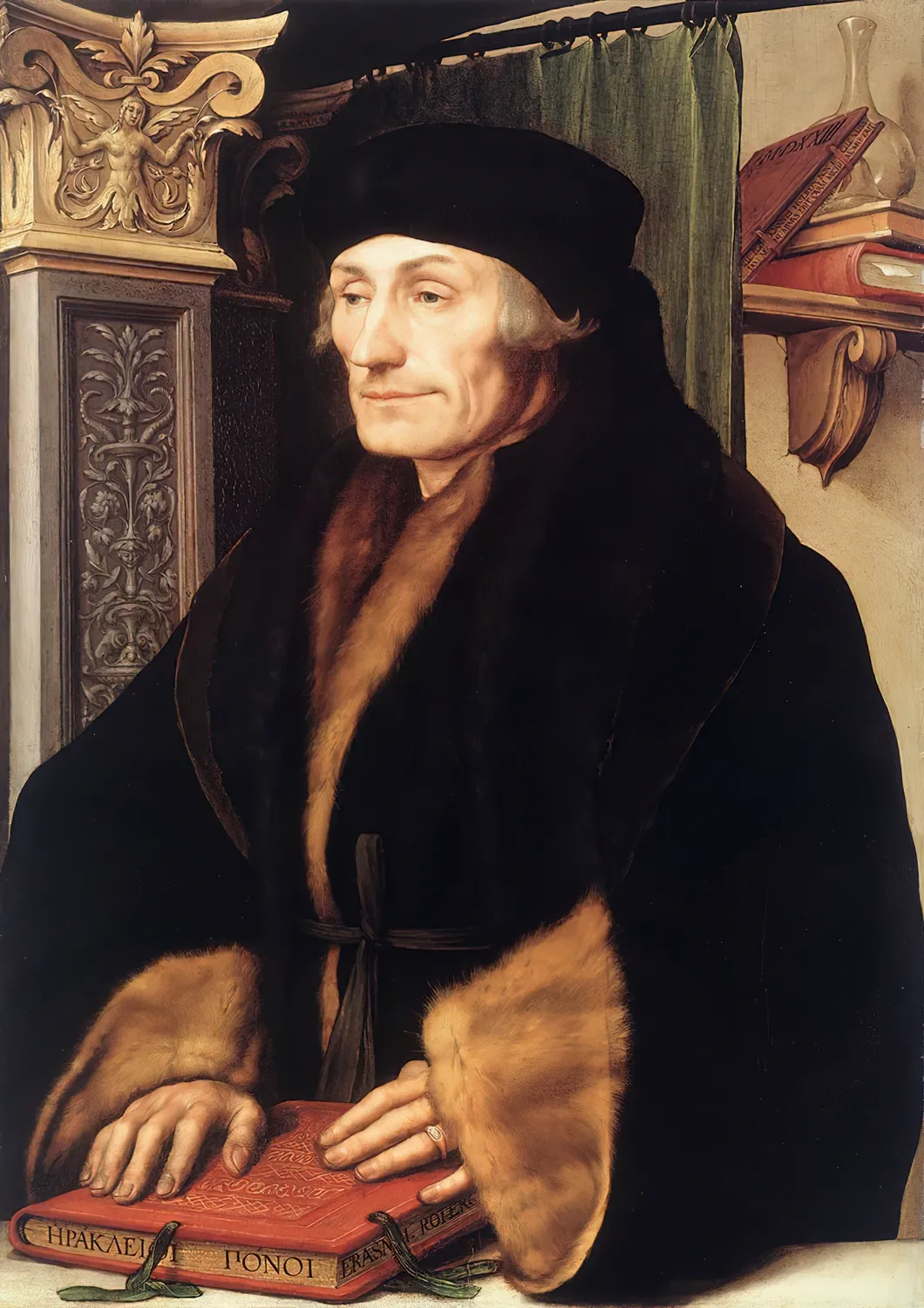
This engaging world history passage explores the life and legacy of Desiderius Erasmus, a leading Dutch humanist of the Northern European Renaissance. Students will learn about Erasmus's role in translating the New Testament, his influence on educational reforms, and his advocacy for critical thinking and religious tolerance. The passage includes primary source examples and connects Erasmus's contributions to changes in European society, making historical analysis accessible and meaningful. This resource is aligned with CA HSS 7.8.1 and CCSS.RI.6.3 standards, supporting both history and ELA learning objectives. It is ideal for developing skills in historical thinking, vocabulary, and evidence-based writing. The passage comes with a read aloud audio feature, Spanish translation, multiple-choice and writing activities, as well as graphic organizers and a timeline for comprehensive learning.
Desiderius Erasmus was one of the most influential thinkers of the Northern European Renaissance. Born in Rotterdam, the Netherlands, in 1466, Erasmus became known across Europe as a leading humanist. Humanists believed in the power of education, the study of classical texts, and the value of critical thinking. Erasmus used his talents to improve learning, support religious reform, and encourage open discussion of new ideas.
During the late 1400s and early 1500s, the Renaissance spread north from Italy into places like the Netherlands, Germany, and England. Erasmus traveled widely, visiting important cities such as Paris, London, and Basel. He formed friendships with other Renaissance scholars, including Sir Thomas More in England. Erasmus believed in the importance of returning to the original sources, especially the Bible. In 1516, he published a new Latin translation of the New Testament, using ancient Greek manuscripts. This work allowed scholars to compare the Bible’s words more accurately and inspired further study and religious debate. Erasmus’s translation was a major event in European intellectual history and influenced figures such as Martin Luther.
Erasmus also advocated for educational reform. He argued that learning should focus on fostering reason and personal understanding, rather than just memorizing facts. In his book "On the Education of a Christian Prince" (1516), Erasmus advised rulers to be wise, just, and guided by ethics, not just tradition. He produced textbooks, wrote letters to students and teachers, and encouraged the study of languages and classical literature. As a result, schools across Northern Europe began to adopt new teaching methods that emphasized questioning and discussion.
Erasmus’s work contributed to major changes in European society. His writings challenged some traditional religious practices and encouraged people to think for themselves. However, he also supported peace and tolerance, arguing against violence and harsh punishment. He was sometimes criticized by both Catholic and Protestant leaders, but he remained committed to reform through education and dialogue. Erasmus’s legacy continued after his death in 1536, as humanist ideas spread and shaped modern European thought.
By connecting classical learning to everyday life, Erasmus helped transform how people thought about education, religion, and society. His ideas demonstrate the power of knowledge and the importance of asking questions. The Renaissance in Northern Europe was not just about art or science, but also about changing how people understood the world and their role in it.
Interesting Fact: Erasmus wrote most of his books by hand and sent thousands of letters to scholars all over Europe, helping to create a network of intellectual exchange.
Where was Erasmus born?
RotterdamLondonParisRome
What did Erasmus translate in 1516?
New TestamentOld TestamentGreek poetryRoman law
Who was Erasmus's friend in England?
Thomas MoreMartin LutherIsaac NewtonLeonardo da Vinci
Why did Erasmus want educational reform?
To encourage critical thinkingTo build more churchesFor political powerTo stop travel
How did his translation affect Europe?
Inspired religious debateStopped all reformsEnded the RenaissanceStarted the Roman Empire
What did Erasmus argue rulers should follow?
EthicsSuperstitionWarTradition only
Erasmus died in 1536. True or False?
TrueFalse
What is a humanist?
Studies human values and classicsWorks only with scienceFights warsBuilds cities
Perfect For:
👩🏫 Teachers
• Reading comprehension practice
• Auto-graded assessments
• Literacy skill development
👨👩👧👦 Parents
• Reading practice at home
• Comprehension improvement
• Educational reading time
🏠 Homeschoolers
• Reading curriculum support
• Independent reading practice
• Progress monitoring
Reading Features:
📖
Reading Passage
Engaging fiction or nonfiction text
❓
Comprehension Quiz
Auto-graded questions
📊
Instant Feedback
Immediate results and scoring
📄
Printable Version
Download for offline reading
🔊
Read Aloud
Voice-over with word highlighting
Reviews & Ratings
No reviews yet. Be the first to share your experience!
Related Content
Renaissance Clothing
This passage explores the fascinating world of Renaissance fashion clothing in Europe, focusing on how clothing reflecte...
Renaissance Poetry
This engaging world history reading passage introduces students to the Renaissance sonnet, focusing on the influential w...
Renaissance Philosophy
This passage explores the main ideas of Renaissance philosophy, which emerged in Europe during the 14th to 16th centurie...
Renaissance Art
This reading passage examines the enduring legacy of Renaissance art in world history, focusing on key techniques such a...
CA HSS 7.8.3CCSS RH.6-8.2CCSS W.6.2
Renaissance Anatomy Art
This engaging passage explores the intersection of art, science, and society during the Renaissance through the lens of ...
French Renaissance
This passage explores the rich culture of the French Renaissance, focusing on the influence of Italian art and architect...
Northern Renaissance
This passage examines the development and significance of Northern Renaissance art, focusing on how Renaissance ideas sp...
Renaissance Art and Artists
This history reading passage delves into the world of Renaissance art, focusing on the revolutionary works and lives of ...
Florence Renaissance
This history reading passage examines Florence during the Renaissance, highlighting its cultural richness, the influence...
Renaissance Humanism
This passage introduces students to the transformative concept of Renaissance Humanism, a philosophical movement that em...
Renaissance Oil Painting
This passage explores the development of oil painting techniques during the Renaissance, focusing on the comparison betw...
Renaissance Impact Today
This engaging world history passage examines the enduring impact of the Renaissance on modern society, focusing on how R...
English Renaissance
This comprehensive passage explores the English Renaissance, a transformative period in England marked by a flourishing ...
Renaissance Education
This engaging history reading passage examines the transformation of education during the Renaissance and its impact on ...
Renaissance Medicine
This engaging world history reading passage explores medical advances during the Renaissance in Europe, focusing on chan...
Renaissance Music
This world history reading passage examines the development of music during the Renaissance, a period of profound cultur...
Renaissance Festivals Celebrations
This passage explores the vibrant role of festivals and celebrations during the Renaissance, focusing on how public spec...
Catholic Church and Renaissance
This passage explores the major role the Catholic Church played as a patron of Renaissance art in Europe. It examines ho...
Renaissance Religious Art
This passage explores the dramatic changes in religious art during the Renaissance, focusing on the shift from medieval ...
Renaissance Women
This reading passage explores the lives and contributions of women during the Renaissance period in Europe. Students wil...