Fossil Fuels: Oil and Natural Gas
Interactive passage with audio narration, comprehension questions, and printable PDF.
By completing this purchase you agree to our Terms of Use and Privacy Policy. Your subscription renews automatically until you cancel. You can cancel anytime from your account settings. All sales are final and non-refundable. Digital content is available for download in your account immediately upon purchase.
What's included
Fossil Fuels: Oil and Natural Gas preview and details
About this printable Fossil Fuels: Oil and Natural Gas science reading passage, NGSS-aligned (Grades 5-8)
Sample passage and quiz from Fossil Fuels: Oil and Natural Gas
Reading passage and comprehension quiz preview
Fossil Fuels: Oil and Natural Gas
Oil and natural gas are critical sources of energy that power modern society. Today, most cars, trucks, and airplanes rely on fuels made from oil, and millions of homes are heated or powered by natural gas. But these resources are not created quickly—they are the result of a fascinating, ancient process that begins with microscopic marine life. Understanding how these fossil fuels form, are extracted, used, and impact our environment is key to making informed decisions about energy and the planet's future.
How Oil and Natural Gas Form
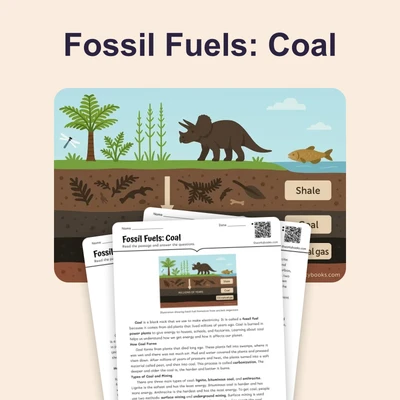
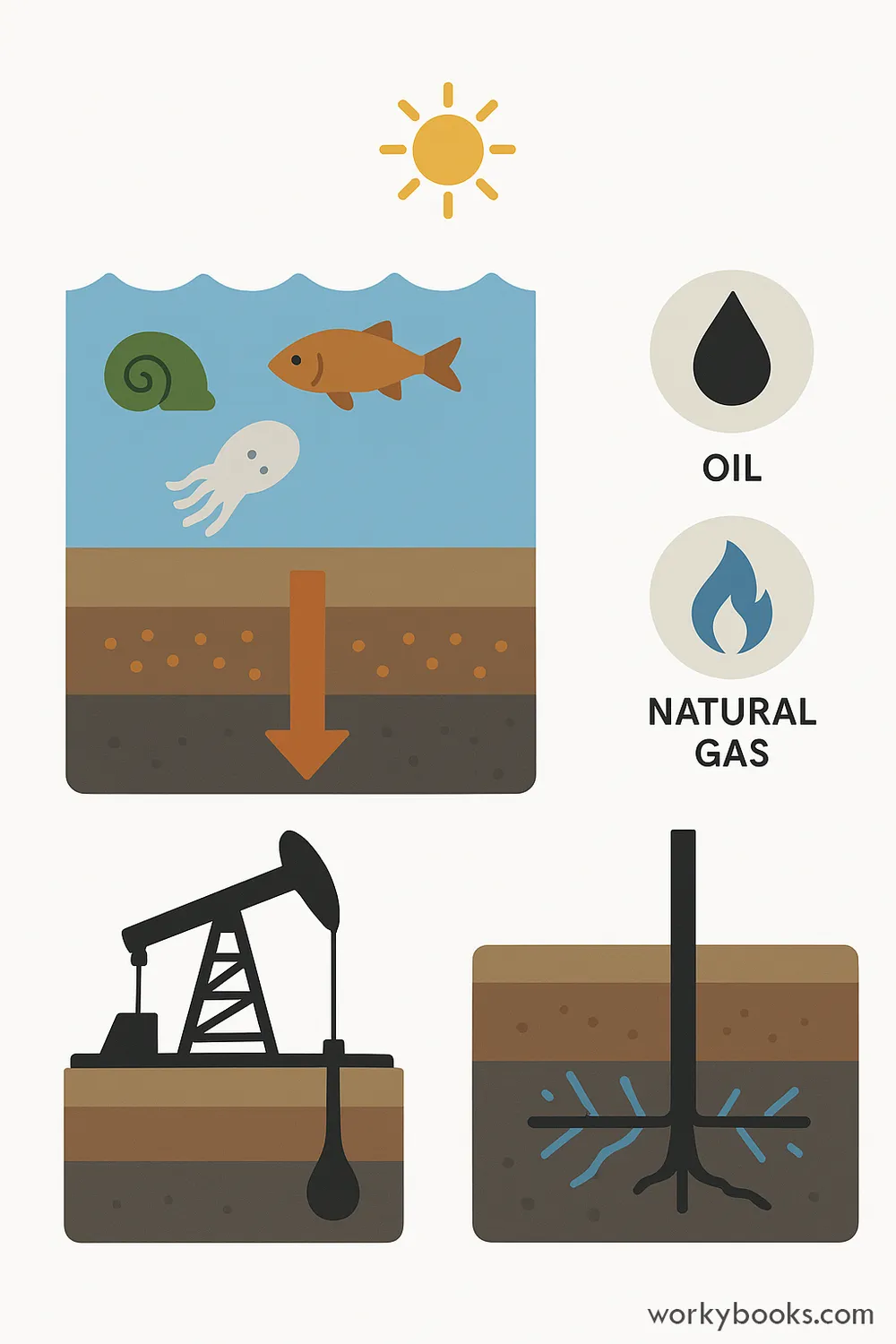
Fossil fuels like oil and natural gas began forming 50 to 300 million years ago. When tiny plants and animals called plankton died, their remains settled on the ocean floor and mixed with mud and sand. Over millions of years, layers of sediment built up, burying this organic material deeper and deeper. The combination of intense heat (up to 150°C) and pressure transformed these remains into petroleum (crude oil) and natural gas. Scientists have studied rock layers and used chemical analysis to confirm that most oil and gas deposits are found in sedimentary rocks where ancient seas once existed. In some places, only about 1% of the original organic matter became oil or gas, showing how rare and valuable these fuels are.
Extraction and Refining
To get oil and natural gas out of the ground, people use drilling and a technology called hydraulic fracturing, or fracking. Drilling creates deep wells that reach underground reservoirs. Fracking uses high-pressure water, sand, and chemicals to crack rocks and release trapped gas and oil. Once extracted, crude oil is sent to refineries, where it is separated and processed into products like gasoline, diesel, jet fuel, and plastics. Natural gas is cleaned and transported through pipelines for use in heating, cooking, and electricity generation. According to the U.S. Energy Information Administration, about 60% of U.S. homes use natural gas for heating.
Uses and Environmental Concerns
Oil and natural gas are essential for transportation, manufacturing, and electricity. However, burning fossil fuels releases carbon dioxide (CO₂), a greenhouse gas that contributes to climate change. Natural gas produces about 30% less CO₂ per unit of energy than coal or oil, making it a "cleaner" fossil fuel. But there are still risks: oil spills can harm ocean and land ecosystems, and methane leaks from natural gas operations can speed up global warming, since methane is a much stronger greenhouse gas than CO₂. Scientists use satellite data and field studies to track these emissions and their effects on the atmosphere.
Oil and natural gas have transformed human life, but their extraction and use come with complex trade-offs. As technology advances and our understanding of climate grows, societies are seeking ways to balance energy needs with environmental protection. Exploring renewable alternatives and improving efficiency are important steps for the future.
Interesting Fact:
More than 6,000 everyday products—including plastics, fertilizers, and medicines—are made using chemicals from oil and natural gas!
Comprehension quiz (10 questions)
1. What are fossil fuels mainly made from?
2. Which process uses high-pressure water and chemicals to release oil and gas?
3. What is the main environmental concern when burning fossil fuels?
4. What percentage of the original organic matter typically becomes oil or gas?
5. What is the purpose of a refinery?
6. What does the word 'plankton' mean in the passage?
7. Which gas is released when fossil fuels are burned and traps heat in the atmosphere?
8. Why is natural gas sometimes called a "cleaner" fossil fuel?
9. Oil and natural gas are never used to make plastics. (True/False)
10. Methane leaks from natural gas operations can speed up global warming. (True/False)
Perfect for the way you teach
- Build comprehension skills
- Auto-graded quiz
- Differentiated reading
- Read together at home
- Improve fluency
- Quiet reading time
- Reading curriculum support
- Independent practice
- Track Lexile growth