This learning resource is available in interactive and printable formats. The interactive worksheet can be played online and assigned to students. The Printable PDF version can be downloaded and printed for completion by hand.
This passage provides an in-depth look at the fresco painting technique, a hallmark of Renaissance art. Students will learn how artists painted on wet plaster to achieve vibrant, long-lasting murals, and why this method was both challenging and rewarding. The passage covers key examples such as Michelangelo's Sistine Chapel ceiling, explores the scientific and artistic processes behind frescoes, and discusses the impact of geography and social hierarchy on Renaissance art. The resource includes a glossary, Spanish translation, differentiated reading version, comprehension and writing activities, graphic organizers, and a timeline. Aligned with CA HSS 7.8.3 and CCSS RH.6-8.2, this passage is ideal for classrooms seeking rigorous, standards-based historical content with read aloud and Spanish audio options.
CONTENT PREVIEW
Expand content preview
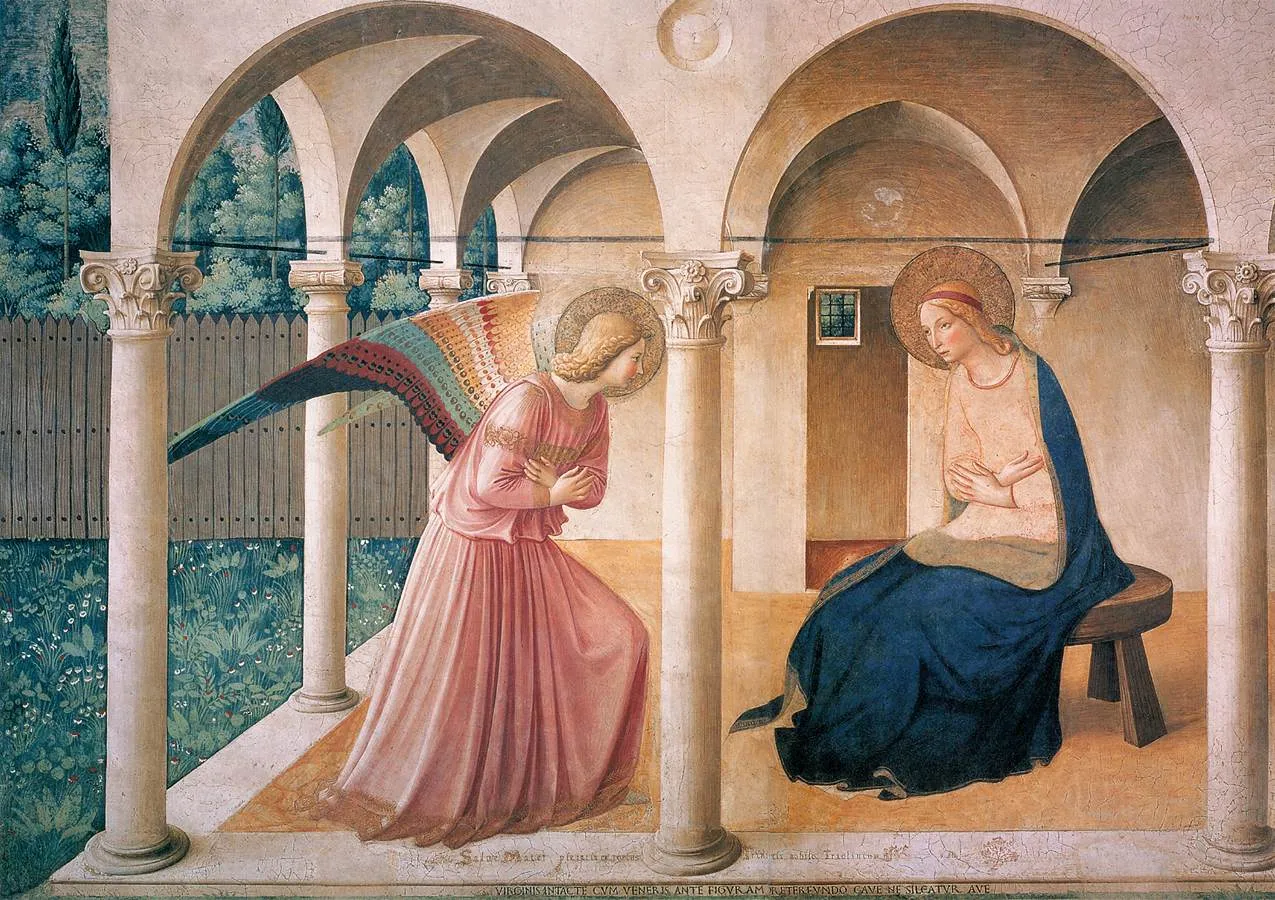
"Fra Angelico - The Annunciation" by Fra Angelico / Wikimedia Commons.
The fresco painting technique became a hallmark of Renaissance art in Italy between the 14th and 16th centuries. Fresco involves applying pigments directly onto freshly laid wet plaster, allowing the colors to become a permanent part of the wall. This method allowed artists to create large and vibrant murals in churches, palaces, and public buildings that have lasted for centuries.
During the Renaissance, cities like Florence and Rome became famous for their patronage of the arts. Wealthy families, such as the Medici, commissioned artists to decorate important spaces. The process of fresco painting required careful planning. Artists would first prepare a rough sketch, called a cartoon, on paper. Then, they transferred the outline to the wet plaster using a method called pouncing—pricking holes along the lines and dusting charcoal through them. Time was critical, as the painter had to apply pigments before the plaster dried. If the plaster set too quickly, mistakes could not be easily fixed.
One of the most famous examples is Michelangelo’s ceiling in the Sistine Chapel, painted between 1508 and 1512 in Vatican City. Michelangelo faced many challenges, including the physical strain of working on high scaffolding and the need to paint quickly. He used natural pigments mixed with water, which chemically bonded with the lime-rich plaster as it dried. This chemical reaction is what makes frescoes so durable. Other notable works include Giotto’s frescoes in the Scrovegni Chapel in Padua (early 1300s) and Raphael’s frescoes in the Vatican’s Raphael Rooms (early 1500s). Archeological evidence and written records from the period show that artists sometimes had skilled assistants to help mix plaster and pigments, and that they often divided large walls into sections called giornata—the amount an artist could paint in a day.
The permanence of frescoes made them ideal for communicating important stories and religious messages to the public. However, the speed required meant artists had to be confident and skilled. Fresco painting influenced the development of later art forms and helped spread Renaissance ideas across Europe. Today, these masterpieces teach us about the values, beliefs, and daily life of Renaissance society, as well as the scientific understanding of materials and techniques in that era.
Fresco painting connects to bigger historical themes, including the role of art in society, the impact of technology and science on culture, and how geography shaped artistic traditions in Italy and beyond.
Interesting Fact: Some Renaissance frescoes, like those in Florence’s Brancacci Chapel, have survived floods and centuries of wear, showing how effective the technique was in creating lasting art.
What is fresco painting?
Painting on wet plasterSculpting from stonePainting on canvasCarving wood
Who painted the Sistine Chapel ceiling?
Leonardo da VinciGiottoMichelangeloRaphael
What made frescoes last a long time?
Chemical bond in wet plasterOil paint dries slowlyUse of gold leafPainted on wood panels
Which city was famous for Renaissance art patronage?
FlorenceLondonParisMadrid
Why did artists divide walls into sections (giornata)?
To paint quickly before plaster driedTo use different colorsTo save moneyTo let assistants work alone
How did artists transfer the cartoon to plaster?
By pouncing with charcoalBy carving itBy gluing paperBy tracing with a pen
Fresco painting required artists to work slowly. True or false?
TrueFalse
What does 'patronage' mean?
Support from wealthy peoplePainting very quicklyUsing a cartoonMixing pigments
Perfect For:
👩🏫 Teachers
• Reading comprehension practice
• Auto-graded assessments
• Literacy skill development
👨👩👧👦 Parents
• Reading practice at home
• Comprehension improvement
• Educational reading time
🏠 Homeschoolers
• Reading curriculum support
• Independent reading practice
• Progress monitoring
Reading Features:
📖
Reading Passage
Engaging fiction or nonfiction text
❓
Comprehension Quiz
Auto-graded questions
📊
Instant Feedback
Immediate results and scoring
📄
Printable Version
Download for offline reading
🔊
Read Aloud
Voice-over with word highlighting
Reviews & Ratings
No reviews yet. Be the first to share your experience!
Related Content
Renaissance Clothing
This passage explores the fascinating world of Renaissance fashion clothing in Europe, focusing on how clothing reflecte...
Renaissance Poetry
This engaging world history reading passage introduces students to the Renaissance sonnet, focusing on the influential w...
Renaissance Philosophy
This passage explores the main ideas of Renaissance philosophy, which emerged in Europe during the 14th to 16th centurie...
Renaissance Art
This reading passage examines the enduring legacy of Renaissance art in world history, focusing on key techniques such a...
CA HSS 7.8.3CCSS RH.6-8.2CCSS W.6.2
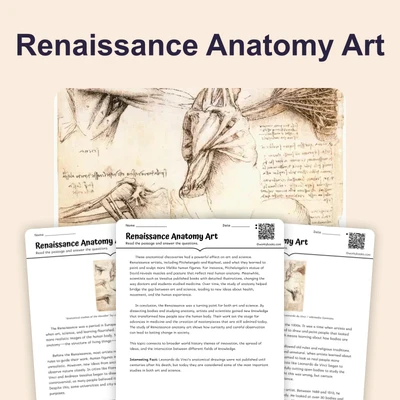
Renaissance Anatomy Art
This engaging passage explores the intersection of art, science, and society during the Renaissance through the lens of ...
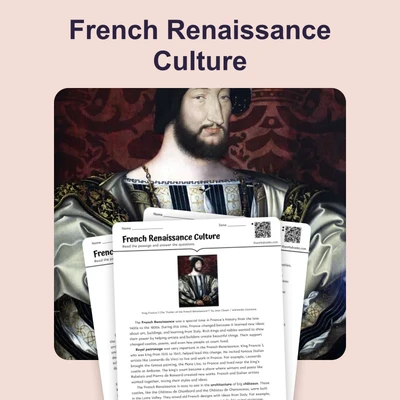
French Renaissance
This passage explores the rich culture of the French Renaissance, focusing on the influence of Italian art and architect...
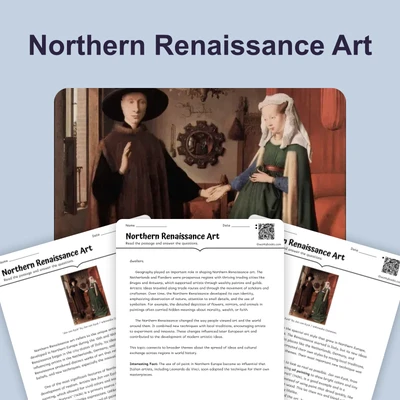
Northern Renaissance
This passage examines the development and significance of Northern Renaissance art, focusing on how Renaissance ideas sp...
Renaissance Art and Artists
This history reading passage delves into the world of Renaissance art, focusing on the revolutionary works and lives of ...
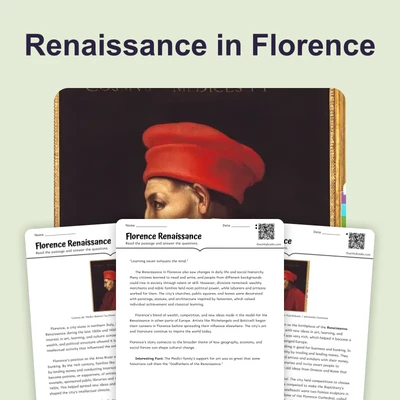
Florence Renaissance
This history reading passage examines Florence during the Renaissance, highlighting its cultural richness, the influence...
Renaissance Humanism
This passage introduces students to the transformative concept of Renaissance Humanism, a philosophical movement that em...
Renaissance Oil Painting
This passage explores the development of oil painting techniques during the Renaissance, focusing on the comparison betw...
Renaissance Impact Today
This engaging world history passage examines the enduring impact of the Renaissance on modern society, focusing on how R...
English Renaissance
This comprehensive passage explores the English Renaissance, a transformative period in England marked by a flourishing ...
Renaissance Education
This engaging history reading passage examines the transformation of education during the Renaissance and its impact on ...
Renaissance Medicine
This engaging world history reading passage explores medical advances during the Renaissance in Europe, focusing on chan...
Renaissance Music
This world history reading passage examines the development of music during the Renaissance, a period of profound cultur...
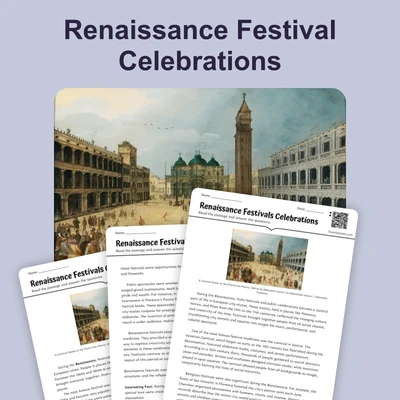
Renaissance Festivals Celebrations
This passage explores the vibrant role of festivals and celebrations during the Renaissance, focusing on how public spec...
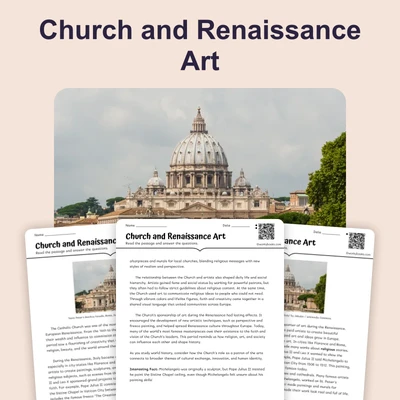
Catholic Church and Renaissance
This passage explores the major role the Catholic Church played as a patron of Renaissance art in Europe. It examines ho...
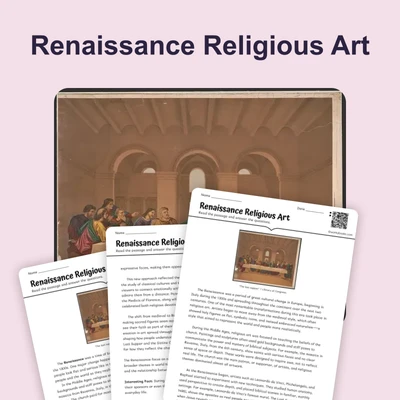
Renaissance Religious Art
This passage explores the dramatic changes in religious art during the Renaissance, focusing on the shift from medieval ...
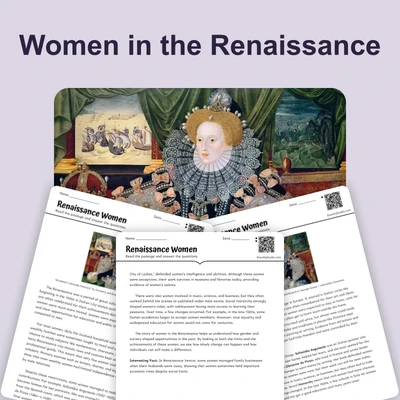
Renaissance Women
This reading passage explores the lives and contributions of women during the Renaissance period in Europe. Students wil...