Giotto di Bondone
Interactive passage with audio narration, comprehension questions, and printable PDF.
By completing this purchase you agree to our Terms of Use and Privacy Policy. Your subscription renews automatically until you cancel. You can cancel anytime from your account settings. All sales are final and non-refundable. Digital content is available for download in your account immediately upon purchase.
What's included
Giotto di Bondone preview and details
About this printable Giotto di Bondone reading passage (Grades 5-8)
Sample passage and quiz from Giotto di Bondone
Reading passage and comprehension quiz preview
Giotto di Bondone: Pioneer of the Proto-Renaissance
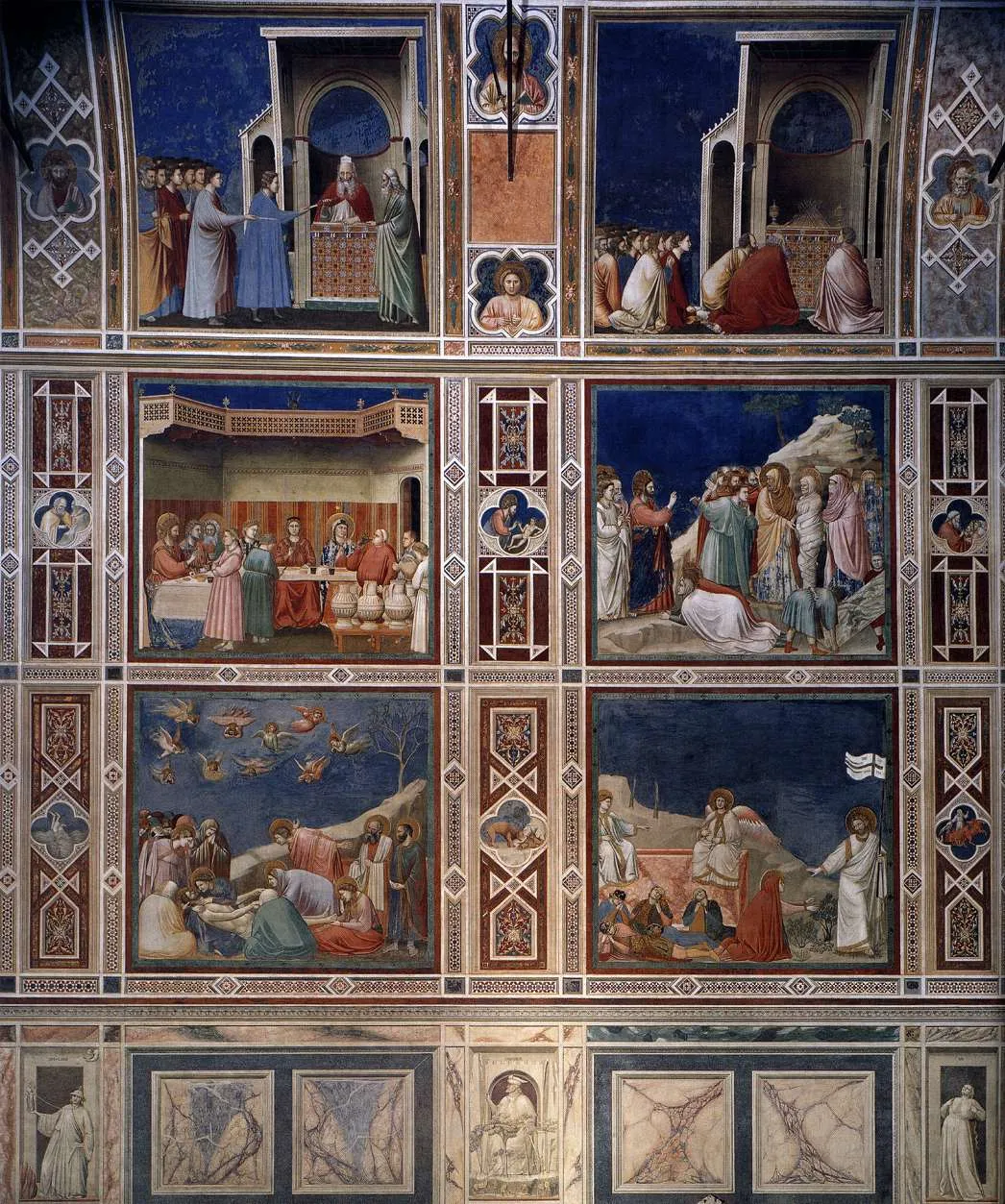
"Giotto di Bondone - Scenes with decorative bands" by Giotto / Wikimedia Commons.
Giotto di Bondone was an Italian painter and architect born around 1267 in the village of Colle di Vespignano near Florence. He is often called the father of European painting and is known for leading a major shift in art during the late Middle Ages. Before Giotto, most European art followed a medieval style called Byzantine, where figures looked flat, stiff, and emotionless. Giotto broke from this tradition by creating paintings that showed lifelike bodies, natural settings, and expressive faces. His work is considered the beginning of the Proto-Renaissance, a period that paved the way for the later Renaissance.
Giotto’s most famous achievement is the series of frescoes he painted between 1303 and 1305 in the Scrovegni Chapel, also known as the Arena Chapel, in Padua, Italy. These frescoes tell important stories from the lives of Jesus and Mary using realistic gestures and emotions. For example, in the scene called 'The Kiss of Judas', Giotto captures the moment of betrayal with dramatic facial expressions and body language. This was very different from earlier art, where such emotions were rarely shown. Giotto’s use of perspective and chiaroscuro (the use of light and shadow) made the scenes appear three-dimensional and more believable to viewers.
Historical evidence about Giotto comes from both primary sources and later accounts. The 14th-century writer Giovanni Villani described Giotto as the most famous painter in Italy. Giorgio Vasari, in his book Lives of the Artists (1550), praised Giotto for “bringing back to light the art of painting, which had been buried for many years.” While some details about Giotto’s early life are debated by historians, most agree that his innovations marked a clear break from medieval traditions. Archaeological studies of the Scrovegni Chapel support the idea that Giotto developed new techniques for preparing and applying paint on wet plaster, allowing for greater realism and durability.
Giotto’s impact on European art was profound. He inspired later artists such as Masaccio and Michelangelo, who built on his ideas during the full Renaissance. The geographic context of Italy, especially the wealthy city-states like Florence and Padua, provided support for artists and allowed new ideas to flourish. By making religious stories feel more human and immediate, Giotto’s art connected with viewers in a way that earlier medieval art had not. This change reflected broader shifts in society, including a growing interest in the individual and the natural world.
In summary, Giotto di Bondone’s revolutionary approach to art helped move Europe from the medieval to the Renaissance era. His use of realistic human emotions, perspective, and light transformed painting and made him a key figure in world history. Giotto’s legacy can still be seen in museums and churches today, reminding us of the power art has to shape how people see themselves and their world.
Interesting Fact: Giotto was so famous in his own time that legend says the King of Naples once asked him to draw a perfect freehand circle as proof of his skill—and Giotto did so without using any tools!
This topic connects to larger themes in world history, such as the development of new artistic styles and the relationship between art, society, and cultural change.
Comprehension quiz (8 questions)
1. Where was Giotto born?
2. What is Giotto's most famous work?
3. When were the Scrovegni Chapel frescoes painted?
4. How did Giotto change art?
5. Why are the Scrovegni Chapel frescoes important?
6. What was the geographic context for Giotto?
7. Giotto painted scenes with no emotions. True or false?
8. What does 'fresco' mean?
Perfect for the way you teach
- Build comprehension skills
- Auto-graded quiz
- Differentiated reading
- Read together at home
- Improve fluency
- Quiet reading time
- Reading curriculum support
- Independent practice
- Track Lexile growth