How and Where Do Ore Deposits Form
Interactive passage with audio narration, comprehension questions, and printable PDF.
By completing this purchase you agree to our Terms of Use and Privacy Policy. Your subscription renews automatically until you cancel. You can cancel anytime from your account settings. All sales are final and non-refundable. Digital content is available for download in your account immediately upon purchase.
What's included
How and Where Do Ore Deposits Form preview and details
About this printable How and Where Do Ore Deposits Form science reading passage, NGSS-aligned (Grades 6-8)
Sample passage and quiz from How and Where Do Ore Deposits Form
Reading passage and comprehension quiz preview
How and Where Ore Deposits Form
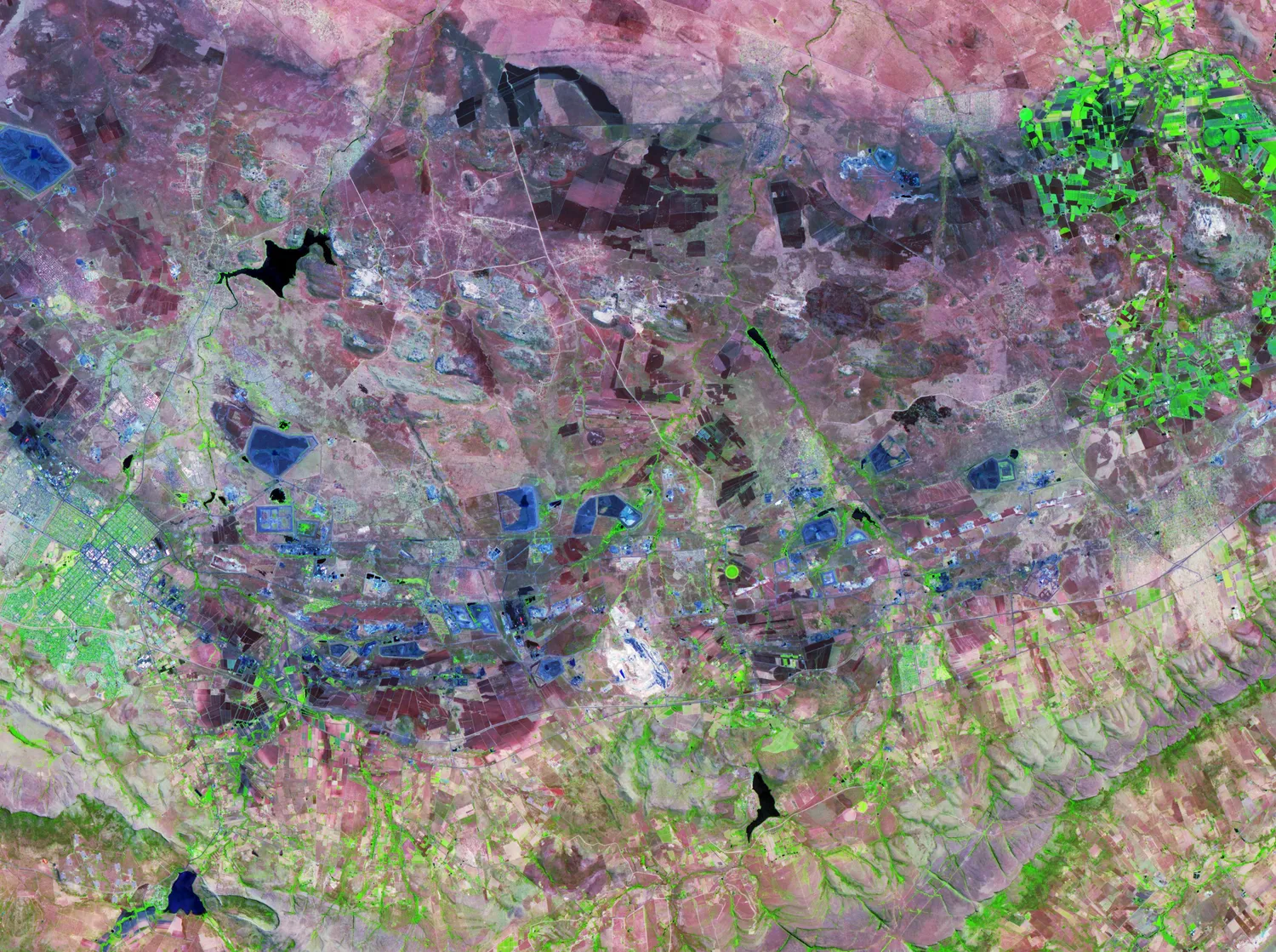
"Bushveld Igneous Complex, South Africa (ASTER)" by NASA/METI/AIST/Japan Space Systems, and U.S./Japan ASTER Science Team / Wikimedia Commons
An ore deposit is a natural concentration of minerals that contains valuable metals or other materials in amounts large enough to be mined profitably. These deposits do not form randomly across Earth's surface. Instead, specific geological processes create ore deposits in particular locations, which explains why some regions have abundant mineral resources while others have very few.
One major process that forms ore deposits is magma crystallization. When molten rock, or magma, rises from deep within Earth and begins to cool, different minerals crystallize at different temperatures. Heavy metallic minerals often crystallize first and sink to the bottom of the magma chamber, creating layers rich in valuable metals like chromium, platinum, and nickel. The Bushveld Complex in South Africa formed this way and contains the world's largest reserves of platinum. This process takes millions of years and requires specific conditions of temperature and pressure found only in certain geological settings.
A second important process involves hydrothermal fluids, which are hot, mineral-rich water solutions that move through cracks and pores in rocks. These fluids form when water is heated by magma or by Earth's internal heat deep underground. As the hot fluids rise toward the surface and cool, dissolved metals precipitate out and fill fractures in rocks, creating veins of ore. Many gold, silver, and copper deposits formed through this process. The famous gold deposits in Nevada and the copper mines in Arizona developed when hydrothermal fluids carried metals upward and deposited them in concentrated zones. This process explains why ore deposits often occur near ancient or active volcanic regions.
Sedimentary concentration represents a third way ore deposits form. This process occurs when flowing water or wind transports and sorts mineral particles based on their size and density. Heavy minerals like gold, tin, and diamonds settle out first in stream beds or along coastlines, creating placer deposits. Over time, these concentrated minerals can become buried and preserved in sedimentary rock layers. The California Gold Rush of 1849 focused on placer deposits in stream gravels. Some sedimentary ore deposits also form when minerals precipitate directly from water in lakes or oceans, creating layers of iron, manganese, or other valuable materials.
The uneven distribution of mineral resources across Earth results directly from these geological processes occurring in specific locations over millions of years. Plate tectonics plays a crucial role by creating the conditions necessary for ore formation. Volcanic activity at plate boundaries produces magma and hydrothermal systems. Mountain building exposes ancient ore deposits formed deep underground. Past climates and ocean conditions influenced where sedimentary ores accumulated. This means countries sitting on old continental cores or near active plate boundaries often have more mineral wealth than regions with different geological histories.
Understanding how and where ore deposits form helps geologists predict where to search for new mineral resources. It also explains why mining operations cluster in certain regions and why some nations have greater access to specific minerals than others. The geological processes that created ore deposits millions of years ago continue to shape global economies and resource distribution today.
Interesting Fact: The largest copper deposit ever discovered, the Chuquicamata mine in Chile, formed from hydrothermal fluids over 30 million years ago and contains enough copper ore to fill more than 50,000 Olympic-sized swimming pools.
Comprehension quiz (10 questions)
1. What is an ore deposit?
2. During magma crystallization, what happens to heavy metallic minerals?
3. What are hydrothermal fluids?
4. How do placer deposits form?
5. Why are ore deposits often found near volcanic regions?
6. Which process explains the California Gold Rush deposits of 1849?
7. What role does plate tectonics play in ore deposit formation?
8. According to the passage, why do some countries have more mineral wealth than others?
9. True or False: All three ore-forming processes (magma crystallization, hydrothermal fluids, and sedimentary concentration) happen quickly, taking only a few years.
10. True or False: The Bushveld Complex in South Africa contains the world's largest reserves of platinum and formed through magma crystallization.
Perfect for the way you teach
- Build comprehension skills
- Auto-graded quiz
- Differentiated reading
- Read together at home
- Improve fluency
- Quiet reading time
- Reading curriculum support
- Independent practice
- Track Lexile growth