How Does Deforestation Change Earth's Systems
Interactive passage with audio narration, comprehension questions, and printable PDF.
By completing this purchase you agree to our Terms of Use and Privacy Policy. Your subscription renews automatically until you cancel. You can cancel anytime from your account settings. All sales are final and non-refundable. Digital content is available for download in your account immediately upon purchase.
What's included
How Does Deforestation Change Earth's Systems preview and details
About this printable How Does Deforestation Change Earth's Systems science reading passage, NGSS-aligned (Grades 6-8)
Sample passage and quiz from How Does Deforestation Change Earth's Systems
Reading passage and comprehension quiz preview
How Deforestation Affects Earth
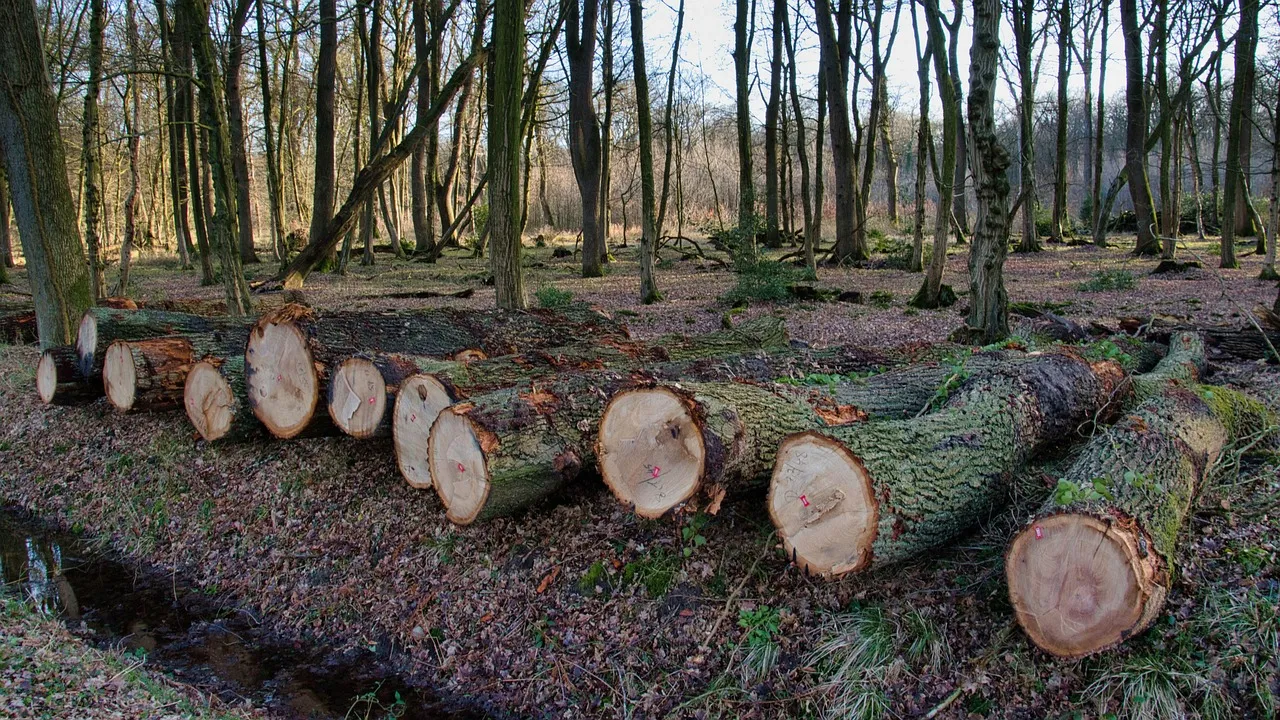
Deforestation is the permanent removal of trees and forests from large areas of land. When humans cut down forests for agriculture, lumber, or development, they disrupt natural systems that have existed for thousands of years. Forests cover about 30% of Earth's land surface and play essential roles in maintaining the planet's health. Understanding how deforestation affects Earth helps us recognize the importance of protecting these vital ecosystems.
Forests act as massive carbon storage systems through a process called photosynthesis. Trees absorb carbon dioxide from the atmosphere and convert it into oxygen and plant material. A single mature tree can absorb approximately 48 pounds of carbon dioxide per year. When forests are cut down, this carbon storage stops immediately. Even worse, the carbon stored in trees gets released back into the atmosphere when wood decays or burns. This release of carbon dioxide contributes to the greenhouse effect, which traps heat in Earth's atmosphere and leads to global warming. Scientists estimate that deforestation accounts for about 10% of all human-caused greenhouse gas emissions.
The water cycle depends heavily on forests to function properly. Trees pull water from the soil through their roots and release it into the air through tiny pores in their leaves in a process called transpiration. This moisture rises into the atmosphere and forms clouds, which eventually produce rainfall. When large forest areas are removed, transpiration decreases dramatically. Regions that once received regular rainfall may experience drought conditions. The Amazon rainforest, for example, generates about half of its own rainfall through transpiration. Deforestation in the Amazon has already begun changing regional weather patterns, with some areas receiving 25% less rainfall than before.
Forests provide critical habitat for approximately 80% of Earth's terrestrial plant and animal species. When forests disappear, so do the homes and food sources for countless organisms. This loss of biodiversity weakens entire ecosystems. Many species cannot survive in the fragmented patches of forest that remain after deforestation. Scientists estimate that we lose dozens of species every day due to habitat destruction, and most of these losses occur in tropical forests. The loss of biodiversity affects humans too, as many medicines come from forest plants and animals.
Tree roots hold soil in place like an underground net. When forests are removed, soil becomes vulnerable to erosion from wind and rain. Without root systems to anchor it, topsoil washes away into rivers and streams. This eroded soil clogs waterways, harms aquatic ecosystems, and reduces water quality. The loss of nutrient-rich topsoil also makes land less productive for farming. In Madagascar, deforestation has caused such severe erosion that rivers run red with soil, and the ocean near the coast appears rust-colored from satellite images.
Forests provide numerous ecosystem services that benefit humans and nature. These services include cleaning air and water, preventing floods, maintaining soil fertility, and regulating local temperatures. Forests also support the livelihoods of over 1.6 billion people worldwide who depend on them for food, medicine, and income. When deforestation occurs, these valuable services disappear, often forcing communities to find alternatives that cost more money and provide fewer benefits.
Protecting existing forests and replanting trees in deforested areas can help reverse some of these harmful effects. While young forests cannot immediately replace the ecosystem services of old-growth forests, they do begin absorbing carbon dioxide, stabilizing soil, and providing habitat. Understanding the connections between forests and Earth's natural systems helps us make better decisions about land use and conservation.
Interesting Fact: The world loses an area of forest equivalent to 27 soccer fields every single minute, yet forests produce about 28% of the oxygen we breathe.
Comprehension quiz (10 questions)
1. What is deforestation?
2. How much carbon dioxide can a single mature tree absorb per year?
3. What is transpiration?
4. According to the passage, what percentage of Earth's terrestrial species depend on forests for habitat?
5. Why does deforestation lead to increased soil erosion?
6. How has deforestation affected rainfall in some parts of the Amazon rainforest?
7. What happens to the carbon stored in trees when forests are cut down and the wood decays or burns?
8. Which of the following is NOT mentioned as an ecosystem service provided by forests?
9. True or False: Young replanted forests can immediately provide all the same ecosystem services as old-growth forests.
10. True or False: Deforestation accounts for approximately 10% of all human-caused greenhouse gas emissions.
Perfect for the way you teach
- Build comprehension skills
- Auto-graded quiz
- Differentiated reading
- Read together at home
- Improve fluency
- Quiet reading time
- Reading curriculum support
- Independent practice
- Track Lexile growth