How Did Rachel Carson Change Environmental Science
Interactive passage with audio narration, comprehension questions, and printable PDF.
By completing this purchase you agree to our Terms of Use and Privacy Policy. Your subscription renews automatically until you cancel. You can cancel anytime from your account settings. All sales are final and non-refundable. Digital content is available for download in your account immediately upon purchase.
What's included
How Did Rachel Carson Change Environmental Science preview and details
About this printable How Did Rachel Carson Change Environmental Science science reading passage, NGSS-aligned (Grades 6-8)
Sample passage and quiz from How Did Rachel Carson Change Environmental Science
Reading passage and comprehension quiz preview
Rachel Carson and the Environmental Movement
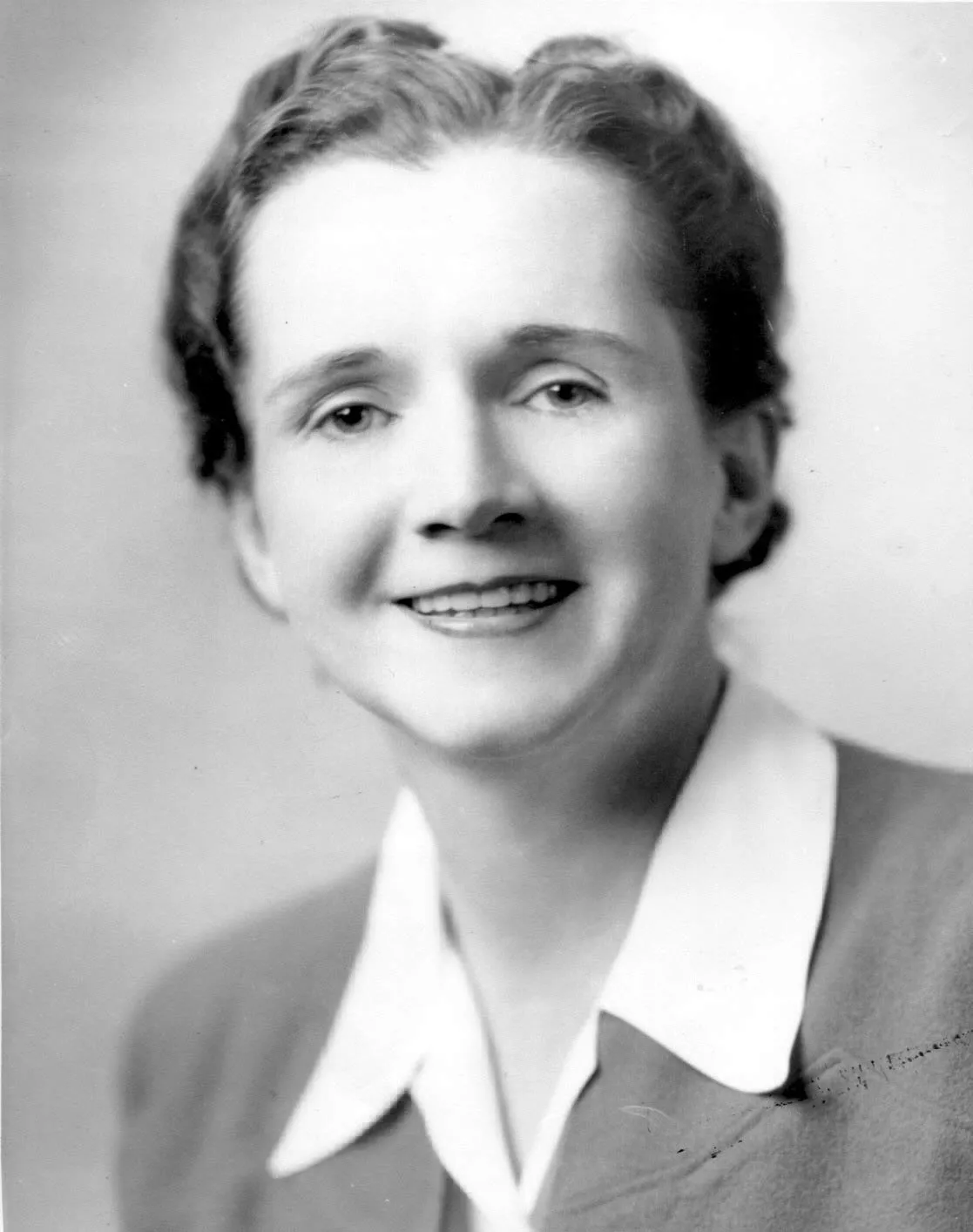
"Rachel-Carson" by U.S. Fish and Wildlife Service / Wikimedia Commons.
Rachel Carson was a marine biologist who changed how humans think about their relationship with Earth's ecosystems. In 1962, she published a book called Silent Spring that documented the harmful effects of pesticides on the environment. Carson used careful scientific observation and data collection to show how chemicals designed to kill insects were actually damaging entire ecosystems. Her work demonstrated that human activities could have widespread, unintended consequences on natural systems.
Carson focused much of her research on a pesticide called DDT, which farmers and homeowners widely used to control insects. Through her investigation, she discovered that DDT did not simply disappear after killing target pests. Instead, the chemical remained in the environment and moved through food chains. Small organisms absorbed DDT from contaminated soil and water. When larger animals ate these organisms, the DDT transferred to them. This process, called bioaccumulation, caused DDT concentrations to increase at each level of the food chain. Birds at the top of food chains, such as eagles and hawks, accumulated so much DDT that their eggshells became too thin to protect developing chicks.
Carson's approach to studying pesticides exemplified the scientific method. She gathered evidence from multiple sources, including field observations, laboratory experiments, and reports from other scientists. She interviewed farmers, wildlife managers, and medical professionals to understand the full scope of pesticide impacts. Carson analyzed this data systematically and drew conclusions based on patterns she observed. When chemical companies challenged her findings, she defended her work with detailed references to peer-reviewed research. This evidence-based approach gave her arguments credibility and made them difficult to dismiss.
The publication of Silent Spring created immediate controversy. Chemical companies launched aggressive campaigns to discredit Carson's work, but she remained committed to presenting scientific facts. Her testimony before Congress in 1963 helped lawmakers understand the need for stronger environmental regulations. Carson explained complex scientific concepts in language that non-scientists could understand, making her research accessible to the general public. This ability to communicate science effectively proved crucial in building support for environmental protection.
Carson's work led to significant changes in public policy. In 1972, the United States banned DDT for most uses. The government established the Environmental Protection Agency in 1970, partly in response to concerns Carson raised. New laws required testing of chemicals before widespread use and gave citizens the right to know about environmental hazards. These policy changes showed how scientific research could inform government decisions and protect Earth's systems. Carson's legacy extends beyond specific regulations—she helped create a broader understanding that human activities must be evaluated for their environmental impact.
The environmental movement that Carson sparked continues today. Her work established the principle that scientists have a responsibility to share their findings with the public, especially when those findings reveal threats to health and ecosystems. Modern environmental science builds on Carson's approach by using evidence to guide decisions about climate change, pollution, and conservation. Her example shows that individual scientists can make a difference by carefully documenting problems, communicating clearly, and advocating for science-based solutions.
Interesting Fact: Rachel Carson died in 1964, just two years after publishing Silent Spring, but she lived long enough to see President Kennedy's Science Advisory Committee support her findings about pesticide dangers.
Comprehension quiz (10 questions)
1. What was Rachel Carson's profession?
2. What was the name of Rachel Carson's influential book published in 1962?
3. What does bioaccumulation mean in the context of the passage?
4. How did DDT affect birds at the top of food chains?
5. Which method did Carson use to gather evidence for her research?
6. What happened to DDT in the United States in 1972?
7. Why was Carson's ability to communicate science to non-scientists important?
8. When was the Environmental Protection Agency established?
9. Rachel Carson lived to see the complete ban of DDT in the United States.
10. Chemical companies supported Carson's findings when Silent Spring was first published.
Perfect for the way you teach
- Build comprehension skills
- Auto-graded quiz
- Differentiated reading
- Read together at home
- Improve fluency
- Quiet reading time
- Reading curriculum support
- Independent practice
- Track Lexile growth