How Do Glaciers Store Water
Interactive passage with audio narration, comprehension questions, and printable PDF.
By completing this purchase you agree to our Terms of Use and Privacy Policy. Your subscription renews automatically until you cancel. You can cancel anytime from your account settings. All sales are final and non-refundable. Digital content is available for download in your account immediately upon purchase.
What's included
How Do Glaciers Store Water preview and details
About this printable How Do Glaciers Store Water science reading passage, NGSS-aligned (Grades 5-8)
Sample passage and quiz from How Do Glaciers Store Water
Reading passage and comprehension quiz preview
How Do Glaciers Store Water
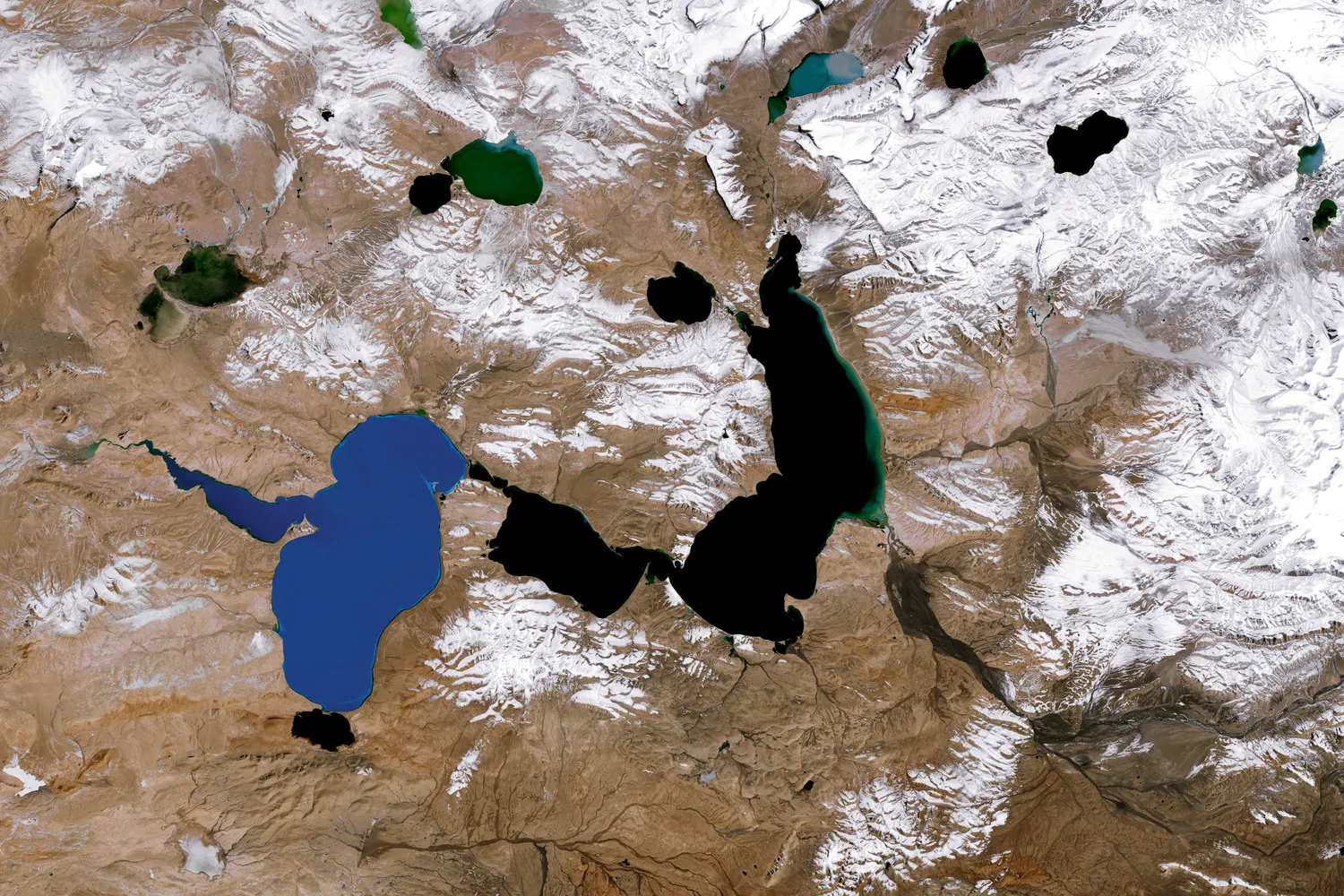
"Shrinking Glaciers and Growing Lakes 1987" by NASA Earth Observatory images by Joshua Stevens, using Landsat data from the U.S. Geological Survey. Story by Adam Voiland. / Wikimedia Commons
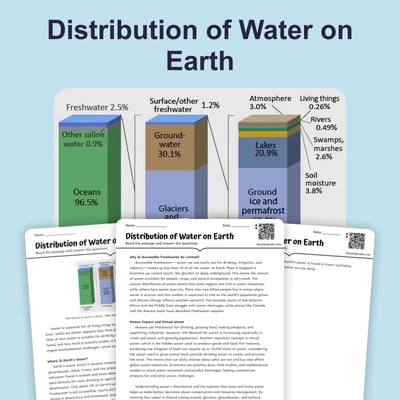
Glaciers store water by holding it as ice for long periods of time. These massive bodies of ice contain 69% of all freshwater on Earth. Glaciers form over centuries when snow falls and does not melt completely during summer. Each winter, new snow layers pile on top of older snow. The weight of upper layers presses down on lower layers. This pressure turns snow into dense ice through a process called compaction.
Scientists explain that glacier formation requires specific conditions. Temperatures must stay cold enough to prevent complete melting. Evidence shows that snow transforms into ice through several stages. First, loose snow becomes granular ice called firn. Over decades, firn compresses further into solid glacial ice. The ice can reach depths of several hundred meters. Glaciers move slowly downhill due to gravity and the weight of accumulated ice. This movement is called glacial flow. As glaciers flow, they carry stored water from high elevations to lower areas.
Glaciers play a critical role in supplying freshwater to human populations. Major rivers like the Ganges, Indus, and Yangtze begin in glacier-fed mountain regions. These rivers provide water to approximately 1.6 billion people across Asia. During dry seasons, glacial meltwater becomes especially important for agriculture and drinking water. Glacier National Park in Montana demonstrates how climate affects these ice reserves. The park had 150 glaciers in 1850. Today, only 25 glaciers remain. Rising temperatures cause glaciers to lose ice faster than new snow can replace it. This process is called glacier retreat.
Understanding glacier water storage matters for Earth's future. Glaciers act as natural water towers that release water gradually. They help regulate river flow throughout the year. When glaciers shrink, the water supply for billions of people may decrease. Scientists monitor glacier changes to predict water availability. This research helps communities plan for climate-related water challenges. Glaciers connect mountain environments to distant ecosystems through the water cycle. Protecting these ice formations supports both natural systems and human societies.
Interesting Fact: If all glaciers and ice sheets melted, global sea levels would rise approximately 70 meters. This would flood most coastal cities around the world.
Comprehension quiz (10 questions)
1. What percentage of Earth's freshwater do glaciers store?
2. What is the process called when snow is pressed into dense ice?
3. What is firn?
4. How many people in Asia depend on glacier-fed rivers for water?
5. Based on the passage, why is glacial meltwater especially important during dry seasons?
6. What evidence shows that climate change is affecting glaciers?
7. How do glaciers help regulate river flow?
8. If you wanted to apply what you learned about glacier formation to predict where new glaciers might form, which conditions would be most important?
9. True or False: Glaciers form in just a few years when snow accumulates.
10. True or False: When glaciers shrink due to warming temperatures, the water supply for people downstream may decrease.
Perfect for the way you teach
- Build comprehension skills
- Auto-graded quiz
- Differentiated reading
- Read together at home
- Improve fluency
- Quiet reading time
- Reading curriculum support
- Independent practice
- Track Lexile growth