How Does Water Infiltrate the Ground
Interactive passage with audio narration, comprehension questions, and printable PDF.
By completing this purchase you agree to our Terms of Use and Privacy Policy. Your subscription renews automatically until you cancel. You can cancel anytime from your account settings. All sales are final and non-refundable. Digital content is available for download in your account immediately upon purchase.
What's included
How Does Water Infiltrate the Ground preview and details
About this printable How Does Water Infiltrate the Ground science reading passage, NGSS-aligned (Grades 6-8)
Sample passage and quiz from How Does Water Infiltrate the Ground
Reading passage and comprehension quiz preview
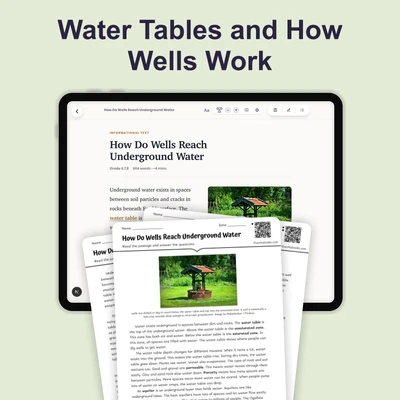
How Does Water Infiltrate the Ground
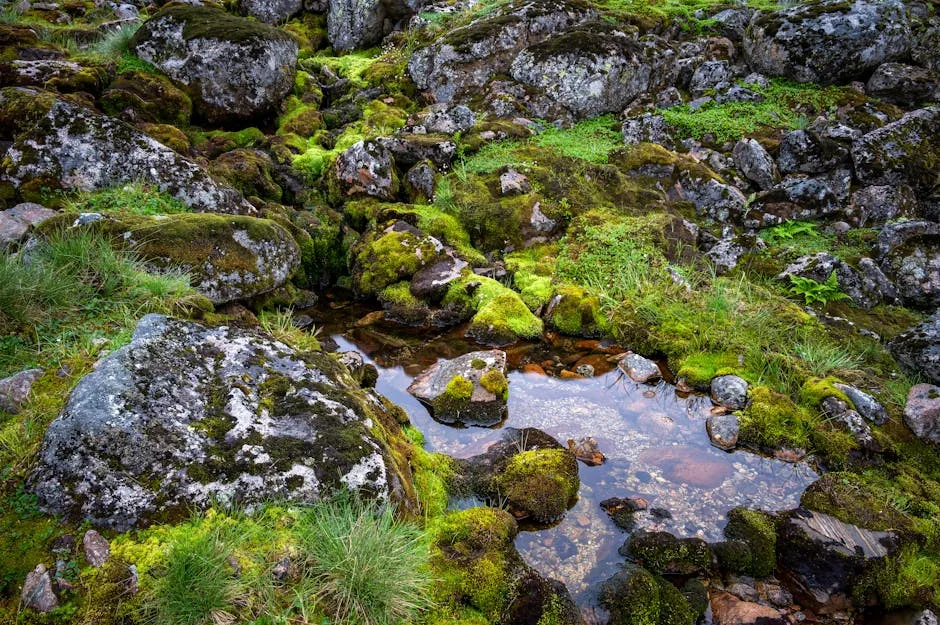
Several factors determine how quickly water infiltrates the ground. The type of soil makes a major difference in infiltration rate, which measures how fast water enters the soil. Image by Replenishman PhotoBlogger / Pexels.
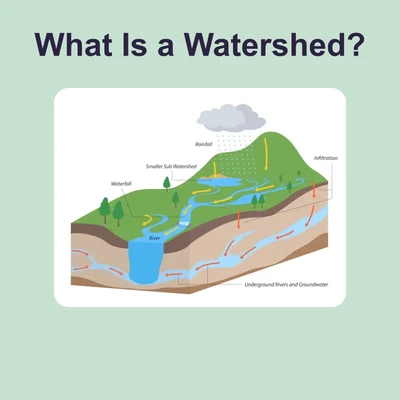
When rain falls on the ground, some water flows across the surface into streams and rivers. However, much of this water soaks into the soil through a process called infiltration. Infiltration is the movement of water from the surface down into the soil and rock layers below. This process is essential for replenishing underground water supplies and maintaining the water cycle.
Several factors determine how quickly water infiltrates the ground. The type of soil makes a major difference in infiltration rate, which measures how fast water enters the soil. Sandy soil has large spaces between particles, allowing water to infiltrate quickly. Clay soil has tiny particles packed closely together, so water infiltrates much more slowly. The amount of vegetation also affects infiltration because plant roots create channels in the soil that help water move downward. Additionally, the slope of the land matters—water infiltrates more slowly on steep slopes because it runs off before it can soak in.
After water infiltrates the surface, it continues moving downward through a process called percolation. Percolation is the downward movement of water through soil and rock layers under the influence of gravity. As water percolates, it passes through materials with different properties. Permeable materials like sand, gravel, and fractured rock allow water to flow through them easily. In contrast, impermeable materials like clay and solid rock block water movement.
The ability of rock or soil to hold water depends on its porosity, which refers to the amount of empty space between particles. High porosity means more space for water storage. However, porosity alone does not determine how well water moves through a material. Permeability measures how easily water can flow through the connected spaces in rock or soil. A material can have high porosity but low permeability if the pores are not connected, like in pumice stone.
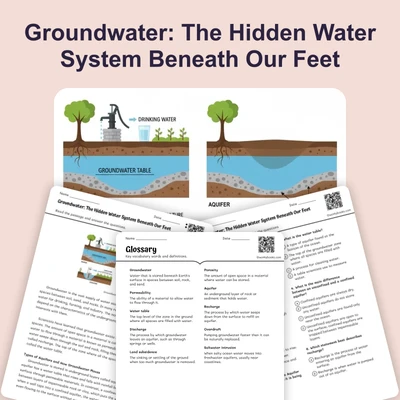
Underground water flows in specific directions based on gravity and pressure differences. Water generally moves from areas of higher elevation to lower elevation, following the slope of the underground rock layers. The speed of underground flow varies greatly depending on permeability. Water might move several meters per day through gravel but only a few centimeters per year through dense clay. When water reaches an impermeable layer, it cannot move downward anymore and begins to accumulate, forming an aquifer—an underground layer of permeable rock that stores water.
Understanding infiltration and percolation helps scientists predict where groundwater will collect and how quickly it moves. This knowledge is crucial for managing water resources, especially in areas that depend on wells for drinking water. Human activities like paving roads and building parking lots reduce infiltration by covering soil with impermeable surfaces, which can lead to more flooding and less groundwater recharge.
Interesting Fact: In some limestone regions, water can dissolve rock as it percolates underground, creating massive cave systems over thousands of years. The world's longest known cave system, Mammoth Cave in Kentucky, has over 400 miles of explored passages formed by this process.
Comprehension quiz (10 questions)
1. What is infiltration?
2. Which type of soil allows water to infiltrate most quickly?
3. What does the term 'percolation' refer to?
4. Based on the passage, why do plant roots help increase infiltration?
5. What is the difference between porosity and permeability?
6. How does paving roads and parking lots affect infiltration?
7. What happens when water reaches an impermeable layer underground?
8. According to the passage, water generally moves faster through gravel than through clay.
9. Clay and solid rock are examples of permeable materials.
10. Why is understanding infiltration and percolation important for managing water resources?
Perfect for the way you teach
- Build comprehension skills
- Auto-graded quiz
- Differentiated reading
- Read together at home
- Improve fluency
- Quiet reading time
- Reading curriculum support
- Independent practice
- Track Lexile growth