How Do Humans Degrade and Pollute Soil — Reading Comprehension
Rate this
Premium Resource
Present
Present in classroom. No work saved
Assign
Classroom with student accounts, Track progress
Quick Play
No student accounts, assign with a link
Grades
6
7
8
Standards
MS-ESS3-3
PRINT+DIGITAL RESOURCE
This learning resource is available in interactive and printable formats. The interactive worksheet can be played online and assigned to students. The Printable PDF version can be downloaded and printed for completion by hand.
This comprehensive 600-word reading passage for middle school students (grades 6-8) examines soil pollution and degradation, aligned with NGSS standard MS-ESS3-3. Students explore how pesticides, heavy metals, industrial chemicals, and excess fertilizers contaminate soil and reduce its quality. The passage connects soil degradation to critical environmental issues including reduced food production capacity, groundwater contamination, and the long-term loss of a finite natural resource. Audio-integrated content helps students understand the causes and effects of soil pollution, the movement of contaminants through soil layers, and the importance of protecting this essential resource. The curriculum includes differentiated versions for struggling readers, Spanish translations, comprehensive glossary, multiple-choice questions, writing activities, and graphic organizers. Students develop scientific literacy while learning about human impacts on Earth's systems and the importance of sustainable resource management.
CONTENT PREVIEW
Expand content preview
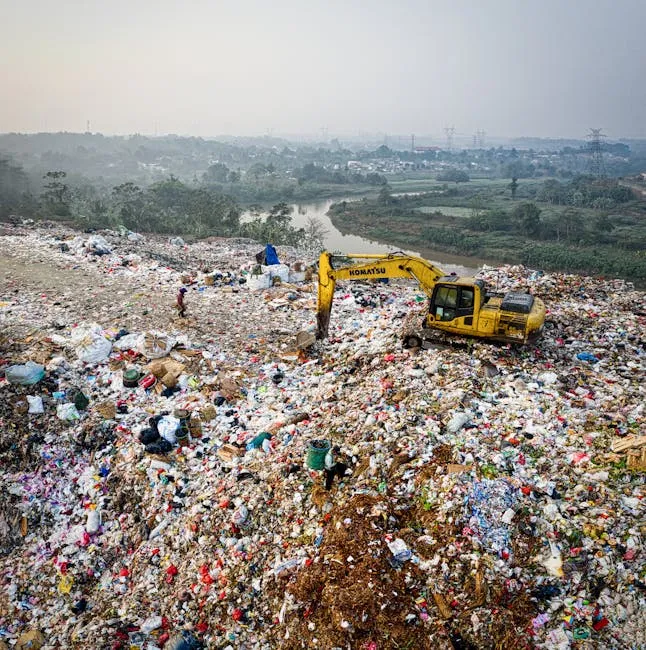
"Heavy machinery operates on a massive landfill, illustrating land and soil degradation." Image by Tom Fisk / Pexels.
Soil is a finite natural resource that takes hundreds to thousands of years to form. Soil pollution occurs when harmful substances contaminate the soil, reducing its quality and ability to support plant life. Soil degradation is the decline in soil quality caused by human activities or natural processes. When soil becomes polluted or degraded, it loses its capacity to grow food, filter water, and support ecosystems.
Four major types of contaminants damage soil quality. Pesticides are chemicals used to kill insects, weeds, and other pests that harm crops. When farmers apply too many pesticides or use them incorrectly, these chemicals accumulate in the soil. Heavy metals like lead, mercury, and cadmium enter soil from industrial waste, mining operations, and improper disposal of electronics. Unlike organic materials that break down over time, heavy metals persist in soil for decades or centuries. Industrial chemicals from factories, oil spills, and waste dumps seep into soil, creating toxic conditions. Finally, excess fertilizers containing nitrogen and phosphorus can saturate soil when applied in amounts greater than plants can absorb.
These contaminants move through soil in predictable ways. When rain falls on contaminated soil, water carries pollutants downward through soil layers in a process called leaching. As water percolates through the soil, it dissolves chemicals and heavy metals, transporting them deeper underground. Eventually, these pollutants reach the groundwater, which is water stored in underground layers of rock and sediment. Once groundwater becomes contaminated, it can take decades or even centuries to clean, affecting drinking water supplies for entire communities.
Soil degradation directly reduces our ability to produce food. Healthy soil contains organic matter, beneficial microorganisms, and essential nutrients that plants need to grow. Contaminated soil disrupts this balance. Heavy metals can be absorbed by crop plants, making food unsafe to eat. Pesticides kill beneficial soil organisms like earthworms and bacteria that help decompose organic matter and cycle nutrients. Excess fertilizers alter soil chemistry, making it too acidic or alkaline for many crops. As soil quality declines, farmers must use more chemicals to maintain crop yields, creating a harmful cycle that further degrades the soil.
The long-term consequences of soil pollution are severe because soil is essentially non-renewable on human timescales. A single inch of topsoil can take 500 years to form through the weathering of rocks and the decomposition of organic matter. When we degrade soil faster than natural processes can restore it, we permanently lose productive land. Globally, soil degradation affects approximately 33% of Earth's land surface. This loss threatens food security for growing human populations and reduces biodiversity as plants and animals lose habitat.
Preventing soil pollution requires changes in agricultural and industrial practices. Farmers can use integrated pest management, which combines biological controls, crop rotation, and minimal chemical use to protect crops. Industries must properly treat and dispose of waste rather than releasing it into the environment. Individuals can reduce soil pollution by properly disposing of household chemicals, batteries, and electronics. Protecting soil means preserving our capacity to grow food and maintain clean water for future generations.
Interesting Fact: Scientists estimate that there are more living organisms in one tablespoon of healthy soil than there are people on Earth, highlighting the incredible biodiversity that soil pollution destroys.
What is soil degradation?
The decline in soil quality caused by human activities or natural processesThe process of creating new soil from rocksThe addition of nutrients to soilThe natural formation of topsoil over time
Which of the following is NOT mentioned as a major soil contaminant in the passage?
The process of adding fertilizers to soilThe removal of heavy metals from groundwaterThe process by which water carries pollutants downward through soil layersThe natural breakdown of pesticides in soil
How long can it take for one inch of topsoil to form?
50 years100 years250 years500 years
According to the passage, how do heavy metals differ from organic materials in soil?
Heavy metals are beneficial to plants while organic materials are harmfulHeavy metals persist for decades or centuries while organic materials break down over timeHeavy metals improve soil quality while organic materials degrade itHeavy metals come only from natural sources while organic materials are man-made
What happens when contaminated water reaches groundwater?
The pollutants immediately disappearThe groundwater naturally filters out all contaminantsIt can take decades or centuries to clean and affects drinking water suppliesThe pollutants evaporate within a few weeks
What is integrated pest management?
Using only chemical pesticides to control pestsCombining biological controls, crop rotation, and minimal chemical use to protect cropsRemoving all insects from farmlandApplying maximum amounts of fertilizers to increase yields
Approximately what percentage of Earth's land surface is affected by soil degradation?
10%20%33%50%
Soil is considered a renewable resource that can be quickly replaced.
TrueFalse
Excess fertilizers can make soil too acidic or alkaline for many crops to grow.
TrueFalse
Perfect For:
👩🏫 Teachers
• Reading comprehension practice
• Auto-graded assessments
• Literacy skill development
👨👩👧👦 Parents
• Reading practice at home
• Comprehension improvement
• Educational reading time
🏠 Homeschoolers
• Reading curriculum support
• Independent reading practice
• Progress monitoring
Reading Features:
📖
Reading Passage
Engaging fiction or nonfiction text
❓
Comprehension Quiz
Auto-graded questions
📊
Instant Feedback
Immediate results and scoring
📄
Printable Version
Download for offline reading
🔊
Read Aloud
Voice-over with word highlighting
Reviews & Ratings
No reviews yet. Be the first to share your experience!
Related Content
Natural Disaster: Volcanic Eruptions
Volcanoes can erupt with lava and ash, changing the landscape. While dangerous, they also create fertile land and new la...
RI.3.1RI.4.4RI.4.2RI.5.2
How Rainforests Help the Planet
MS-LS2-3MS-LS2-5MS-ESS3-3MS-ESS3-5; RST.6-8.1
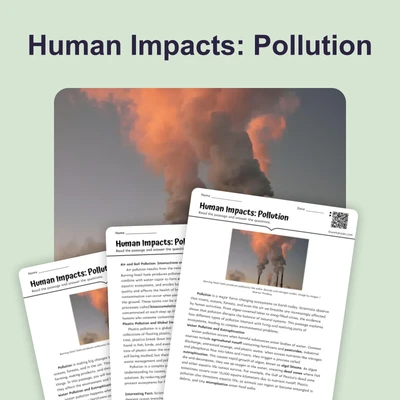
Human Impacts: Pollution
This middle school science reading passage, aligned with NGSS standards MS-LS2-4 and MS-ESS3-3, examines the mechanisms ...
MS-LS2-4MS-ESS3-3
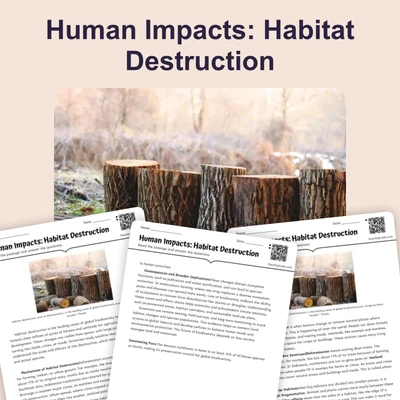
Human Impacts: Habitat Destruction
This grade 6-8 science passage explores human impacts on ecosystems, focusing on habitat destruction as the leading caus...
MS-LS2-4MS-LS2-5MS-ESS3-3
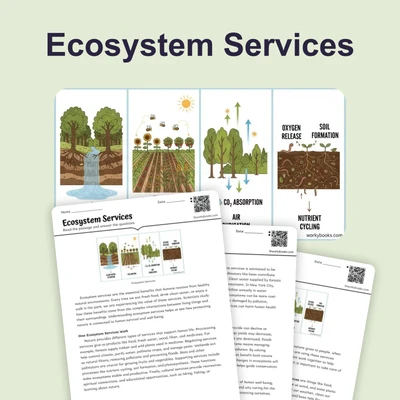
Ecosystem Services
This engaging middle school science passage introduces students to the concept of ecosystem services, the vital benefits...
MS-LS2-5MS-ESS3-3
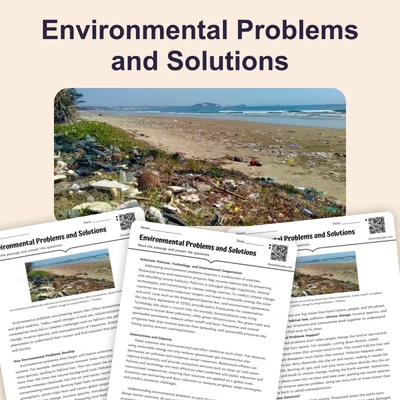
Environmental Problems and Solutions
This passage for grades 6-8 introduces major environmental problems such as habitat loss, pollution, climate change, inv...
MS-LS2-4MS-ESS3-3MS-ESS3-4
Remote Sensing
This middle school science passage introduces students to the concept of remote sensing—the collection of information ab...
MS-ESS3-3MS-PS4-2MS-ETS1-1MS-ETS1-3
Geographic Information Systems (GIS)
This engaging middle school science passage introduces students to Geographic Information Systems (GIS), aligning with N...
MS-ESS3-3MS-ETS1-1MS-ETS1-2MS-ETS1-3
Renewable vs. Nonrenewable Energy
This engaging passage, aligned with NGSS standards MS-PS3-4, MS-ESS3-3, and MS-ESS3-4, helps middle school students diff...
MS-PS3-4MS-ESS3-3MS-ESS3-4
Fossil Fuels: Coal
This middle school science reading passage explores the science behind coal, a major fossil fuel. Students will learn ho...
MS-PS3-4MS-ESS3-3MS-ESS3-4
Solar Energy
This engaging passage for grades 6-8 explores the science of solar energy, focusing on how sunlight is converted into el...
MS-PS3-4MS-ESS3-3MS-ESS3-4
Wind Energy
This comprehensive middle school science passage explores the scientific principles behind wind energy and how wind turb...
MS-PS3-4MS-ESS3-3MS-ESS3-4
Hydroelectric Energy
This comprehensive passage introduces middle school students to the science behind hydroelectric energy, directly aligni...
MS-PS3-4MS-ESS3-3MS-ESS3-4
Geothermal Energy
This comprehensive science passage introduces middle school students to the mechanisms and applications of geothermal en...
MS-PS3-4MS-ESS3-3MS-ESS3-4
Biomass and Biofuels
This NGSS-aligned passage introduces grades 6-8 students to the science of biomass and biofuels, explaining how organic ...
MS-PS3-4MS-ESS3-3MS-ESS3-4
Nuclear Energy as a Resource
This NGSS-aligned informational science passage, designed for grades 6-8, explores nuclear energy as a resource in the c...
MS-PS3-4MS-ESS3-3MS-ESS3-4
Water Quality
This middle school science reading passage covers the topic of water quality, aligned with NGSS standards MS-ESS3-1 and ...
MS-ESS3-1MS-ESS3-3
Florida Everglades
This comprehensive passage introduces middle school students to the Florida Everglades, a distinctive wetland ecosystem ...
MS-LS2-1MS-LS2-4MS-ESS3-3MS-ESS3-4
Congo Rainforest
This middle school science passage explores the Congo Rainforest—Earth’s second-largest rainforest, located in Central A...
MS-LS2-1MS-ESS3-3
Nuclear Power Plants
This comprehensive reading passage introduces middle school students (grades 6-8) to the science of nuclear power plants...