Reading PassagePremium

How Do Tides Affect Coastal Life

Interactive passage with audio narration, comprehension questions, and printable PDF.

No ratings yet
Grades 5–8ScienceElaEnglish · SpanishInteractive · Printable
Aligned toMS-ESS1-2
Just this resource
$1.50
One-time purchase
Best value
Unlock everything
$49.99$29.99/yr
40% off until Aug 1 — 10,000+ resources
Renews at $49.99/year.
Unlock above to use these actions

What's included

Reading passage
Audio narration
Comprehension quiz
Writing activity
Glossary & flashcards
Differentiated version
Spanish translation

How Do Tides Affect Coastal Life preview and details

About this printable How Do Tides Affect Coastal Life science reading passage, NGSS-aligned (Grades 5-8)

This informational science reading passage examines how tides affect coastal life for middle school students in grades 6-8. Aligned with NGSS MS-ESS1-2 and DCI MS-ESS1.B, the passage explores the gravitational forces that create tides and their impact on coastal ecosystems and human activities. Students learn how tide pool organisms like crabs, sea stars, and anemones adapt to changing water levels, how fishing fleets and ports schedule operations around tides, and why coastal communities have followed tidal rhythms for thousands of years. The passage includes audio integration for enhanced accessibility, a Spanish translation, a simplified differentiated version for English Language Learners and struggling readers, and comprehensive activities including multiple-choice questions, writing prompts, and graphic organizers. Key vocabulary terms are highlighted and defined in an integrated glossary to support science literacy development.
Written by Workybooks TeamPublished by Workybooks
Preview

Sample passage and quiz from How Do Tides Affect Coastal Life

Reading passage and comprehension quiz preview

How Do Tides Affect Coastal Life
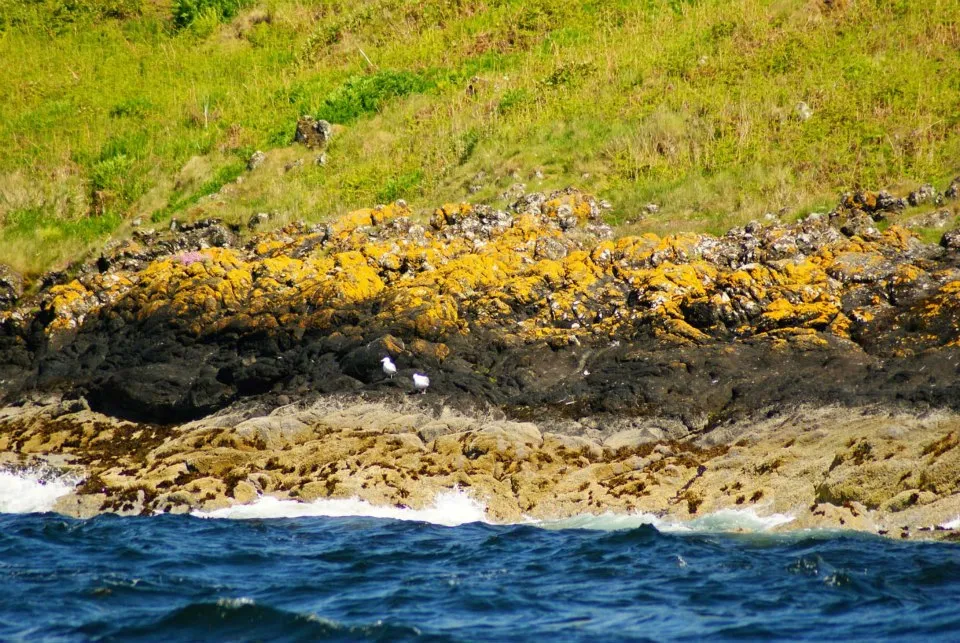
Intertidal zonation
Photograph showing intertidal zonation on the island of Greater Cumbrae, Scotland. Image by Jrockley / Wikimedia Commons

Tides shape coastal life in powerful ways. The gravitational pull of the Moon and Sun causes ocean water to rise and fall twice each day. This creates a rhythm that affects both marine organisms and human communities along coastlines.

The area between high and low tide is called the intertidal zone. This zone experiences dramatic changes every six hours. When the tide is high, seawater covers the rocks and sand. When the tide is low, the same area becomes exposed to air. Scientists observe that organisms living here must survive both underwater and out of water. Tide pools form in rocky areas when seawater gets trapped in depressions. These pools support specialized animals like crabs, sea stars, and anemones. Evidence shows these creatures have adaptations that help them handle temperature changes and varying salt levels.

Humans have also adapted their activities to match tidal patterns. Fishing fleets in places like Alaska and Maine time their trips using tide tables. These tables predict when tides will be high or low. Ports schedule ship arrivals during high tide because deeper water allows large vessels to enter safely. Surfers track tides to find the best waves. In the Bay of Fundy in Canada, tides can change water levels by up to 16 meters. This extreme tidal range affects everything from boat launching to coastal construction.

Understanding tides matters because coastal ecosystems depend on this regular cycle. The mixing of water during tides brings nutrients that support food chains. Tidal movements also help remove pollutants from coastal areas. Coastal communities have followed these rhythms for thousands of years. Modern technology like satellite monitoring helps scientists track tidal patterns more accurately. This information protects both marine life and human activities along our coastlines.

Interesting Fact: Some coastal plants called mangroves have special roots that filter salt from seawater. These trees thrive in the intertidal zone where few other plants can survive.

Comprehension quiz (10 questions)

1. What causes tides to rise and fall twice each day?

The gravitational pull of the Moon and Sun
Wind blowing across the ocean surface
Underwater earthquakes and volcanoes
Changes in water temperature

2. What is the intertidal zone?

The deepest part of the ocean floor
The area between high tide and low tide
A zone where no organisms can survive
The area where rivers meet the ocean

3. Based on the passage, what does the term 'tide tables' mean?

Charts that predict when tides will be high or low
Tables built on beaches for tourists
Lists of all the fish caught each day
Maps showing ocean currents

4. What does the word 'adaptations' mean in the context of the passage?

The process of moving to a new location
Special features that help organisms survive
Changes in ocean temperature
The time between high and low tide

5. Why do ports schedule ship arrivals during high tide?

Because the weather is better during high tide
Because fish are more active during high tide
Because deeper water allows large ships to enter safely
Because workers prefer to work during high tide

6. How do tides benefit coastal ecosystems according to the passage?

They prevent all storms from reaching shore
They bring nutrients and help remove pollutants
They keep water temperature constant
They stop animals from entering tide pools

7. What can you infer about animals living in tide pools?

They can only survive in fresh water
They need constant water temperature to live
They have special abilities to handle changing conditions
They migrate to deeper water every day

8. If you were a fisherman in Alaska, how would understanding tides help you?

You could predict the weather more accurately
You could time your trips for the best fishing conditions
You could avoid all dangerous sea animals
You could catch fish without using bait

9. Tide pools form when seawater gets trapped in rocky depressions during low tide.

True
False

10. The Bay of Fundy in Canada has tidal changes of only a few centimeters.

True
False
Who it's for

Perfect for the way you teach

Teachers
  • Build comprehension skills
  • Auto-graded quiz
  • Differentiated reading
Parents
  • Read together at home
  • Improve fluency
  • Quiet reading time
Homeschoolers
  • Reading curriculum support
  • Independent practice
  • Track Lexile growth
Topics

Reviews & Ratings

No reviews yet. Be the first to share your experience!

More reading you might love

20 more
Passage
Comets - reading educational content
Grades 5–8

Comets

science · MS-ESS1-2

$1.50
Passage
Mercury: Closest to the Sun - reading educational content
Grades 5–8

Mercury: Closest to the Sun

science · MS-ESS1-2

$1.50
Passage
Venus: Earth's Twin? - reading educational content
Grades 5–8

Venus: Earth's Twin?

science · MS-ESS1-2

$1.50
Passage
Earth: Our Home Planet - reading educational content
Grades 5–8

Earth: Our Home Planet

science · MS-ESS1-2

Free
Passage
Mars: The Red Planet - reading educational content
Grades 5–8

Mars: The Red Planet

science · MS-ESS1-2

$1.50
Passage
Kepler's Laws of Planetary Motion - reading educational content
Grades 5–8

Kepler's Laws of Planetary Motion

science · MS-ESS1-2

$1.50
Passage
Tides and Tidal Forces - reading educational content
Grades 5–8

Tides and Tidal Forces

science · MS-ESS1-1

$1.50
Passage
Escape Velocity and Space Travel - reading educational content
Grades 5–8

Escape Velocity and Space Travel

science · MS-ESS1-2

$1.50
Passage
Weightlessness and Microgravity - reading educational content
Grades 5–8

Weightlessness and Microgravity

science · MS-PS2-4

$1.50
Passage
Orbits and Orbital Motion - reading educational content
Grades 5–8

Orbits and Orbital Motion

science · MS-ESS1-2

$1.50
Passage
What Is the Solar System? - reading educational content
Grades 5–8

What Is the Solar System?

science · MS-ESS1-2

$1.50
Passage
Structure of the Solar System - reading educational content
Grades 5–8

Structure of the Solar System

science · MS-ESS1-2

$1.50
Passage
Moons of the Solar System - reading educational content
Grades 5–8

Moons of the Solar System

science · MS-ESS1-2

Free
Passage
Defining Life: What Are We Looking For? - reading educational content
Grades 5–8

Defining Life: What Are We Looking For?

science · MS-LS1-1

$1.50
Passage
 Astronomy - reading educational content
Grades 5–8

Astronomy

earth science · MS-ESS1-2

$1.50
Passage
The Solar System - reading educational content
Grades 5–8

The Solar System

science · MS-ESS1-2

$1.50
Passage
Gravity and Orbits - reading educational content
Grades 5–8

Gravity and Orbits

science · MS-ESS1-2

$1.50
Passage
The Inner Planets - reading educational content
Grades 5–8

The Inner Planets

science · MS-ESS1-2

$1.50
Passage
The Outer Planets - reading educational content
Grades 5–8

The Outer Planets

science · MS-ESS1-2

$1.50
Passage
The Moon's Characteristics - reading educational content
Grades 5–8

The Moon's Characteristics

science · MS-ESS1-1

$1.50
Copyright © 2026 Workybooks. Made with ♥ in California.