How Does Habitat Loss Affect Wildlife
Interactive passage with audio narration, comprehension questions, and printable PDF.
By completing this purchase you agree to our Terms of Use and Privacy Policy. Your subscription renews automatically until you cancel. You can cancel anytime from your account settings. All sales are final and non-refundable. Digital content is available for download in your account immediately upon purchase.
What's included
How Does Habitat Loss Affect Wildlife preview and details
About this printable How Does Habitat Loss Affect Wildlife science reading passage, NGSS-aligned (Grades 6-8)
Sample passage and quiz from How Does Habitat Loss Affect Wildlife
Reading passage and comprehension quiz preview
How Does Habitat Loss Affect Wildlife
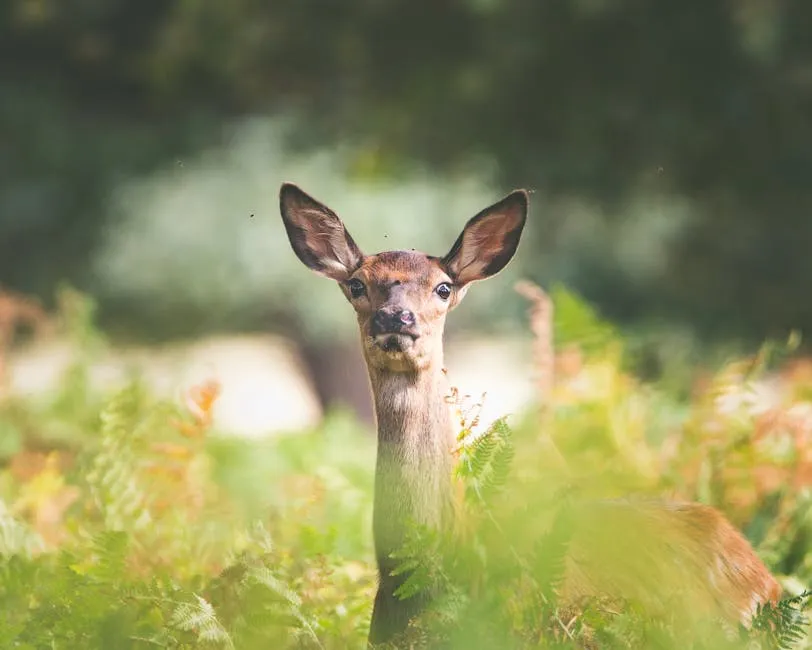
"A deer standing amidst lush green foliage, looking directly at the camera." by Ian Probets / Pexels.
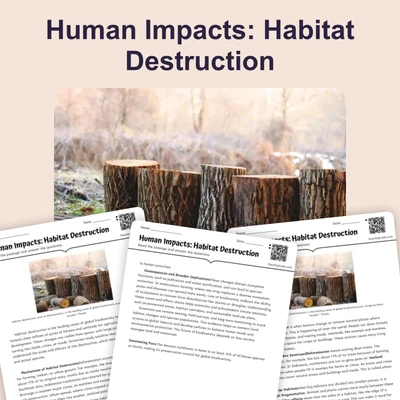
A habitat is the natural environment where a species lives and finds food, water, shelter, and space to reproduce. When humans convert natural areas into farms, cities, or roads, they destroy these habitats. This process, called habitat loss, removes the living space that plants and animals need to survive. Habitat loss is the leading cause of biodiversity decline worldwide, threatening thousands of species with extinction.
Human land use drives most habitat destruction. Forests are cleared for agriculture and timber. Wetlands are drained for development. Grasslands are converted to cropland. As natural areas shrink, the total space available to wildlife decreases. Species that once roamed across large territories now compete for resources in much smaller areas. Many populations decline because their remaining habitat cannot support their original numbers. Some species disappear entirely from regions where they once thrived.
Habitat fragmentation occurs when large, continuous habitats are broken into smaller, isolated pieces. Roads, farms, and cities create barriers that divide natural areas. A forest that once stretched for miles might become several small patches separated by human development. These fragments function differently than intact habitats. Each fragment has more edge area relative to its interior, exposing species to wind, temperature changes, and predators that normally stay outside the habitat. Species that need large territories or deep forest conditions cannot survive in small fragments.
Fragmentation isolates populations, preventing animals from moving between habitat patches. This isolation creates serious problems for species survival. When populations cannot interact, they cannot exchange individuals for breeding. Small, isolated populations lose genetic diversity, the variety of genes within a population. Genetic diversity helps populations adapt to diseases, climate changes, and other challenges. Without it, populations become vulnerable to extinction. If a disease or natural disaster strikes one isolated fragment, the entire population in that patch might die with no possibility of replacement from other areas.
The combination of habitat loss and fragmentation creates a pattern of declining biodiversity. As habitats shrink and break apart, they can support fewer species. Large predators and animals with big territories disappear first. Species that need specific habitat conditions or cannot cross human-modified landscapes become trapped in fragments. Over time, local extinctions accumulate. The Amazon rainforest provides a clear example. Deforestation has removed about 17% of the original forest, and much of what remains exists in fragments. Scientists have documented population declines in hundreds of species, from jaguars to tropical birds, as their habitat shrinks and fragments.
Understanding habitat loss and fragmentation helps explain why protecting large, connected natural areas matters for conservation. Wildlife corridors, strips of natural habitat that connect larger areas, allow animals to move between fragments. These connections maintain genetic diversity and give species access to more resources. Conservation efforts that preserve intact habitats and create corridors can slow biodiversity loss and help species survive in human-dominated landscapes.
Interesting Fact: Scientists estimate that habitat loss and fragmentation threaten approximately 85% of all species listed as endangered or vulnerable on the International Union for Conservation of Nature's Red List.
Comprehension quiz (10 questions)
1. What is the leading cause of biodiversity decline worldwide?
2. What happens when large, continuous habitats are broken into smaller, isolated pieces?
3. What does genetic diversity help populations do?
4. According to the passage, approximately what percentage of the Amazon rainforest has been removed?
5. What is the purpose of wildlife corridors?
6. Why do habitat fragments have different conditions than intact habitats?
7. When populations become isolated, what important process cannot occur?
8. Which species typically disappear first when habitats shrink and fragment?
9. True or False: Habitat loss removes the living space that plants and animals need to survive.
10. True or False: Small, isolated populations maintain high genetic diversity even without contact with other populations.
Perfect for the way you teach
- Build comprehension skills
- Auto-graded quiz
- Differentiated reading
- Read together at home
- Improve fluency
- Quiet reading time
- Reading curriculum support
- Independent practice
- Track Lexile growth