How Does Nuclear Energy Work — Reading Comprehension
Rate this
Premium Resource
Present
Present in classroom. No work saved
Assign
Classroom with student accounts, Track progress
Quick Play
No student accounts, assign with a link
Grades
6
7
8
Standards
MS-ESS3-1
PRINT+DIGITAL RESOURCE
This learning resource is available in interactive and printable formats. The interactive worksheet can be played online and assigned to students. The Printable PDF version can be downloaded and printed for completion by hand.
This comprehensive middle school science reading passage explains how nuclear energy works through the process of nuclear fission. Students learn how splitting uranium atoms releases enormous heat energy used to generate electricity in nuclear power plants. The passage aligns with NGSS MS-ESS3-1 standards and covers key concepts including nuclear fission, chain reactions, nuclear reactors, and electricity generation. Audio-integrated content helps students understand the structure and function of nuclear power plants, the role of control rods in managing reactions, and how heat energy is converted to electrical energy. The passage includes real-world examples, vocabulary support through a comprehensive glossary, and multiple assessment activities including comprehension questions, writing prompts, and graphic organizers. Differentiated versions support English Language Learners and struggling readers while maintaining content depth. Spanish translations ensure accessibility for bilingual students.
CONTENT PREVIEW
Expand content preview
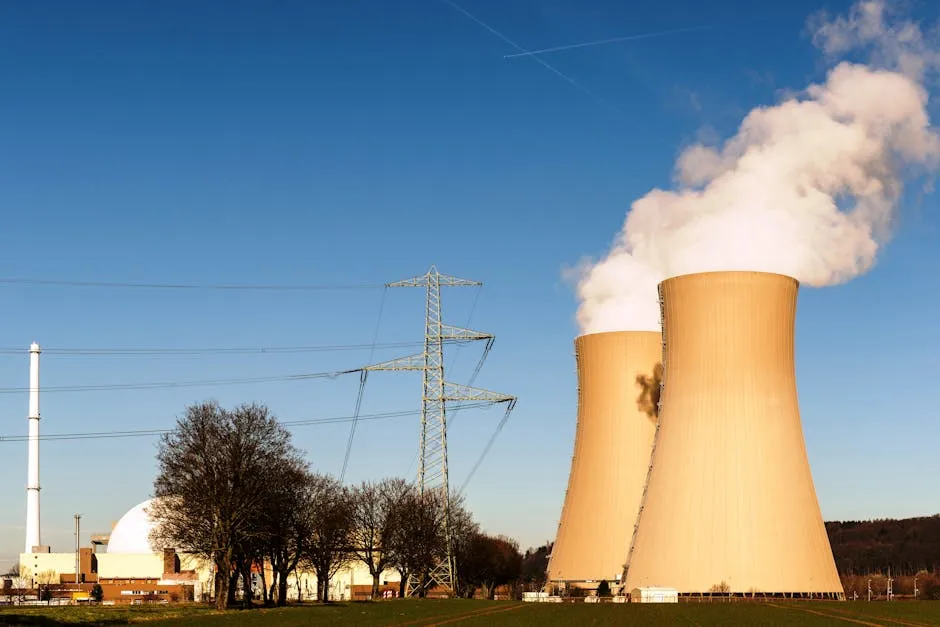
"A nuclear power plant in Hameln, Germany, showcasing cooling towers and electricity pylons." by Wolfgang Weiser / Pexels.
Nuclear energy provides electricity to millions of homes and businesses around the world. This energy comes from nuclear fission, a process where the nucleus of an atom splits into smaller parts. When uranium atoms split, they release enormous amounts of heat energy that can be used to generate electricity in power plants.
The process begins with uranium, a heavy metal element found in rocks. Nuclear power plants use a special type of uranium called uranium-235. When a neutron strikes the nucleus of a uranium-235 atom, the atom becomes unstable and splits apart. This splitting releases heat energy, radiation, and more neutrons. The released neutrons then strike other uranium atoms, causing them to split as well. This continuing process is called a chain reaction.
Inside a nuclear reactor, the chain reaction must be carefully controlled. The reactor contains fuel rods made of uranium pellets stacked inside long metal tubes. Between the fuel rods are control rods made of materials that absorb neutrons. When operators lower the control rods into the reactor, they absorb more neutrons and slow down the chain reaction. When they raise the control rods, more neutrons are available to split uranium atoms, and the reaction speeds up.
The heat produced by nuclear fission is used to boil water and create steam. This steam rushes through pipes to spin large turbines connected to generators. As the turbines rotate, the generators convert the mechanical energy into electrical energy. This electricity then travels through power lines to homes, schools, and businesses. The steam is cooled back into water and recycled through the system again.
Nuclear power plants produce large amounts of electricity without burning fossil fuels like coal or natural gas. A single uranium pellet the size of a fingertip contains as much energy as one ton of coal. However, nuclear fission also produces radioactive waste, materials that emit dangerous radiation for thousands of years. This waste must be stored safely in special containers to protect people and the environment.
Safety systems in nuclear power plants prevent accidents and protect workers. Thick concrete and steel walls surround the reactor to contain radiation. Multiple backup cooling systems ensure the reactor does not overheat. Regular inspections and strict regulations help maintain safe operations. Despite these precautions, accidents at nuclear plants have occurred, leading to concerns about nuclear energy safety.
Interesting Fact: One uranium fuel pellet produces enough energy to power an average home for nearly two months, yet it weighs less than a small grape.
What is nuclear fission?
The process of splitting an atom's nucleus into smaller partsThe process of combining atoms togetherThe process of cooling nuclear reactorsThe process of storing radioactive waste
What happens when a neutron strikes a uranium-235 atom?
The atom becomes larger and heavierThe atom becomes unstable and splits apartThe atom absorbs the neutron and becomes stableThe atom releases only radiation
What is the purpose of control rods in a nuclear reactor?
To produce more uranium fuelTo generate electricity directlyTo absorb neutrons and control the chain reactionTo cool the steam back into water
In the passage, what does the term 'chain reaction' mean?
A reaction that stops after one atom splitsA continuing process where split atoms cause other atoms to splitA reaction that only happens in chainsA reaction that produces chains of molecules
Based on the passage, why is radioactive waste a concern?
It is too expensive to produceIt takes up too much space in power plantsIt emits dangerous radiation for thousands of yearsIt cannot be stored in any containers
How does nuclear fission ultimately produce electricity?
Heat from fission creates steam that spins turbines connected to generatorsRadiation directly powers electrical generatorsUranium atoms produce electricity when they splitControl rods generate electricity when lowered
What can you infer about the energy density of uranium compared to coal?
Coal contains much more energy than uraniumUranium contains vastly more energy in a smaller amountUranium and coal have the same energy contentCoal is more efficient for producing electricity
If a nuclear power plant needed to slow down its chain reaction quickly, what would operators do?
Raise the control rods higherAdd more uranium fuelLower the control rods deeper into the reactorTurn off the cooling systems
Nuclear power plants produce electricity without burning fossil fuels.
TrueFalse
One uranium pellet weighs more than one ton of coal.
TrueFalse
Perfect For:
👩🏫 Teachers
• Reading comprehension practice
• Auto-graded assessments
• Literacy skill development
👨👩👧👦 Parents
• Reading practice at home
• Comprehension improvement
• Educational reading time
🏠 Homeschoolers
• Reading curriculum support
• Independent reading practice
• Progress monitoring
Reading Features:
📖
Reading Passage
Engaging fiction or nonfiction text
❓
Comprehension Quiz
Auto-graded questions
📊
Instant Feedback
Immediate results and scoring
📄
Printable Version
Download for offline reading
🔊
Read Aloud
Voice-over with word highlighting
Reviews & Ratings
No reviews yet. Be the first to share your experience!
Related Content
How Do Solar Panels Work?
This middle school reading passage explains how solar panels work by turning sunlight into electricity. The passage desc...
MS-ESS3-1
How Do Wind Turbines Work?
This NGSS-aligned reading passage for middle school students explains how wind turbines convert the energy of moving air...
MS-ESS3-1
How Does a Hydroelectric Dam Work?
This NGSS-aligned science passage for middle school students explains how hydroelectric dams work to produce clean, rene...
MS-ESS3-1
What Is Biofuel?
This NGSS-aligned middle school science passage explains what biofuel is, how it is made, and why it is important as a c...
MS-ESS3-1
What Is Tidal Energy?
This engaging reading passage for middle school students introduces tidal energy, a form of renewable energy that uses t...
MS-ESS3-1
What Is Wave Energy?
This passage introduces middle school students to wave energy—a clean, renewable energy source that comes from the movem...
MS-ESS3-1
What Is Green Energy?
This science passage introduces middle school students to the concept of green energy—clean, renewable energy that comes...
MS-ESS3-1
Igneous Rocks
This comprehensive passage introduces middle school students to igneous rocks, focusing on how these rocks form from mol...
MS-ESS2-1MS-ESS3-1
Sedimentary Rocks
This comprehensive middle school science passage introduces students to sedimentary rocks, detailing their step-by-step ...
MS-ESS2-1MS-ESS2-3MS-ESS3-1
Metamorphic Rocks
This engaging middle school science passage introduces students to the fascinating world of metamorphic rocks. Aligned w...
MS-ESS2-1MS-ESS3-1
Topographic Maps
This comprehensive passage introduces middle school students to topographic maps, with a focus on how these maps represe...
MS-ESS2-2MS-ESS3-1SEP.4SEP.7
Minerals and Rocks as Resources
This middle school science passage, aligned to NGSS standards MS-ESS3-1 and MS-ESS3-4, explores the critical role that m...
MS-ESS3-1MS-ESS3-4
Benefits of Volcanic Activity
This middle school science passage explores the many positive impacts of volcanic activity, aligning with NGSS standards...
MS-ESS2-2MS-ESS3-1
Groundwater
This middle school science passage explores the essential topic of groundwater, aligned to NGSS standards MS-ESS2-4 and ...
MS-ESS2-4MS-ESS3-1
Distribution of Water on Earth
This middle school science reading passage explores the distribution of water on Earth, aligned with NGSS standards MS-E...
MS-ESS2-4MS-ESS3-1
Water as a Resource
This middle school science passage examines water as a critical resource, focusing on how it is used, managed, and conse...
MS-ESS3-1MS-ESS3-4
Water Quality
This middle school science reading passage covers the topic of water quality, aligned with NGSS standards MS-ESS3-1 and ...
MS-ESS3-1MS-ESS3-3
Why Is Uranium Found in Certain Rock Types
This informative science reading passage for middle school students (grades 6-8) explains why uranium concentrates in ce...
MS-ESS3-1
How Minerals Are Mined
This comprehensive 650-word informational science reading passage teaches middle school students (grades 6-8) about mine...
MS-ESS3-1
Why Are Resources Unevenly Distributed on Earth
This comprehensive 650-word reading passage explains why natural resources are unevenly distributed across Earth's surfa...