How Does Solar Energy Work
Interactive passage with audio narration, comprehension questions, and printable PDF.
By completing this purchase you agree to our Terms of Use and Privacy Policy. Your subscription renews automatically until you cancel. You can cancel anytime from your account settings. All sales are final and non-refundable. Digital content is available for download in your account immediately upon purchase.
What's included
How Does Solar Energy Work preview and details
About this printable How Does Solar Energy Work science reading passage, NGSS-aligned (Grades 6-8)
Sample passage and quiz from How Does Solar Energy Work
Reading passage and comprehension quiz preview
How Does Solar Energy Reach and Power Earth
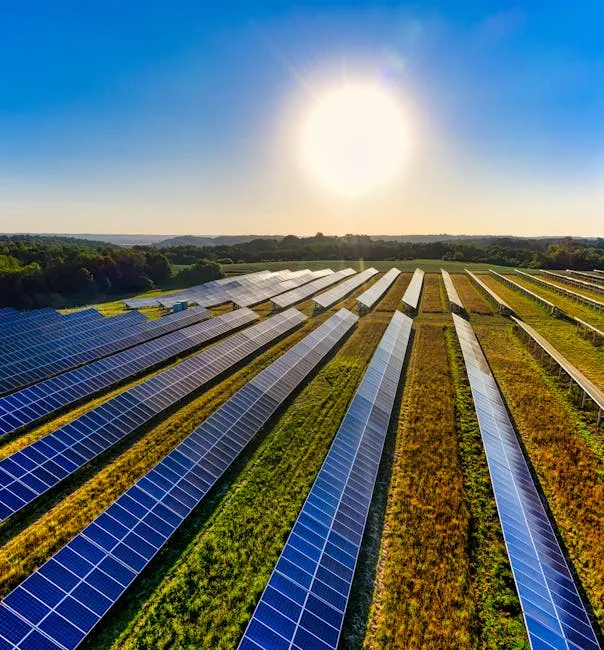
"Aerial view of a solar farm in Red Wing, MN, with solar panels harnessing the sun's energy." by Tom Fisk / Pexels.
Solar energy is energy from the sun that can be converted into electricity or heat for human use. Every day, the sun releases enormous amounts of energy in the form of light and heat. Scientists and engineers have developed two main technologies to capture this energy: photovoltaic cells and solar thermal systems. These technologies allow us to harness the sun's power to meet our energy needs without burning fossil fuels.
Photovoltaic cells, commonly called solar panels, convert sunlight directly into electricity. The word photovoltaic comes from "photo," meaning light, and "voltaic," meaning electricity. These cells are made from special materials called semiconductors, usually silicon. When sunlight strikes the surface of a photovoltaic cell, it knocks electrons loose from the atoms in the semiconductor material. Electrons are tiny particles that carry electrical charge. As these electrons move through the material, they create an electric current that can power homes, schools, and businesses.
The process inside a photovoltaic cell happens because of something called the photovoltaic effect. A photovoltaic cell has two layers of semiconductor material. One layer has extra electrons, while the other layer has spaces where electrons are missing. When sunlight provides energy to the electrons, they jump from one layer to the other, creating a flow of electricity. Metal contacts on the top and bottom of the cell collect this electricity and send it through wires to where it is needed. Multiple photovoltaic cells are connected together to form a solar panel, and multiple panels can be combined to create a solar array that generates more power.
Solar thermal systems work differently from photovoltaic cells. Instead of making electricity, these systems capture the sun's heat energy directly. Solar thermal collectors have dark-colored surfaces that absorb sunlight very well. When sunlight hits these surfaces, the energy is converted into heat. A fluid, usually water or a special liquid, flows through pipes in the collector. As the fluid passes through, it absorbs the heat from the surface. The heated fluid is then pumped to a storage tank or directly to where the heat is needed, such as for warming water in homes or heating swimming pools.
Both photovoltaic and solar thermal systems offer important benefits. They produce clean energy without releasing greenhouse gases or pollutants into the atmosphere. Solar energy is also renewable, meaning it will not run out as long as the sun continues to shine. Many homes and buildings now have rooftop solar panels that reduce their dependence on electricity from power plants. In sunny regions, large solar farms with thousands of panels generate enough electricity to power entire communities.
However, solar energy systems also face challenges. They only generate power when the sun is shining, so they cannot produce energy at night or on very cloudy days. This means solar energy must often be combined with energy storage systems, like batteries, or with other power sources. The initial cost of installing solar panels or thermal systems can also be high, though the equipment eventually pays for itself through energy savings. Engineers continue to improve solar technology to make it more efficient and affordable.
Understanding how solar energy works helps us appreciate how science and engineering can provide solutions to energy challenges. As photovoltaic cells become more efficient at converting sunlight to electricity and solar thermal systems improve at capturing heat, solar energy will play an increasingly important role in meeting global energy demands. By learning about these technologies, students can better understand the connection between natural resources and human innovation.
Interesting Fact: A single hour of sunlight hitting the Earth contains enough energy to power the entire world for one year, but we currently capture only a tiny fraction of that energy with our solar technology.
Comprehension quiz (10 questions)
1. What are the two main technologies used to capture solar energy?
2. What material is most commonly used to make photovoltaic cells?
3. What does the word 'photovoltaic' mean?
4. What happens when sunlight strikes a photovoltaic cell?
5. How do solar thermal systems capture energy?
6. Why must solar energy often be combined with batteries or other power sources?
7. What is one benefit of solar energy mentioned in the passage?
8. In a photovoltaic cell, what creates the flow of electricity?
9. True or False: Solar energy is renewable, meaning it will not run out as long as the sun continues to shine.
10. True or False: Solar thermal systems convert sunlight directly into electricity.
Perfect for the way you teach
- Build comprehension skills
- Auto-graded quiz
- Differentiated reading
- Read together at home
- Improve fluency
- Quiet reading time
- Reading curriculum support
- Independent practice
- Track Lexile growth