How Does Wind Energy Work
Interactive passage with audio narration, comprehension questions, and printable PDF.
By completing this purchase you agree to our Terms of Use and Privacy Policy. Your subscription renews automatically until you cancel. You can cancel anytime from your account settings. All sales are final and non-refundable. Digital content is available for download in your account immediately upon purchase.
What's included
How Does Wind Energy Work preview and details
About this printable How Does Wind Energy Work science reading passage, NGSS-aligned (Grades 6-8)
Sample passage and quiz from How Does Wind Energy Work
Reading passage and comprehension quiz preview
How Wind Energy Works
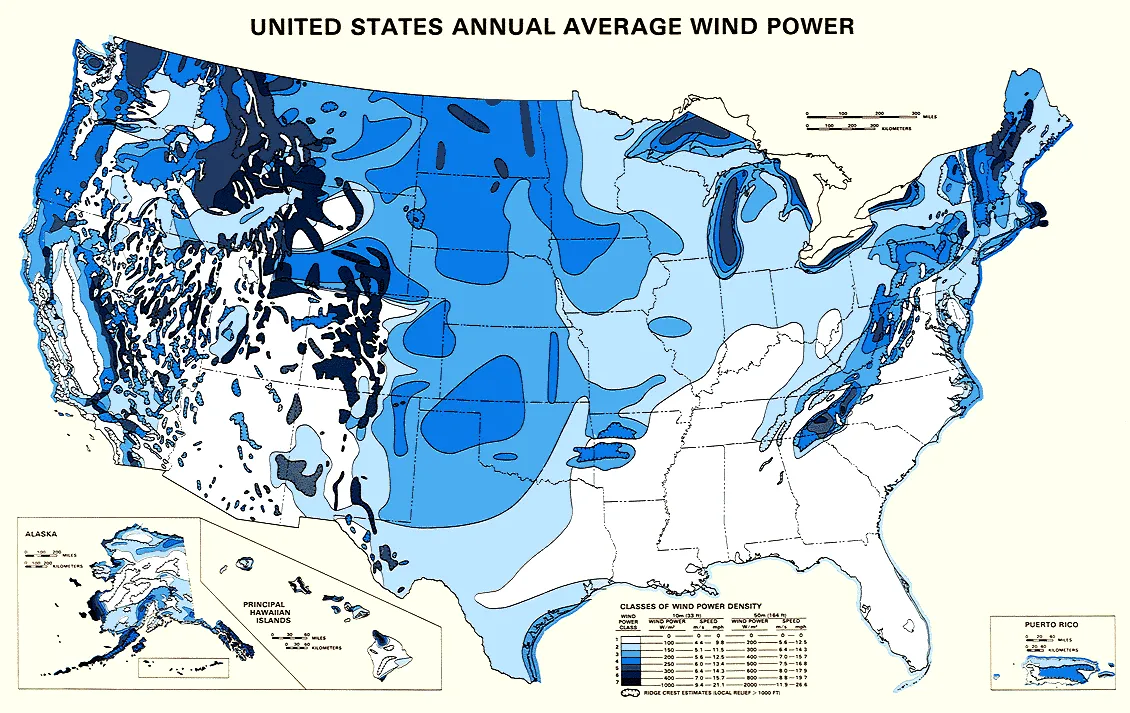
"US wind power map" by National Renewable Energy Laboratory / Wikimedia Commons
Wind energy is a renewable energy source that converts the kinetic energy of moving air into electricity. Wind turbines capture this energy and transform it through several steps. Understanding how wind turbines work helps explain why wind power is becoming an important part of our energy future.
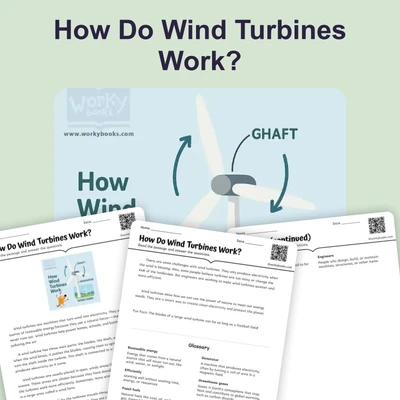
Wind turbines have three main parts that work together to generate electricity. The blades are the large structures that catch the wind, similar to how a sailboat's sail catches wind to move forward. When wind blows across the blades, it causes them to rotate around a central hub called the rotor. The faster the wind blows, the faster the blades spin. These blades are carefully designed with a curved shape, much like an airplane wing, to maximize the amount of wind energy they can capture.
The rotating blades connect to a shaft inside the turbine tower. This shaft transfers the mechanical energy from the spinning blades to a generator located inside the housing at the top of the tower. The generator contains magnets and coils of wire. When the shaft spins the magnets past the wire coils, it creates an electric current through a process called electromagnetic induction. This is the same basic principle used in many types of power plants, but wind turbines use wind instead of steam to create the spinning motion.
The electricity produced by the generator flows through cables down the tower to a transformer. The transformer increases the voltage of the electricity so it can travel efficiently through power lines to homes, schools, and businesses. A single large wind turbine can generate enough electricity to power hundreds of homes. Wind farms, which contain many turbines grouped together, can produce enough energy for thousands of homes.
The best locations for wind energy have consistent, strong winds. Coastal areas and offshore locations often have excellent wind resources because wind blows steadily across open water. The Great Plains region of the United States, sometimes called the "Saudi Arabia of wind," has some of the best wind resources in the world due to its flat, open landscape. Mountain passes and ridge tops also concentrate wind flow, making them ideal locations. Scientists measure wind speed and patterns over time to identify the best sites for wind farms.
Wind energy offers several advantages as a renewable resource. It produces no air pollution or greenhouse gases during operation. The wind itself is free and will never run out. Modern wind turbines are also becoming more efficient, meaning they can generate more electricity from the same amount of wind. As technology improves and more wind farms are built, wind energy continues to grow as a clean alternative to fossil fuels.
Interesting Fact: The largest wind turbine in the world has blades longer than a football field, and a single rotation of its blades can power an average home for an entire day.
Comprehension quiz (10 questions)
1. What type of energy do wind turbines first capture from moving air?
2. Which part of a wind turbine converts mechanical energy into electrical energy?
3. Why are wind turbine blades designed with a curved shape?
4. What does the term 'electromagnetic induction' mean in the context of wind turbines?
5. According to the passage, which region of the United States is sometimes called the 'Saudi Arabia of wind'?
6. Based on the passage, what can you infer about the relationship between wind speed and electricity production?
7. Why do coastal areas and offshore locations often have excellent wind resources?
8. If a city wanted to build a wind farm, which factor would be MOST important to consider?
9. True or False: Wind energy produces air pollution and greenhouse gases during operation.
10. True or False: A single large wind turbine can generate enough electricity to power hundreds of homes.
Perfect for the way you teach
- Build comprehension skills
- Auto-graded quiz
- Differentiated reading
- Read together at home
- Improve fluency
- Quiet reading time
- Reading curriculum support
- Independent practice
- Track Lexile growth