How Do Emissions Change the Atmosphere
Interactive passage with audio narration, comprehension questions, and printable PDF.
By completing this purchase you agree to our Terms of Use and Privacy Policy. Your subscription renews automatically until you cancel. You can cancel anytime from your account settings. All sales are final and non-refundable. Digital content is available for download in your account immediately upon purchase.
What's included
How Do Emissions Change the Atmosphere preview and details
About this printable How Do Emissions Change the Atmosphere science reading passage, NGSS-aligned (Grades 6-8)
Sample passage and quiz from How Do Emissions Change the Atmosphere
Reading passage and comprehension quiz preview
How Emissions Change the Atmosphere
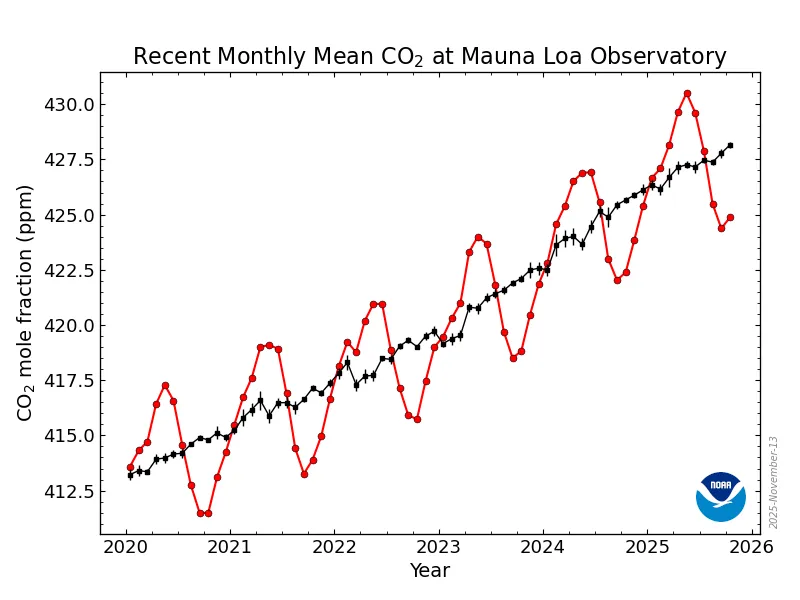
Graphic displaying carbon dioxyd concentrations as measured from Hawaii, 2020-2026..CO2 trend mlo 2020-2026" by Mauna Loa Observatory / Wikimedia Commons
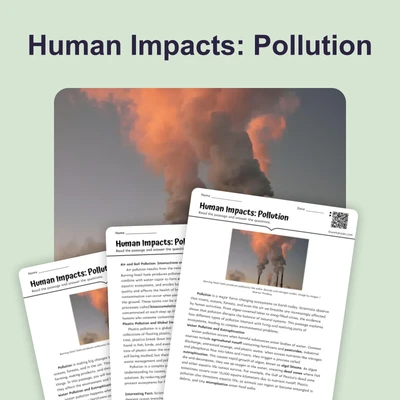
The atmosphere is the layer of gases surrounding Earth. For thousands of years, the atmosphere's composition remained relatively stable. However, human activities over the past 150 years have significantly changed the amounts of certain gases in the air. These changes affect how Earth's atmosphere traps heat and regulates temperature.
Burning fossil fuels is the largest source of atmospheric changes. Fossil fuels include coal, oil, and natural gas that formed from ancient plants and animals. When we burn these fuels in cars, power plants, and factories, they release carbon dioxide (CO₂) into the atmosphere. Before the Industrial Revolution, Earth's atmosphere contained about 280 parts per million of CO₂. Today, that number exceeds 420 parts per million. This represents a 50% increase in atmospheric carbon dioxide in just over a century.
Industrial processes release additional gases that change atmospheric composition. Factories that produce cement, steel, and chemicals emit CO₂ during manufacturing. Some industries also release methane, a greenhouse gas that traps even more heat than carbon dioxide. Agriculture contributes methane too, particularly from rice paddies and livestock digestion. Landfills produce methane as organic waste decomposes without oxygen.
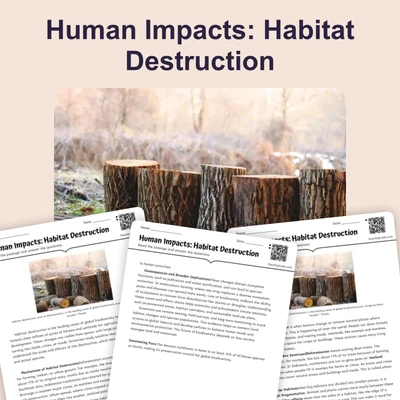
Deforestation affects the atmosphere in two important ways. First, when people cut and burn forests to clear land, the burning trees release stored carbon dioxide into the air. Second, removing trees eliminates organisms that absorb CO₂ through photosynthesis. Trees act like carbon storage units, taking CO₂ from the atmosphere and converting it into wood and leaves. When we remove forests, we lose this natural process that helps balance atmospheric gases. The Amazon rainforest alone absorbs about 2 billion tons of CO₂ each year.
These emissions alter Earth's energy balance through the greenhouse effect. Solar energy reaches Earth's surface and warms it. The warm surface then releases heat energy back toward space. Greenhouse gases in the atmosphere absorb some of this outgoing heat and redirect it back to Earth's surface. This process is natural and necessary for life. Without any greenhouse effect, Earth would be frozen. However, adding more greenhouse gases strengthens this effect. More heat gets trapped, and less escapes to space. This changes the balance between incoming solar energy and outgoing heat energy.
The consequences of this altered energy balance are measurable. Global average temperatures have increased by about 1.1°C since 1880. Ocean temperatures are rising, ice sheets are melting, and weather patterns are shifting. These changes demonstrate how atmospheric composition directly affects Earth's climate systems. Understanding the connection between human emissions and atmospheric changes helps scientists predict future climate conditions and develop solutions to reduce harmful impacts.
Interesting Fact: If all human-caused CO₂ emissions stopped today, the extra carbon dioxide already in the atmosphere would remain there for hundreds to thousands of years because natural processes remove it very slowly.
Comprehension quiz (10 questions)
1. What is the atmosphere?
2. How much has atmospheric CO₂ increased since before the Industrial Revolution?
3. What does the term 'fossil fuels' mean in this passage?
4. Which gas traps more heat than carbon dioxide?
5. Based on the passage, why does deforestation affect atmospheric CO₂ levels?
6. How does the greenhouse effect work according to the passage?
7. If humans stopped producing emissions today, what would happen to the CO₂ already in the atmosphere?
8. What is the main consequence of adding more greenhouse gases to the atmosphere?
9. True or False: Without any greenhouse effect, Earth would be frozen.
10. True or False: Industrial processes only release carbon dioxide and no other gases.
Perfect for the way you teach
- Build comprehension skills
- Auto-graded quiz
- Differentiated reading
- Read together at home
- Improve fluency
- Quiet reading time
- Reading curriculum support
- Independent practice
- Track Lexile growth