How Does Environmental Policy Protect Communities
Interactive passage with audio narration, comprehension questions, and printable PDF.
By completing this purchase you agree to our Terms of Use and Privacy Policy. Your subscription renews automatically until you cancel. You can cancel anytime from your account settings. All sales are final and non-refundable. Digital content is available for download in your account immediately upon purchase.
What's included
How Does Environmental Policy Protect Communities preview and details
About this printable How Does Environmental Policy Protect Communities science reading passage, NGSS-aligned (Grades 6-8)
Sample passage and quiz from How Does Environmental Policy Protect Communities
Reading passage and comprehension quiz preview
How Environmental Policy Protects Communities
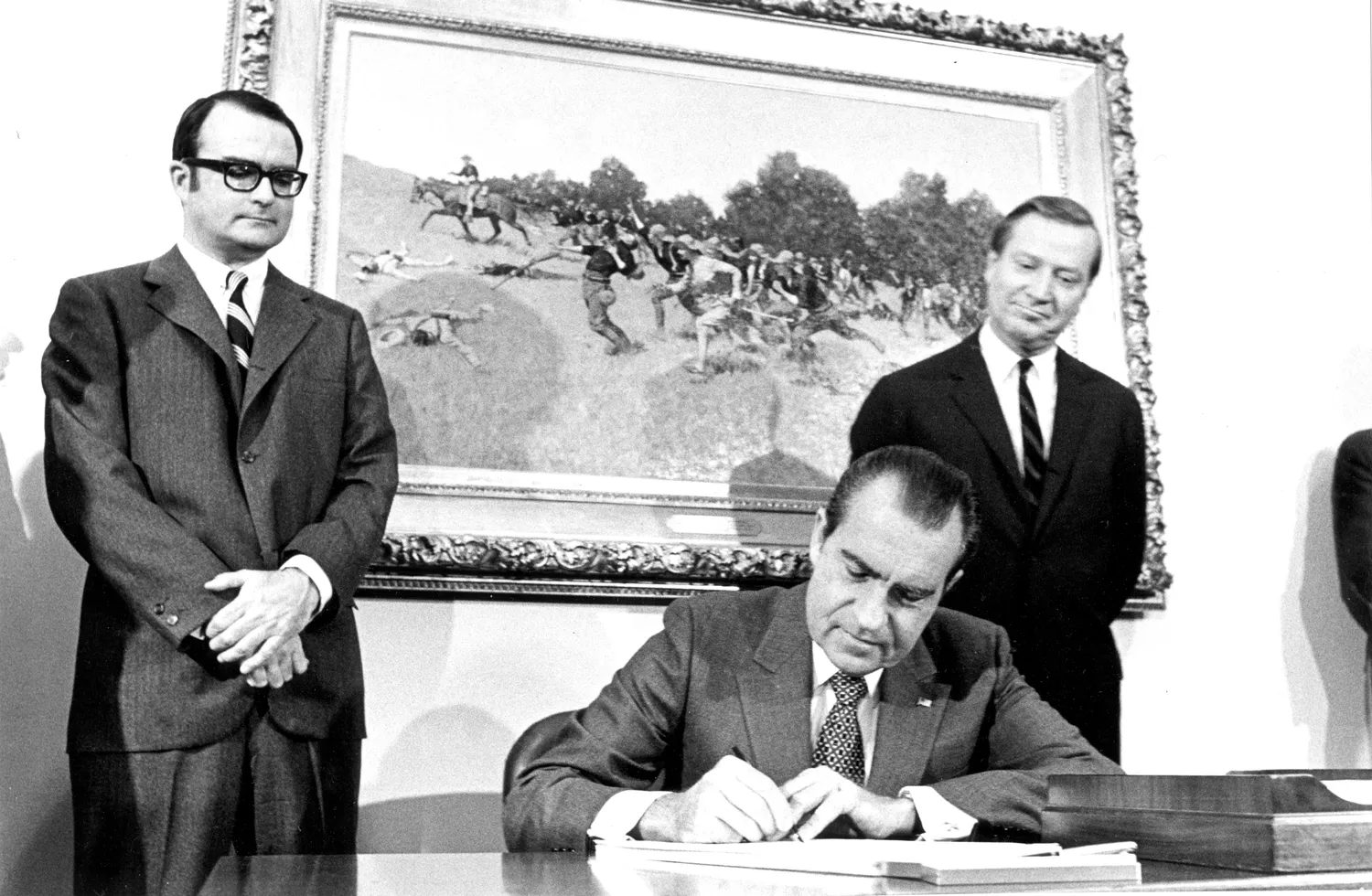
The Clean Air Act, passed in 1970, regulates air pollution across the United States.Richard Nixon signs Clean Air Act of 1970 12-31-1970" by White House Photo Office / Wikimedia Commons
Environmental laws protect people and ecosystems from harmful pollution. These laws were not created randomly. They were developed in response to scientific evidence showing that pollution was causing serious harm to human health and the environment. When scientists documented problems, lawmakers used that evidence to create regulations that would prevent future damage.
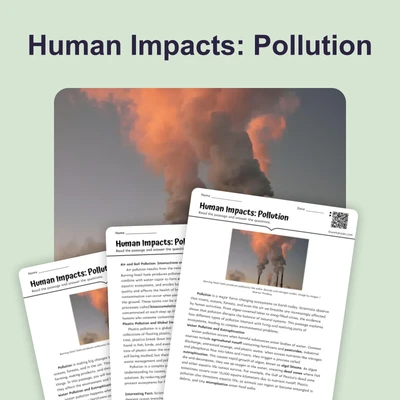
Before the 1970s, many American cities had serious pollution problems. Rivers caught fire because they contained so much oil and chemicals. Smog made it difficult for people to breathe, especially in large cities. Scientists collected data showing that air pollution caused respiratory diseases and that water pollution killed fish and made drinking water unsafe. This scientific evidence proved that pollution was not just unpleasant—it was dangerous. In response to this documented harm, Congress passed major environmental laws.
The Clean Air Act, passed in 1970, regulates air pollution across the United States. This law requires the Environmental Protection Agency (EPA) to set standards for six major air pollutants: particulate matter, ground-level ozone, carbon monoxide, sulfur dioxide, nitrogen dioxide, and lead. Scientists determine safe levels for these pollutants based on research about their health effects. The EPA then sets limits that industries and vehicles cannot exceed. For example, when research showed that lead in gasoline caused brain damage in children, the Clean Air Act was used to phase out leaded gasoline completely.
The Clean Water Act, also passed in the 1970s, protects rivers, lakes, and coastal waters from pollution. This law makes it illegal to discharge pollutants into water without a permit. The EPA sets water quality standards based on scientific studies of how pollutants affect aquatic life and human health. Industries must treat their wastewater before releasing it, and cities must operate sewage treatment plants to remove harmful substances. The law also protects wetlands, which naturally filter pollutants from water.
These environmental policies work through a cycle of science and regulation. Scientists monitor pollution levels and study health effects. When they find problems, they present evidence to the EPA. The EPA uses this evidence to create or update regulations. Industries must follow these rules, and the EPA enforces them through inspections and penalties. This system ensures that policy decisions are based on facts rather than guesses.
Environmental laws have produced measurable results. Since the Clean Air Act was strengthened in 1990, air pollution has decreased by more than 70 percent even as the economy has grown. Lead levels in children's blood have dropped dramatically since leaded gasoline was banned. Rivers that were once too polluted to touch are now safe for swimming and fishing. These improvements show that when policy is guided by scientific evidence, it can effectively protect communities.
Interesting Fact: The Cuyahoga River in Ohio caught fire at least 13 times between 1868 and 1969 due to oil and chemical pollution. The 1969 fire helped convince Congress to pass the Clean Water Act, which has since helped clean up the river so much that fish and other wildlife have returned.
Comprehension quiz (10 questions)
1. What was the main reason environmental laws were created in the 1970s?
2. How many major air pollutants does the Clean Air Act regulate?
3. What does the term 'regulations' mean in the context of this passage?
4. According to the passage, what role do wetlands play in water quality?
5. Why was lead removed from gasoline?
6. What is the relationship between scientific evidence and EPA regulations?
7. What happened to air pollution levels after the Clean Air Act was strengthened in 1990?
8. How do environmental policies ensure that industries follow the rules?
9. The Clean Water Act makes it illegal to discharge pollutants into water without a permit.
10. Before environmental laws were passed, rivers in the United States never caught fire.
Perfect for the way you teach
- Build comprehension skills
- Auto-graded quiz
- Differentiated reading
- Read together at home
- Improve fluency
- Quiet reading time
- Reading curriculum support
- Independent practice
- Track Lexile growth