How Far Are the Planets
Interactive passage with audio narration, comprehension questions, and printable PDF.
By completing this purchase you agree to our Terms of Use and Privacy Policy. Your subscription renews automatically until you cancel. You can cancel anytime from your account settings. All sales are final and non-refundable. Digital content is available for download in your account immediately upon purchase.
What's included
How Far Are the Planets preview and details
About this printable How Far Are the Planets science reading passage, NGSS-aligned (Grades 5-8)
Sample passage and quiz from How Far Are the Planets
Reading passage and comprehension quiz preview
How Far Are the Planets
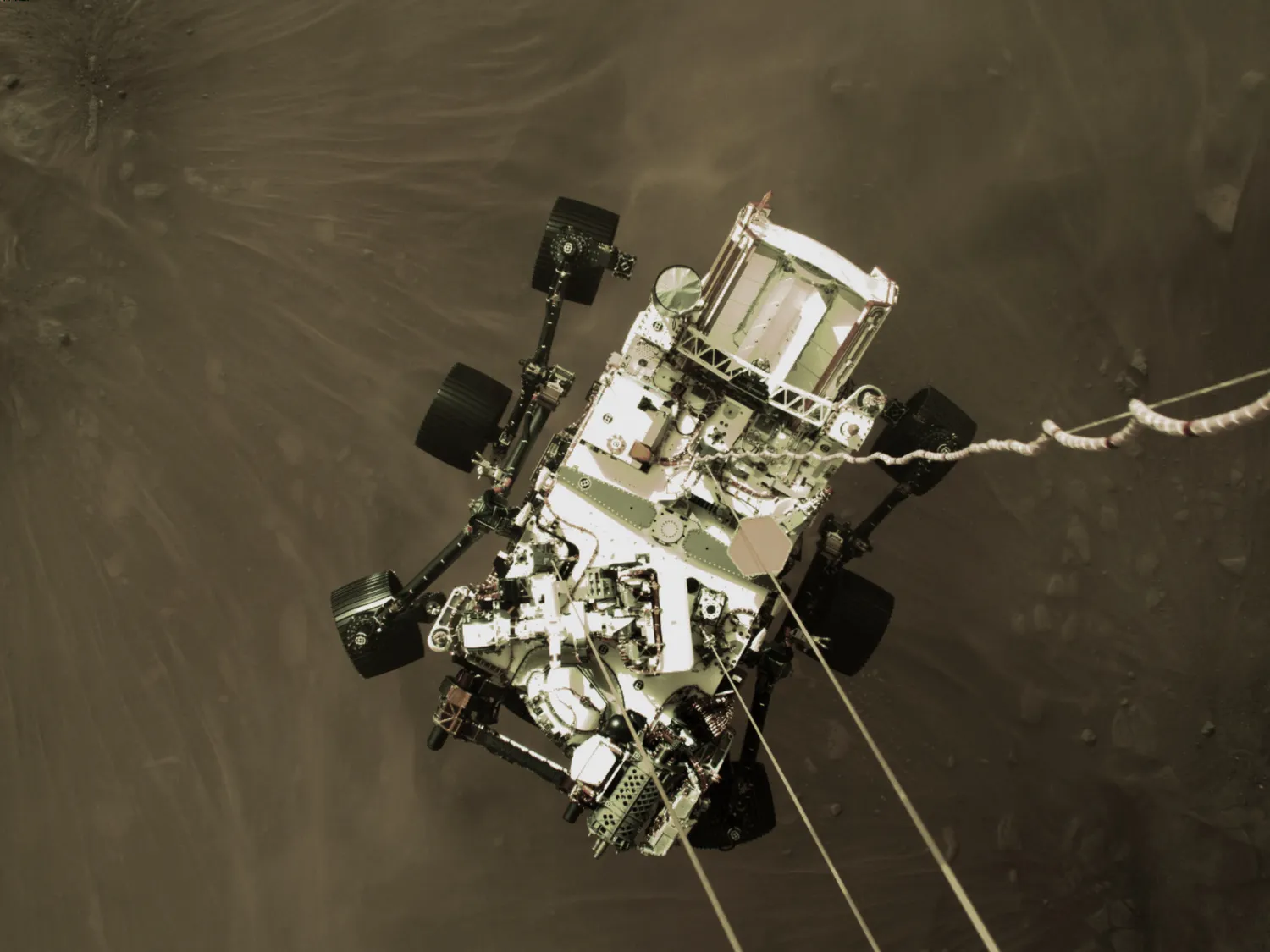
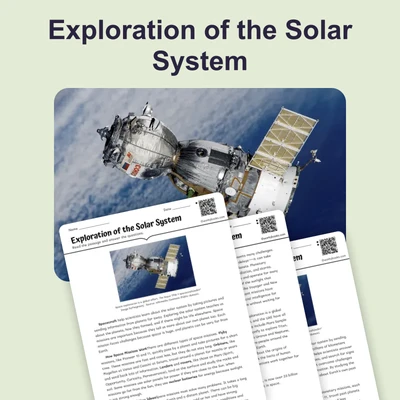
Evidence from NASA missions shows that spacecraft take approximately 6 to 9 months to reach Mars. The Perseverance rover, for example, launched in July 2020 and arrived in February 2021. A camera aboard the descent stage captured this shot."Perseverance Landing Skycrane" by NASA / Wikimedia Commons
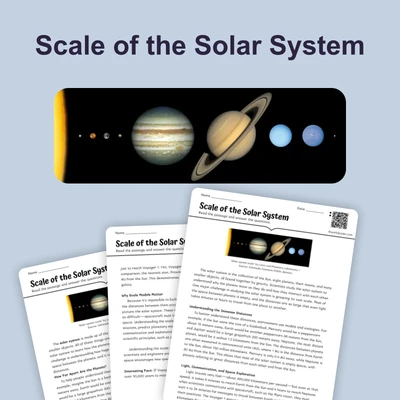
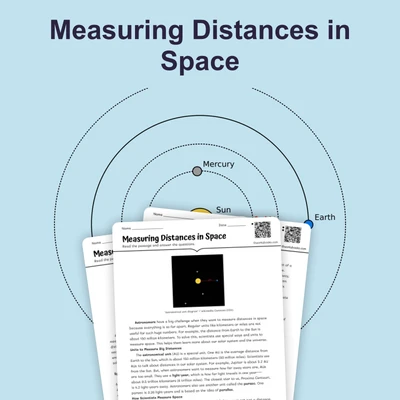
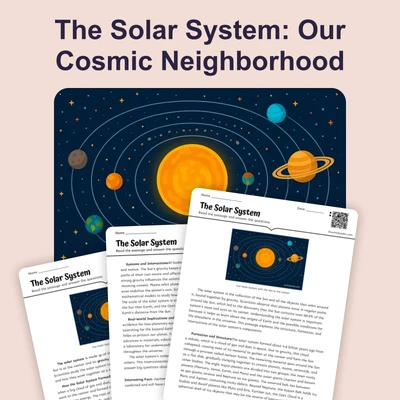
The planets in our solar system are separated by enormous distances that can be difficult to imagine. Scientists measure these distances using a unit called an astronomical unit, or AU. One AU equals the distance from Earth to the Sun, about 150 million kilometers. However, understanding these distances becomes easier when we translate them into spacecraft travel time.
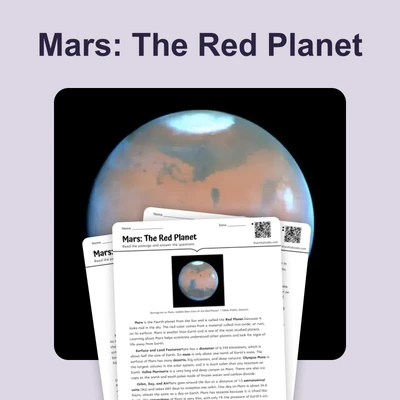
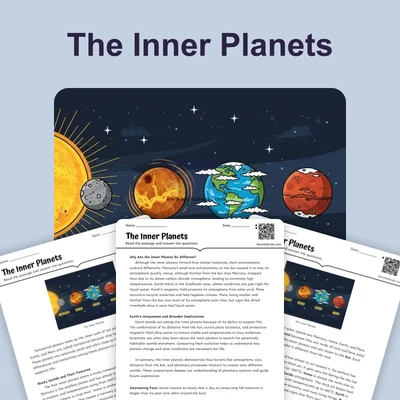
Current spacecraft technology allows us to send robotic missions to explore other planets. The time it takes to reach each planet depends on its distance from Earth and the spacecraft's speed. Mars, our closest planetary neighbor when aligned properly, is about 0.5 to 2.5 AU away depending on orbital positions. Evidence from NASA missions shows that spacecraft take approximately 6 to 9 months to reach Mars. The Perseverance rover, for example, launched in July 2020 and arrived in February 2021.
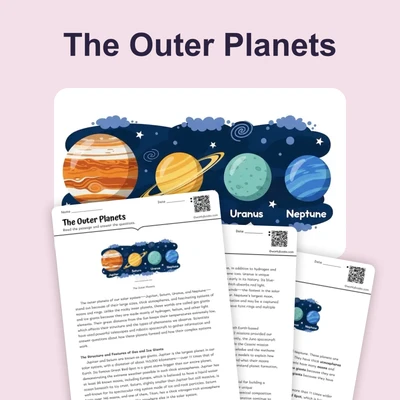
The outer planets require much longer journey times because of their greater distances. Jupiter, located about 5.2 AU from the Sun, takes spacecraft roughly 13 to 24 months to reach. The Juno mission traveled for nearly five years before entering Jupiter's orbit in 2016. Saturn sits even farther at 9.5 AU, requiring about 7 years of travel time. The Cassini spacecraft journeyed for seven years before reaching Saturn in 2004.
The most distant planets present extreme challenges for space exploration. Uranus, at 19.2 AU, would require approximately 8 to 9 years to reach with current technology. Neptune, the farthest planet at 30 AU from the Sun, demands even more patience. The Voyager 2 spacecraft, launched in 1977, took 12 years to reach Neptune in 1989. Scientists observe that these long travel times result from both the vast distances involved and the limits of current propulsion systems.
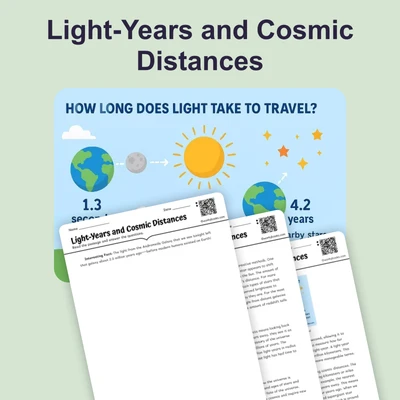
Understanding planetary distances through travel time helps us appreciate the true scale of our solar system. These measurements matter because they affect mission planning, spacecraft design, and communication with distant probes. When a spacecraft reaches Neptune, radio signals traveling at the speed of light take over four hours to reach Earth. This communication delay means scientists must program spacecraft to operate independently, making decisions without real-time human control.
Interesting Fact: If you could drive a car at highway speed (100 km/h) to Mars when it's closest to Earth, the journey would take about 6,000 years!
Comprehension quiz (10 questions)
1. What is one astronomical unit (AU) equal to?
2. How long does it typically take current spacecraft to reach Mars?
3. Based on the passage, what does the term 'propulsion' refer to?
4. Which spacecraft took 12 years to reach Neptune?
5. Why must spacecraft traveling to Neptune be programmed to operate independently?
6. Based on the passage, what can you infer about the relationship between distance and travel time?
7. What evidence does the passage provide to show that outer planets are farther away?
8. If a new spacecraft could travel twice as fast as current spacecraft, approximately how long would it take to reach Jupiter?
9. True or False: Saturn is located farther from the Sun than Jupiter.
10. True or False: The Perseverance rover took more than one year to reach Mars.
Perfect for the way you teach
- Build comprehension skills
- Auto-graded quiz
- Differentiated reading
- Read together at home
- Improve fluency
- Quiet reading time
- Reading curriculum support
- Independent practice
- Track Lexile growth