How Humans Alter the Biosphere — Reading Comprehension
Rate this
Premium Resource
Present
Present in classroom. No work saved
Assign
Classroom with student accounts, Track progress
Quick Play
No student accounts, assign with a link
Grades
6
7
8
Standards
MS-ESS3-3
PRINT+DIGITAL RESOURCE
This learning resource is available in interactive and printable formats. The interactive worksheet can be played online and assigned to students. The Printable PDF version can be downloaded and printed for completion by hand.
This comprehensive middle school science reading passage examines how humans alter the biosphere through agriculture, urbanization, industry, and energy production. Students explore the concept of habitat fragmentation, deforestation, and atmospheric changes caused by human activities. The passage aligns with NGSS MS-ESS3-3 standards, helping students understand humans as the dominant agent of change in Earth's systems. The curriculum includes audio-integrated content, differentiated reading levels, Spanish translations, interactive comprehension questions, writing activities, and graphic organizers. Students analyze cause-and-effect relationships between human activities and biosphere changes while developing critical thinking skills about environmental impacts. The materials support English Language Learners and struggling readers through simplified versions while maintaining content depth. Keywords include biosphere, human impact, urbanization, agriculture, deforestation, habitat fragmentation, carbon dioxide, and climate change.
CONTENT PREVIEW
Expand content preview
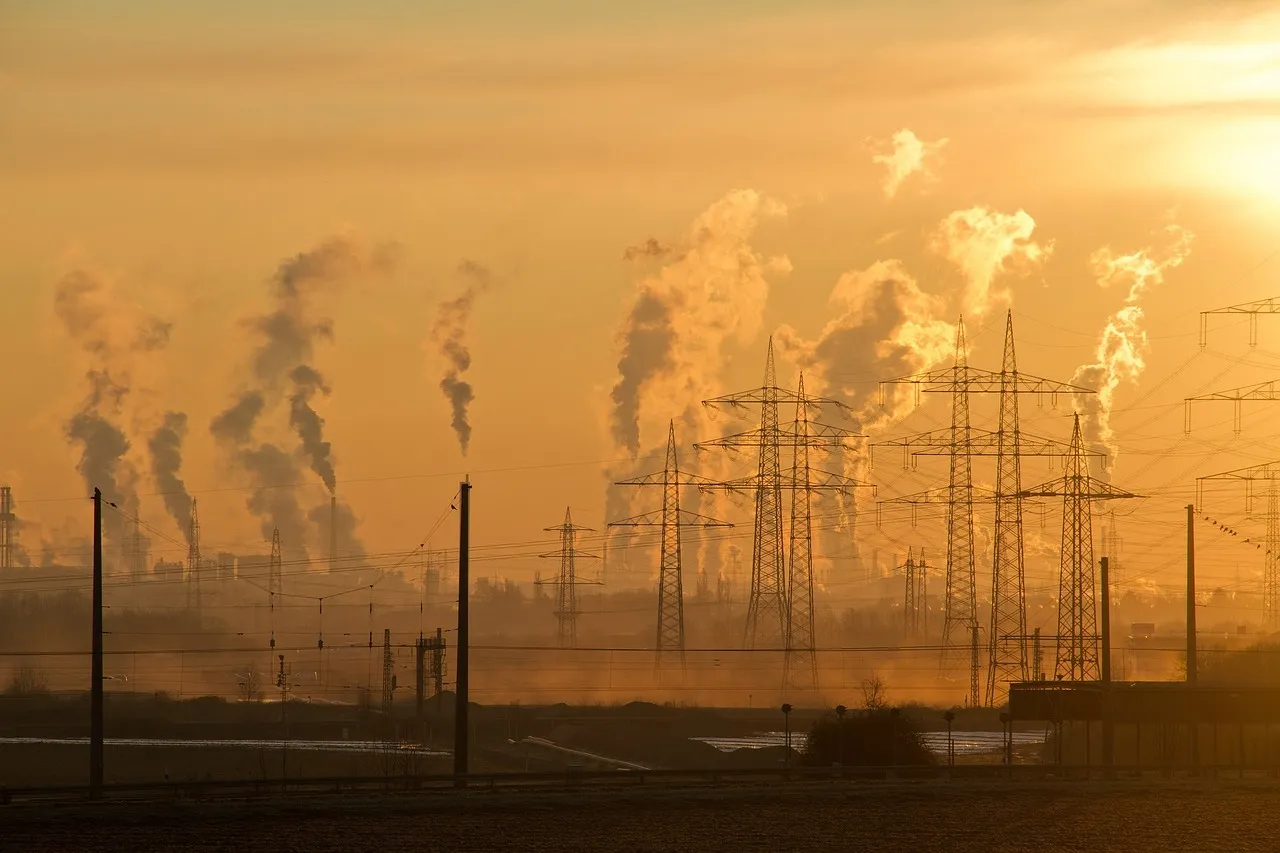
"Industrial smokestacks and power lines illustrating energy production and atmospheric pollution." Image by SD-Pictures / Pixabay.
The biosphere is the part of Earth where all living things exist. It includes land, water, and air. For billions of years, natural processes shaped the biosphere slowly. Volcanic eruptions, asteroid impacts, and ice ages changed Earth's surface over millions of years. Today, humans have become the most powerful force changing the biosphere. Human activities transform ecosystems faster than any natural process in recent geological history.
Four major human activities alter the biosphere: agriculture, urbanization, industry, and energy production. Agriculture involves clearing land to grow crops and raise animals. Farmers remove forests and grasslands to create fields. This process is called deforestation. When forests disappear, thousands of plant and animal species lose their homes. Agriculture now covers about 40 percent of Earth's ice-free land surface. This represents a massive transformation of natural ecosystems into human-managed systems.
Urbanization means building cities and towns where natural habitats once existed. As human populations grow, cities expand outward. Roads, buildings, and parking lots replace forests, wetlands, and meadows. This creates habitat fragmentation, which breaks large ecosystems into smaller, disconnected pieces. Animals cannot move freely between fragments to find food or mates. Urban areas also produce heat, creating warmer temperatures than surrounding rural areas. Scientists call this the urban heat island effect.
Industrial activities and energy production release substances into the biosphere that change its chemistry. Burning fossil fuels like coal, oil, and natural gas releases carbon dioxide into the atmosphere. Before the Industrial Revolution around 1750, Earth's atmosphere contained about 280 parts per million of carbon dioxide. Today, that number exceeds 420 parts per million. This increase traps more heat in the atmosphere, warming the planet. Factories also release chemicals into water and soil, affecting organisms throughout food chains.
The speed of these changes makes human impact unique. Natural climate changes typically occur over thousands or millions of years. Human-caused changes happen over decades or centuries. Organisms cannot adapt quickly enough to survive such rapid environmental shifts. Scientists estimate that species are now going extinct at rates 100 to 1,000 times faster than natural background rates. This rapid loss of biodiversity threatens ecosystem stability worldwide.
Understanding how humans alter the biosphere helps us make better decisions. We can choose farming methods that preserve soil and water. We can design cities with green spaces that support wildlife. We can develop energy sources that do not release carbon dioxide. Recognizing our role as Earth's dominant change agent means accepting responsibility for protecting the biosphere that supports all life.
Interesting Fact: If all humans disappeared tomorrow, scientists estimate it would take only 500 years for forests to reclaim most cities, but it would take thousands of years for atmospheric carbon dioxide levels to return to pre-industrial conditions.
What is the biosphere?
The part of Earth where all living things existOnly the water on Earth's surfaceThe atmosphere above EarthThe rocks and minerals in Earth's crust
According to the passage, what percentage of Earth's ice-free land is now covered by agriculture?
About 20 percentAbout 30 percentAbout 40 percentAbout 50 percent
What does the term 'habitat fragmentation' mean in the context of urbanization?
Building new habitats for animals in citiesBreaking large ecosystems into smaller, disconnected piecesCreating more diverse ecosystemsConnecting different habitats together
How much has atmospheric carbon dioxide increased since before the Industrial Revolution?
From 180 to 280 parts per millionFrom 280 to over 420 parts per millionFrom 350 to 400 parts per millionFrom 100 to 200 parts per million
Why can't organisms adapt quickly enough to current environmental changes?
Because they are too smallBecause they don't want to changeBecause human-caused changes happen much faster than natural changesBecause there is not enough food available
Based on the passage, which statement best describes humans' role in changing the biosphere?
Humans have little impact compared to natural processesHumans have become the most powerful force changing the biosphereHumans only affect small areas of the biosphereHumans change the biosphere at the same rate as volcanic eruptions
What is one way the passage suggests we can reduce our negative impact on the biosphere?
Stop all farming activitiesAbandon all citiesDevelop energy sources that do not release carbon dioxidePrevent all natural climate changes
How much faster are species going extinct now compared to natural background rates?
10 to 50 times faster50 to 100 times faster100 to 1,000 times fasterAt the same rate
Natural climate changes typically occur over thousands or millions of years.
TrueFalse
According to the passage, if all humans disappeared tomorrow, atmospheric carbon dioxide levels would return to pre-industrial conditions within 500 years.
TrueFalse
Perfect For:
👩🏫 Teachers
• Reading comprehension practice
• Auto-graded assessments
• Literacy skill development
👨👩👧👦 Parents
• Reading practice at home
• Comprehension improvement
• Educational reading time
🏠 Homeschoolers
• Reading curriculum support
• Independent reading practice
• Progress monitoring
Reading Features:
📖
Reading Passage
Engaging fiction or nonfiction text
❓
Comprehension Quiz
Auto-graded questions
📊
Instant Feedback
Immediate results and scoring
📄
Printable Version
Download for offline reading
🔊
Read Aloud
Voice-over with word highlighting
Reviews & Ratings
No reviews yet. Be the first to share your experience!
Related Content
Natural Disaster: Volcanic Eruptions
Volcanoes can erupt with lava and ash, changing the landscape. While dangerous, they also create fertile land and new la...
RI.3.1RI.4.4RI.4.2RI.5.2
Human Impacts: Pollution
This middle school science reading passage, aligned with NGSS standards MS-LS2-4 and MS-ESS3-3, examines the mechanisms ...
MS-LS2-4MS-ESS3-3
Human Impacts: Habitat Destruction
This grade 6-8 science passage explores human impacts on ecosystems, focusing on habitat destruction as the leading caus...
MS-LS2-4MS-LS2-5MS-ESS3-3
Ecosystem Services
This engaging middle school science passage introduces students to the concept of ecosystem services, the vital benefits...
MS-LS2-5MS-ESS3-3
Environmental Problems and Solutions
This passage for grades 6-8 introduces major environmental problems such as habitat loss, pollution, climate change, inv...
MS-LS2-4MS-ESS3-3MS-ESS3-4
Remote Sensing
This middle school science passage introduces students to the concept of remote sensing—the collection of information ab...
MS-ESS3-3MS-PS4-2MS-ETS1-1MS-ETS1-3
Geographic Information Systems (GIS)
This engaging middle school science passage introduces students to Geographic Information Systems (GIS), aligning with N...
MS-ESS3-3MS-ETS1-1MS-ETS1-2MS-ETS1-3
Renewable vs. Nonrenewable Energy
This engaging passage, aligned with NGSS standards MS-PS3-4, MS-ESS3-3, and MS-ESS3-4, helps middle school students diff...
MS-PS3-4MS-ESS3-3MS-ESS3-4
Fossil Fuels: Coal
This middle school science reading passage explores the science behind coal, a major fossil fuel. Students will learn ho...
MS-PS3-4MS-ESS3-3MS-ESS3-4
Solar Energy
This engaging passage for grades 6-8 explores the science of solar energy, focusing on how sunlight is converted into el...
MS-PS3-4MS-ESS3-3MS-ESS3-4
Wind Energy
This comprehensive middle school science passage explores the scientific principles behind wind energy and how wind turb...
MS-PS3-4MS-ESS3-3MS-ESS3-4
Hydroelectric Energy
This comprehensive passage introduces middle school students to the science behind hydroelectric energy, directly aligni...
MS-PS3-4MS-ESS3-3MS-ESS3-4
Geothermal Energy
This comprehensive science passage introduces middle school students to the mechanisms and applications of geothermal en...
MS-PS3-4MS-ESS3-3MS-ESS3-4
Biomass and Biofuels
This NGSS-aligned passage introduces grades 6-8 students to the science of biomass and biofuels, explaining how organic ...
MS-PS3-4MS-ESS3-3MS-ESS3-4
Nuclear Energy as a Resource
This NGSS-aligned informational science passage, designed for grades 6-8, explores nuclear energy as a resource in the c...
MS-PS3-4MS-ESS3-3MS-ESS3-4
Water Quality
This middle school science reading passage covers the topic of water quality, aligned with NGSS standards MS-ESS3-1 and ...
MS-ESS3-1MS-ESS3-3
Florida Everglades
This comprehensive passage introduces middle school students to the Florida Everglades, a distinctive wetland ecosystem ...
MS-LS2-1MS-LS2-4MS-ESS3-3MS-ESS3-4
Congo Rainforest
This middle school science passage explores the Congo Rainforest—Earth’s second-largest rainforest, located in Central A...
MS-LS2-1MS-ESS3-3
Nuclear Power Plants
This comprehensive reading passage introduces middle school students (grades 6-8) to the science of nuclear power plants...
MS-PS3-4MS-ESS3-3
Nuclear Safety and Waste
This middle school science passage explores the critical topic of nuclear safety and waste management, aligned with NGSS...