How Land Pollution Reaches Rivers, Lakes, and Oceans
Interactive passage with audio narration, comprehension questions, and printable PDF.
By completing this purchase you agree to our Terms of Use and Privacy Policy. Your subscription renews automatically until you cancel. You can cancel anytime from your account settings. All sales are final and non-refundable. Digital content is available for download in your account immediately upon purchase.
What's included
How Land Pollution Reaches Rivers, Lakes, and Oceans preview and details
About this printable How Land Pollution Reaches Rivers, Lakes, and Oceans science reading passage, NGSS-aligned (Grades 6-8)
Sample passage and quiz from How Land Pollution Reaches Rivers, Lakes, and Oceans
Reading passage and comprehension quiz preview
How Land Pollution Reaches Rivers, Lakes, and Oceans
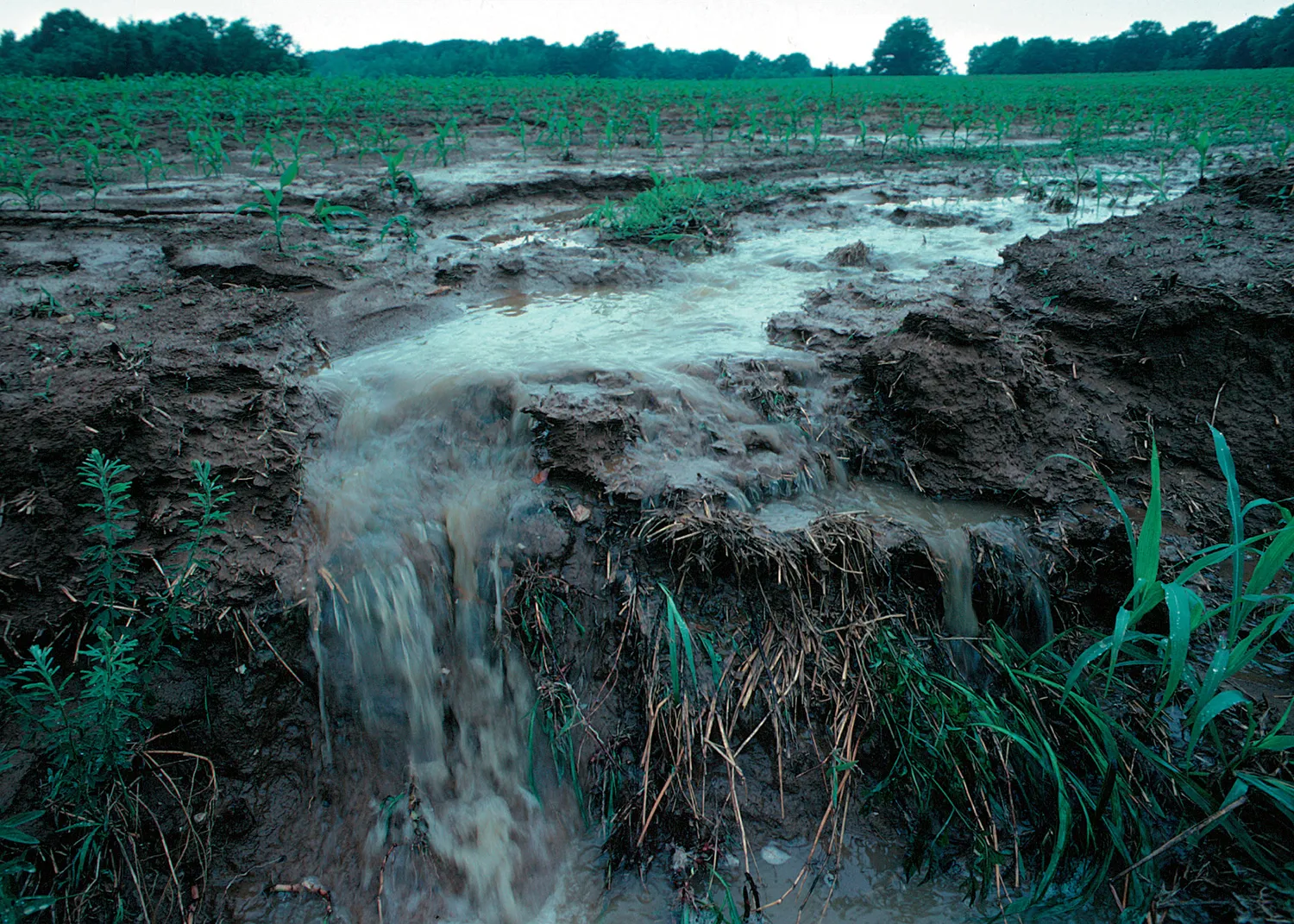
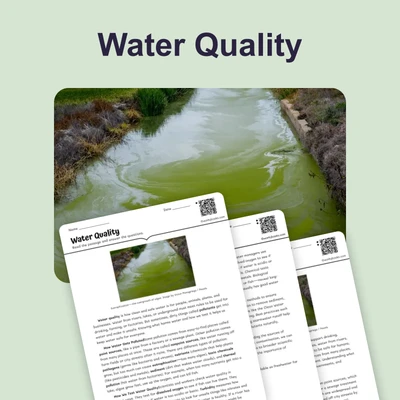
"Runoff of soil & fertilizer" by Lynn Betts, photographer / Wikimedia Commons
Water pollution does not begin in the water itself. Most pollution in rivers, lakes, and coastal waters comes from activities on land. Three major sources of land-based water pollution are sewage from homes and cities, agricultural runoff from farms, and industrial discharge from factories. Each of these sources introduces different types of harmful substances into aquatic ecosystems.
Sewage contains human waste, soap, and other household chemicals. When sewage treatment systems fail or become overwhelmed during heavy rains, untreated sewage can flow directly into waterways. This sewage carries disease-causing pathogens such as bacteria and viruses that make water unsafe for drinking, swimming, or supporting healthy aquatic life. Sewage also contains high levels of nutrients like nitrogen and phosphorus, which are naturally present in human waste.
Agricultural runoff represents another significant pollution source. When farmers apply fertilizers to crops, rain washes excess nutrients into nearby streams and rivers. Similarly, pesticides sprayed on fields to kill insects and weeds can be carried by water into aquatic systems. Animal waste from livestock farms adds even more nutrients and pathogens to the runoff. A single large cattle farm can produce as much waste as a small city, and this waste often reaches waterways during storms.
Industrial discharge includes chemicals, heavy metals, and heated water released from factories and manufacturing plants. These facilities use water for cooling machinery and processing materials, then discharge the water back into rivers or lakes. Even when industries treat their wastewater, some toxic chemicals remain. Heavy metals like mercury and lead can accumulate in fish, making them dangerous for humans and wildlife to eat.
When excess nutrients enter water bodies, they trigger a process called eutrophication. The added nitrogen and phosphorus act like fertilizer for microscopic algae, causing them to multiply rapidly. This rapid growth creates algal blooms that turn water green or brown. When the algae die, bacteria decompose them, consuming large amounts of dissolved oxygen in the water. This oxygen depletion creates hypoxic conditions, or low-oxygen zones, where fish and other aquatic animals cannot survive. These areas are called dead zones.
Dead zones have become a serious environmental problem. The Gulf of Mexico experiences a massive dead zone each summer, caused by nutrient runoff from farms throughout the Mississippi River watershed. This dead zone can cover an area larger than the state of Connecticut. Fish, shrimp, and crabs must flee the area or die, devastating the fishing industry and disrupting marine food webs. Similar dead zones appear in the Chesapeake Bay, Lake Erie, and coastal waters worldwide.
Understanding land-based pollution sources helps communities develop solutions. Improved sewage treatment, better farming practices that reduce fertilizer use, and stricter regulations on industrial discharge can all reduce water pollution. Protecting water quality requires recognizing that what happens on land directly affects the health of aquatic ecosystems.
Interesting Fact: The dead zone in the Gulf of Mexico grows and shrinks with the seasons, typically reaching its largest size in late summer when nutrient runoff peaks and warm water temperatures promote algal growth.
Comprehension quiz (10 questions)
1. What are the three major sources of land-based water pollution mentioned in the passage?
2. According to the passage, what happens when sewage treatment systems fail during heavy rains?
3. What does the term 'eutrophication' mean in the context of water pollution?
4. How do algal blooms lead to the creation of dead zones?
5. Which statement best describes why a large cattle farm is compared to a small city in the passage?
6. What is a 'hypoxic' zone?
7. Based on the passage, which solution would help reduce water pollution?
8. Why are heavy metals like mercury and lead dangerous in water?
9. True or False: The dead zone in the Gulf of Mexico is caused by nutrient runoff from farms throughout the Mississippi River watershed.
10. True or False: Pesticides sprayed on farm fields cannot reach aquatic systems because soil filters them out completely.
Perfect for the way you teach
- Build comprehension skills
- Auto-graded quiz
- Differentiated reading
- Read together at home
- Improve fluency
- Quiet reading time
- Reading curriculum support
- Independent practice
- Track Lexile growth