How Landfills and Waste Affect Land
Interactive passage with audio narration, comprehension questions, and printable PDF.
By completing this purchase you agree to our Terms of Use and Privacy Policy. Your subscription renews automatically until you cancel. You can cancel anytime from your account settings. All sales are final and non-refundable. Digital content is available for download in your account immediately upon purchase.
What's included
How Landfills and Waste Affect Land preview and details
About this printable How Landfills and Waste Affect Land science reading passage, NGSS-aligned (Grades 6-8)
Sample passage and quiz from How Landfills and Waste Affect Land
Reading passage and comprehension quiz preview
How Landfills and Waste Affect Land
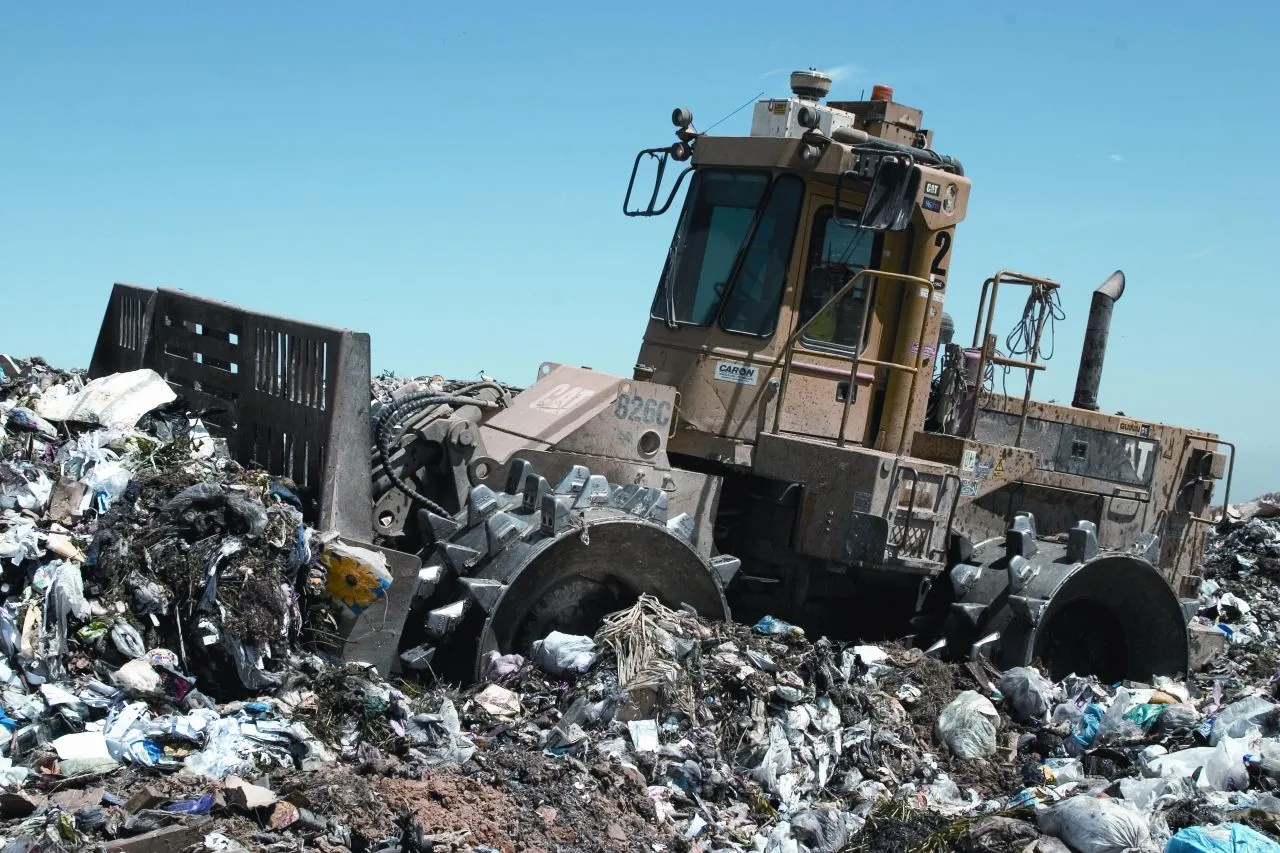
In the United States alone, there are more than 2,000 active landfills covering hundreds of thousands of acres."Landfill compactor" by Ropable / Wikimedia Commons
Every day, people around the world throw away millions of tons of garbage. Most of this solid waste ends up in landfills, which are large areas of land designed to hold trash. A landfill is essentially a massive hole in the ground lined with clay and plastic to prevent waste from directly touching the soil. As trucks dump garbage into these sites, workers compact the waste with heavy machinery and cover it with layers of soil. While landfills seem like a simple solution to our waste problem, they create serious environmental challenges that affect land, water, and air for decades.
When organic materials like food scraps, paper, and yard waste decompose in landfills, they produce methane, a powerful greenhouse gas. Unlike composting, where waste breaks down with oxygen, landfills create anaerobic decomposition, meaning decomposition without oxygen. This process generates methane gas, which is 25 times more effective at trapping heat in the atmosphere than carbon dioxide. Modern landfills install gas collection systems to capture some methane for energy production, but significant amounts still escape into the atmosphere. A single large landfill can produce enough methane to power thousands of homes, yet this same gas contributes to climate change when released.
Another major problem involves leachate, the toxic liquid that forms when rainwater filters through decomposing garbage. As water moves through layers of waste, it dissolves chemicals from household cleaners, batteries, electronics, and other products. This contaminated liquid can contain heavy metals like lead and mercury, as well as harmful bacteria and chemical compounds. Even with protective liners, leachate can eventually seep into surrounding soil and reach underground groundwater supplies. Once groundwater becomes contaminated, it can spread pollution over large areas and remain toxic for many years. Communities near landfills sometimes discover that their well water has become unsafe to drink.
Landfills also consume enormous amounts of land that could serve other purposes. In the United States alone, there are more than 2,000 active landfills covering hundreds of thousands of acres. As these sites fill up, communities must find new locations, often converting farmland, forests, or wetlands into waste disposal areas. The problem intensifies as global consumption patterns increase, meaning people buy and discard more products than ever before. Fast fashion, single-use plastics, and disposable electronics all contribute to mountains of waste. Many items could last for years but are designed to be replaced quickly, creating a cycle of constant disposal.
The global waste crisis reveals the fundamental limitations of disposal-based waste management. Simply burying trash does not make it disappear; it transforms the problem into land degradation, water pollution, and greenhouse gas emissions. Countries with high consumption rates produce the most waste per person, yet developing nations often lack proper landfill infrastructure entirely. This creates situations where waste accumulates in open dumps, directly contaminating soil and water without any protective barriers. Even wealthy nations struggle to find enough space for their growing waste streams.
Addressing this crisis requires changing how we think about waste. The concept of reduce, reuse, recycle offers alternatives to disposal. Reducing consumption means buying fewer unnecessary items and choosing durable products. Reusing involves finding new purposes for items instead of discarding them. Recycling transforms materials into new products, keeping them out of landfills. Some communities have adopted zero-waste goals, aiming to redesign systems so that all materials either decompose safely or get recycled. Sweden has become so efficient at waste-to-energy conversion that it imports garbage from other countries to fuel its power plants. These examples show that solutions exist, but they require commitment to changing consumption habits and waste management systems.
Interesting Fact: The average American produces about 4.5 pounds of trash per day, which means a single person generates roughly 1,600 pounds of waste each year—enough to fill a small bedroom from floor to ceiling.
Comprehension quiz (10 questions)
1. What is a landfill?
2. Why do landfills produce methane gas?
3. What does the term 'leachate' mean in the context of landfills?
4. How does leachate affect groundwater?
5. According to the passage, what is one major problem with increasing consumption patterns?
6. What is the main limitation of disposal-based waste management?
7. Which example from the passage shows a successful alternative to disposal-based waste management?
8. What does 'reduce, reuse, recycle' mean?
9. True or False: Methane gas is 25 times more effective at trapping heat in the atmosphere than carbon dioxide.
10. True or False: Once a landfill fills up with garbage, the land can immediately be used for farming without any problems.
Perfect for the way you teach
- Build comprehension skills
- Auto-graded quiz
- Differentiated reading
- Read together at home
- Improve fluency
- Quiet reading time
- Reading curriculum support
- Independent practice
- Track Lexile growth