How Mining Impacts the Environment — Reading Comprehension
Rate this
Premium Resource
Present
Present in classroom. No work saved
Assign
Classroom with student accounts, Track progress
Quick Play
No student accounts, assign with a link
Grades
6
7
8
Standards
MS-ESS3-3
PRINT+DIGITAL RESOURCE
This learning resource is available in interactive and printable formats. The interactive worksheet can be played online and assigned to students. The Printable PDF version can be downloaded and printed for completion by hand.
This comprehensive 650-word reading passage examines how mining impacts the environment, specifically addressing habitat destruction, soil disruption, water contamination, and landscape change. Designed for middle school students in grades 6-8, the passage aligns with NGSS science standard MS-ESS3-3, which focuses on applying scientific principles to design methods for monitoring and minimizing human impact on the environment. Students explore both open-pit and underground mining methods and their consequences on ecosystems. The passage includes audio integration for accessibility, a simplified differentiated version for struggling readers and English Language Learners, Spanish translations, interactive comprehension activities, writing prompts with model answers, and graphic organizers. Key vocabulary terms like reclamation, acid mine drainage, subsidence, and biodiversity are defined in context. Real-world examples help students understand how mining operations affect soil stability, water quality, wildlife populations, and landscape features. This resource supports science curriculum standards while developing critical thinking about human activities and environmental stewardship.
CONTENT PREVIEW
Expand content preview
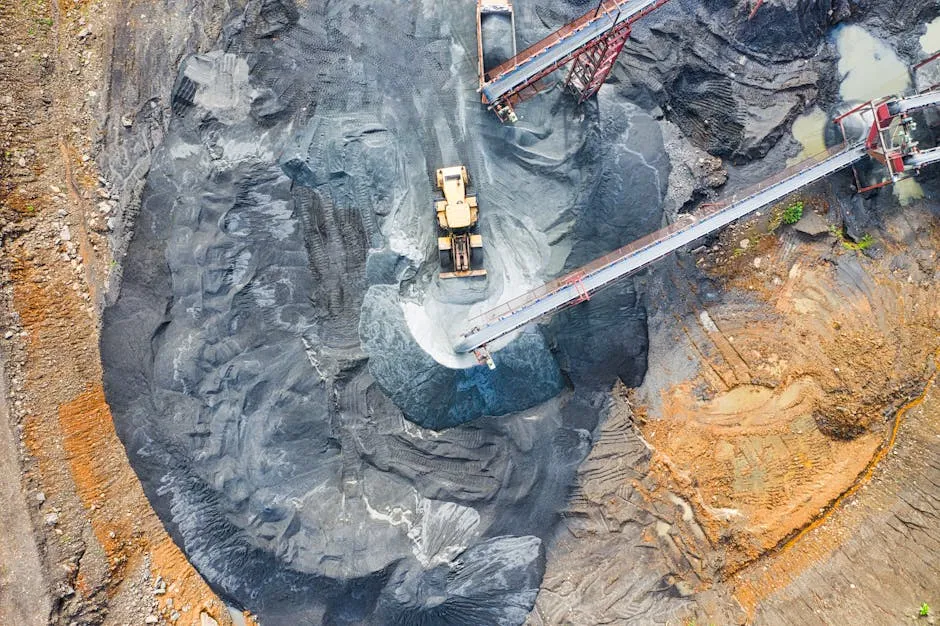
Mining is the process of extracting valuable minerals and resources from the earth. .Aerial view of a large industrial mining site with heavy machinery and conveyor belts in operation. Image by Tom Fisk / Pexels.
Mining is the process of extracting valuable minerals and resources from the earth. While mining provides materials we use every day, it causes serious environmental damage. Both open-pit mining and underground mining create problems that affect ecosystems for decades or even centuries after mining operations end.
Open-pit mining involves removing large amounts of soil and rock to reach minerals near the surface. This method creates massive craters that completely destroy the original landscape. Trees, plants, and topsoil are stripped away, eliminating habitats where animals live and find food. When a forest or grassland is cleared for mining, the wildlife that depends on that ecosystem must relocate or die. Birds lose nesting sites, small mammals lose shelter, and the entire food web collapses. The loss of biodiversity in these areas can be permanent, even after mining stops.
Soil disruption is another major consequence of mining operations. Topsoil, the nutrient-rich upper layer that supports plant growth, is removed and often lost forever. Without vegetation to hold it in place, exposed soil erodes quickly during rainstorms. This erosion washes sediment into nearby streams and rivers, making water cloudy and harming aquatic life. Fish and other water organisms need clear water to breathe and find food. Heavy sediment also fills in spawning areas where fish lay eggs, reducing fish populations.
Water contamination represents one of the most dangerous impacts of mining. When rock containing sulfur compounds is exposed to air and water, it produces acid mine drainage. This acidic water dissolves toxic metals like lead, mercury, and arsenic from surrounding rocks. These pollutants flow into streams, rivers, and groundwater, making water unsafe for drinking and killing aquatic organisms. Acid mine drainage can continue for hundreds of years after a mine closes. Additionally, mining operations use large amounts of water for processing minerals, and this water often becomes contaminated with chemicals before being released back into the environment.
Underground mining creates different but equally serious problems. Removing rock and minerals from beneath the surface can cause the ground above to sink, a process called subsidence. Subsidence damages buildings, roads, and pipelines. It also changes how water flows underground, drying up wells and springs that communities depend on. Underground mines require pumping out groundwater, which lowers water tables and affects surface water sources miles away from the mine site.
The landscape changes caused by mining are dramatic and long-lasting. Open-pit mines create permanent scars on the land that can be seen from space. Waste rock piles, called tailings, contain leftover materials that often include toxic substances. These piles can be hundreds of feet high and cover thousands of acres. Wind and rain carry dust and pollutants from tailings into surrounding areas. Some mining companies attempt reclamation, the process of restoring mined land, but recreating a natural ecosystem takes many decades and often fails to return the land to its original condition.
Understanding mining's environmental impacts is essential for making informed decisions about resource use. While society needs minerals for technology, construction, and manufacturing, we must balance these needs with environmental protection. Scientists and engineers work to develop mining methods that reduce habitat destruction, prevent water contamination, and minimize landscape damage. Stricter environmental regulations and better reclamation practices can help, but the most effective solution is reducing our consumption of mined materials through recycling and using alternative materials.
Interesting Fact: The Berkeley Pit in Montana, an abandoned open-pit copper mine, has filled with acidic water so toxic that migrating birds that land on it die within hours. The water has a pH of 2.5, similar to stomach acid.
What is open-pit mining?
A method that creates tunnels deep undergroundA process of extracting minerals by removing large amounts of soil and rock to create a craterA technique that uses chemicals to dissolve mineralsA system that pumps water out of mines
According to the passage, what happens to wildlife when their habitat is destroyed by mining?
They adapt quickly to new environmentsThey must relocate or die because they lose shelter and food sourcesThey move to nearby citiesThey hibernate until the land recovers
What does the term 'erosion' mean in the context of this passage?
The process of planting new treesThe creation of underground tunnelsThe washing away of exposed soil during rainstormsThe formation of acid in water
What is acid mine drainage?
Water used to clean mining equipmentAcidic water that forms when sulfur-containing rocks are exposed to air and waterRainwater that collects in mining pitsA method of processing minerals
How does underground mining affect the ground above it?
It makes the soil more fertileIt has no effect on the surfaceIt can cause subsidence, making the ground sink and damaging structuresIt creates new hills and mountains
Why is sediment in water harmful to fish?
It makes the water too coldIt makes water cloudy, making it difficult for fish to breathe and find food, and it fills spawning areasIt attracts predatorsIt changes the water temperature
Based on the passage, what can be inferred about the long-term effects of mining?
Mining damage heals naturally within a few monthsEnvironmental damage from mining can last for decades or centuriesAll mining sites return to their original condition within five yearsMining has no long-term effects on the environment
What is the most effective solution mentioned in the passage to reduce mining's environmental impact?
Building more underground minesUsing more water in mining operationsReducing consumption of mined materials through recycling and using alternativesCreating larger open-pit mines
Mining operations always successfully restore land to its original condition through reclamation.
TrueFalse
Acid mine drainage can continue for hundreds of years after a mine closes.
TrueFalse
Perfect For:
👩🏫 Teachers
• Reading comprehension practice
• Auto-graded assessments
• Literacy skill development
👨👩👧👦 Parents
• Reading practice at home
• Comprehension improvement
• Educational reading time
🏠 Homeschoolers
• Reading curriculum support
• Independent reading practice
• Progress monitoring
Reading Features:
📖
Reading Passage
Engaging fiction or nonfiction text
❓
Comprehension Quiz
Auto-graded questions
📊
Instant Feedback
Immediate results and scoring
📄
Printable Version
Download for offline reading
🔊
Read Aloud
Voice-over with word highlighting
Reviews & Ratings
No reviews yet. Be the first to share your experience!
Related Content
Natural Disaster: Volcanic Eruptions
Volcanoes can erupt with lava and ash, changing the landscape. While dangerous, they also create fertile land and new la...
RI.3.1RI.4.4RI.4.2RI.5.2
Human Impacts: Pollution
This middle school science reading passage, aligned with NGSS standards MS-LS2-4 and MS-ESS3-3, examines the mechanisms ...
MS-LS2-4MS-ESS3-3
Human Impacts: Habitat Destruction
This grade 6-8 science passage explores human impacts on ecosystems, focusing on habitat destruction as the leading caus...
MS-LS2-4MS-LS2-5MS-ESS3-3
Ecosystem Services
This engaging middle school science passage introduces students to the concept of ecosystem services, the vital benefits...
MS-LS2-5MS-ESS3-3
Environmental Problems and Solutions
This passage for grades 6-8 introduces major environmental problems such as habitat loss, pollution, climate change, inv...
MS-LS2-4MS-ESS3-3MS-ESS3-4
Remote Sensing
This middle school science passage introduces students to the concept of remote sensing—the collection of information ab...
MS-ESS3-3MS-PS4-2MS-ETS1-1MS-ETS1-3
Geographic Information Systems (GIS)
This engaging middle school science passage introduces students to Geographic Information Systems (GIS), aligning with N...
MS-ESS3-3MS-ETS1-1MS-ETS1-2MS-ETS1-3
Renewable vs. Nonrenewable Energy
This engaging passage, aligned with NGSS standards MS-PS3-4, MS-ESS3-3, and MS-ESS3-4, helps middle school students diff...
MS-PS3-4MS-ESS3-3MS-ESS3-4
Fossil Fuels: Coal
This middle school science reading passage explores the science behind coal, a major fossil fuel. Students will learn ho...
MS-PS3-4MS-ESS3-3MS-ESS3-4
Solar Energy
This engaging passage for grades 6-8 explores the science of solar energy, focusing on how sunlight is converted into el...
MS-PS3-4MS-ESS3-3MS-ESS3-4
Wind Energy
This comprehensive middle school science passage explores the scientific principles behind wind energy and how wind turb...
MS-PS3-4MS-ESS3-3MS-ESS3-4
Hydroelectric Energy
This comprehensive passage introduces middle school students to the science behind hydroelectric energy, directly aligni...
MS-PS3-4MS-ESS3-3MS-ESS3-4
Geothermal Energy
This comprehensive science passage introduces middle school students to the mechanisms and applications of geothermal en...
MS-PS3-4MS-ESS3-3MS-ESS3-4
Biomass and Biofuels
This NGSS-aligned passage introduces grades 6-8 students to the science of biomass and biofuels, explaining how organic ...
MS-PS3-4MS-ESS3-3MS-ESS3-4
Nuclear Energy as a Resource
This NGSS-aligned informational science passage, designed for grades 6-8, explores nuclear energy as a resource in the c...
MS-PS3-4MS-ESS3-3MS-ESS3-4
Water Quality
This middle school science reading passage covers the topic of water quality, aligned with NGSS standards MS-ESS3-1 and ...
MS-ESS3-1MS-ESS3-3
Florida Everglades
This comprehensive passage introduces middle school students to the Florida Everglades, a distinctive wetland ecosystem ...
MS-LS2-1MS-LS2-4MS-ESS3-3MS-ESS3-4
Congo Rainforest
This middle school science passage explores the Congo Rainforest—Earth’s second-largest rainforest, located in Central A...
MS-LS2-1MS-ESS3-3
Nuclear Power Plants
This comprehensive reading passage introduces middle school students (grades 6-8) to the science of nuclear power plants...
MS-PS3-4MS-ESS3-3
Nuclear Safety and Waste
This middle school science passage explores the critical topic of nuclear safety and waste management, aligned with NGSS...