How Mount St. Helens Reshaped Land
Interactive passage with audio narration, comprehension questions, and printable PDF.
By completing this purchase you agree to our Terms of Use and Privacy Policy. Your subscription renews automatically until you cancel. You can cancel anytime from your account settings. All sales are final and non-refundable. Digital content is available for download in your account immediately upon purchase.
What's included
How Mount St. Helens Reshaped Land preview and details
About this printable How Mount St. Helens Reshaped Land science reading passage, NGSS-aligned (Grades 5-8)
Sample passage and quiz from How Mount St. Helens Reshaped Land
Reading passage and comprehension quiz preview
How Mount St. Helens Reshaped Land
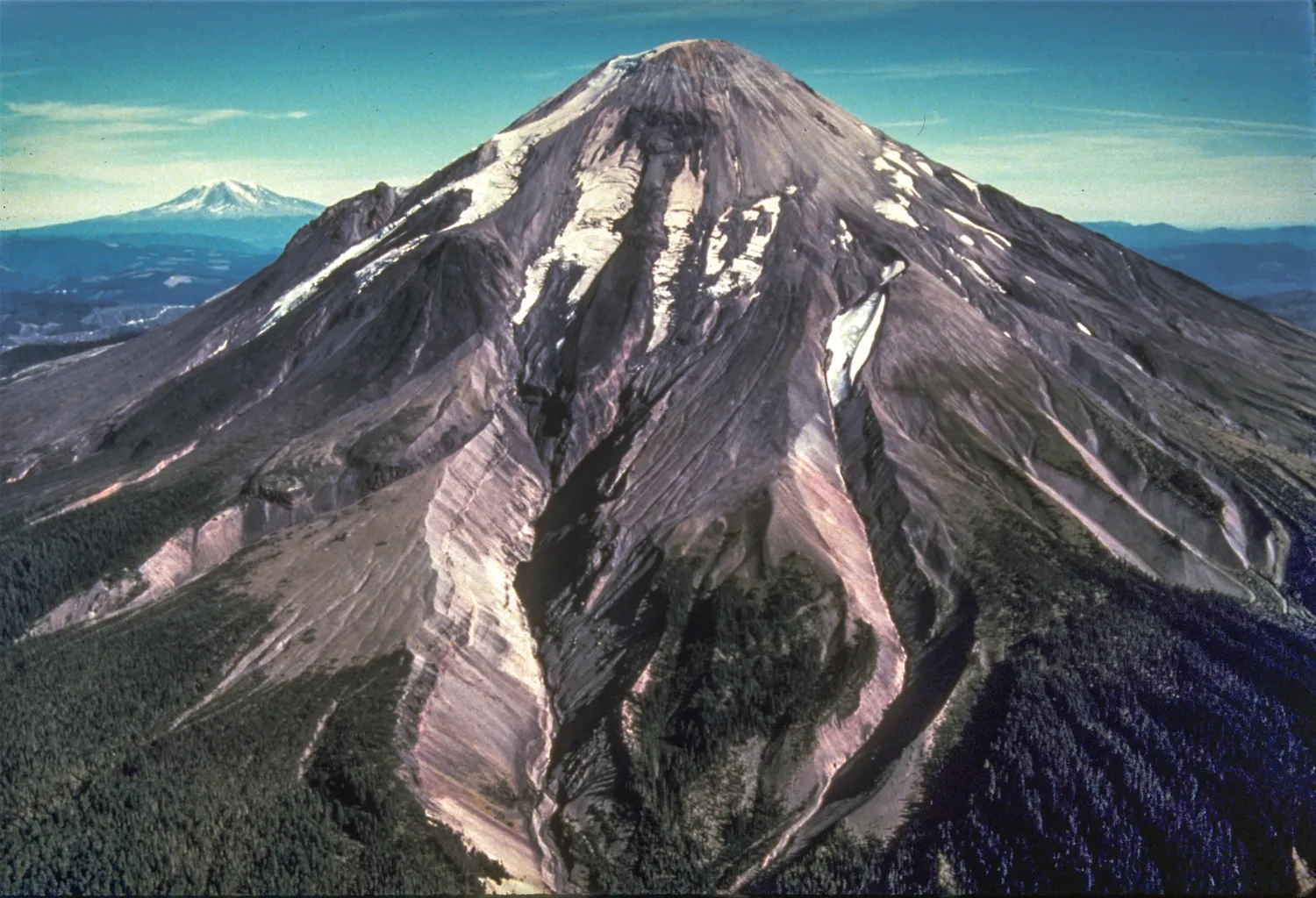
"Mount St. Helens 1979" by USGS / Wikimedia Commons (Public domain).
On May 18, 1980, Mount St. Helens in Washington State erupted with tremendous force. This volcano dramatically changed the surrounding landscape in ways scientists still study today. The eruption began with a massive landslide that tore away the mountain's entire north side. This landslide released pressure inside the volcano, triggering a powerful sideways explosion called a lateral blast. The blast flattened forests for seventeen miles, knocking down trees like matchsticks.
The eruption unfolded in several destructive stages. After the lateral blast, a vertical column of ash shot fifteen miles into the atmosphere. Pyroclastic flows, which are fast-moving currents of hot gas and rock, raced down the mountain's slopes at speeds exceeding 300 miles per hour. These flows buried everything in their path under thick layers of volcanic material. Meanwhile, lahars, or volcanic mudflows, formed when melted snow and ice mixed with ash and debris. These lahars roared down river valleys, carrying massive boulders and destroying bridges.
The eruption transformed the landscape in dramatic ways. Mount St. Helens lost over 1,300 feet of elevation, leaving a gaping crater nearly two miles wide. Ash buried the region under several feet of gray powder, smothering plants and filling streams. Spirit Lake, located near the volcano, filled with debris and became choked with floating logs. The blast zone covered 230 square miles, creating what looked like a lifeless gray desert. Evidence shows that the eruption released energy equivalent to 1,600 atomic bombs.
Scientists observed something remarkable in the years following the eruption. Life gradually returned through a process called ecological succession. Plants sprouted from seeds carried by wind and animals. Small mammals that survived in underground burrows emerged and spread seeds. Within a decade, scientists documented hundreds of plant species returning to the blast zone. Today, Mount St. Helens serves as a natural laboratory where researchers study how ecosystems recover from catastrophic disturbances.
Understanding how Mount St. Helens reshaped the land matters for several reasons. The eruption demonstrated how quickly volcanic events can transform landscapes and affect human communities. As part of the Cascade Range, Mount St. Helens reminds us that many volcanoes remain active along the Pacific coast. Scientists use data from this eruption to predict future volcanic hazards and protect nearby populations. The recovery process also teaches us about nature's resilience and how ecosystems rebuild after major disruptions.
Interesting Fact: Pocket gophers that survived underground played a crucial role in recovery by mixing nutrient-rich soil with volcanic ash, helping plants grow faster than scientists expected.
Comprehension quiz (10 questions)
1. What triggered the powerful sideways explosion at Mount St. Helens?
2. How far did the lateral blast from Mount St. Helens flatten forests?
3. What are lahars?
4. Based on the passage, what does the term 'ecological succession' mean?
5. Why do scientists consider Mount St. Helens a natural laboratory?
6. How did pocket gophers help the ecosystem recover after the eruption?
7. What can scientists learn from Mount St. Helens that helps protect people?
8. Approximately how much elevation did Mount St. Helens lose during the eruption?
9. True or False: Pyroclastic flows moved at speeds exceeding 300 miles per hour during the Mount St. Helens eruption.
10. True or False: No plant life returned to the blast zone within the first decade after the eruption.
Perfect for the way you teach
- Build comprehension skills
- Auto-graded quiz
- Differentiated reading
- Read together at home
- Improve fluency
- Quiet reading time
- Reading curriculum support
- Independent practice
- Track Lexile growth