How Reducing Waste Protects Earth's Systems
Interactive passage with audio narration, comprehension questions, and printable PDF.
By completing this purchase you agree to our Terms of Use and Privacy Policy. Your subscription renews automatically until you cancel. You can cancel anytime from your account settings. All sales are final and non-refundable. Digital content is available for download in your account immediately upon purchase.
What's included
How Reducing Waste Protects Earth's Systems preview and details
About this printable How Reducing Waste Protects Earth's Systems science reading passage, NGSS-aligned (Grades 6-8)
Sample passage and quiz from How Reducing Waste Protects Earth's Systems
Reading passage and comprehension quiz preview
Reduce, Reuse, and Recycle
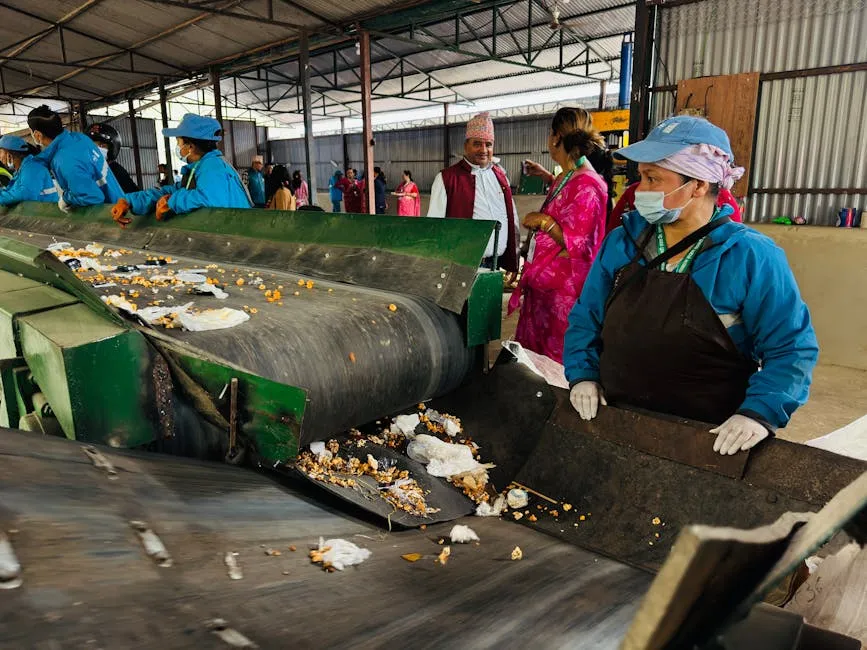
"Workers manually sort recyclables at a material recovery facility." Image by CP Khanal / Pexels.
The waste hierarchy is a system that ranks waste management strategies from most to least effective for protecting the environment. This hierarchy places reducing consumption at the top, reusing materials in the middle, and recycling at the bottom. Understanding this order helps people make better choices about how they use and dispose of materials. The waste hierarchy focuses on preventing waste before it happens rather than managing it after creation.
Reducing consumption means using fewer resources in the first place. This is the most effective strategy because it prevents waste from ever being created. When people reduce consumption, they buy fewer products, choose items with less packaging, and avoid single-use items. This strategy saves the most energy and natural resources because it stops the entire cycle of extraction, manufacturing, transportation, and disposal. For example, bringing a reusable water bottle instead of buying plastic bottles prevents the need to extract oil, manufacture plastic, transport products, and eventually dispose of waste. Reducing consumption also decreases pollution from factories and trucks.
Reusing materials is the second-best option in the waste hierarchy. Reusing means using an item multiple times for its original purpose or finding new uses for it. This strategy requires less energy than recycling because the item does not need to be broken down and reprocessed. When someone reuses a glass jar to store food, repairs a broken toy, or donates old clothing, they extend the life of materials already produced. Reusing prevents new resources from being extracted and manufactured. A reusable shopping bag, for instance, can replace hundreds of disposable plastic bags over its lifetime, saving the petroleum needed to make new bags and reducing landfill waste.
Recycling is the third option in the waste hierarchy and should be used only when reducing and reusing are not possible. Recycling involves collecting used materials, breaking them down, and manufacturing them into new products. While recycling is better than throwing items in the trash, it still requires significant energy and resources. Recycling facilities must collect materials, sort them, clean them, and process them into raw materials. For example, recycling aluminum cans uses about 95% less energy than making new cans from mined aluminum ore, but it still requires trucks for collection, water for cleaning, and electricity for processing. Some materials lose quality when recycled and can only be recycled a limited number of times.
Each level of the waste hierarchy has different environmental impacts. Reducing consumption prevents the greatest amount of resource extraction, energy use, and pollution. Mining, drilling, and logging to obtain raw materials damage ecosystems and require enormous amounts of energy. Manufacturing products from these materials produces air and water pollution. Reusing materials avoids most of these impacts by keeping items in use longer. Recycling reduces some environmental damage but still requires energy for collection and processing. Items sent to landfills or incinerators represent the worst option, as they waste all the energy and resources used to create them while potentially releasing harmful chemicals into soil and air.
Applying the waste hierarchy in daily life creates meaningful environmental benefits. Students can reduce by choosing products with minimal packaging, borrowing items instead of buying new ones, and thinking carefully before making purchases. They can reuse by maintaining and repairing possessions, finding creative new uses for items, and choosing durable products designed to last. When reducing and reusing are not options, proper recycling ensures materials are processed correctly. Understanding that reducing consumption has the greatest positive impact helps people prioritize their choices and recognize that recycling alone cannot solve waste problems.
Interesting Fact: Americans generate about 4.5 pounds of trash per person each day, but reducing consumption by just 10% would prevent more environmental damage than recycling 50% of all waste.
Comprehension quiz (10 questions)
1. According to the waste hierarchy, which strategy is most effective for protecting the environment?
2. Why does reducing consumption save more energy than recycling?
3. What does the term 'extraction' mean in this passage?
4. How much less energy does recycling aluminum cans use compared to making new cans from mined ore?
5. Which example best demonstrates the strategy of reusing?
6. Why is recycling considered less effective than reusing in the waste hierarchy?
7. What is one environmental impact of mining and drilling for raw materials?
8. If a student chooses to borrow a book instead of buying a new one, which waste hierarchy strategy are they using?
9. True or False: Recycling alone can solve all waste problems.
10. True or False: A reusable shopping bag can replace hundreds of disposable plastic bags over its lifetime.
Perfect for the way you teach
- Build comprehension skills
- Auto-graded quiz
- Differentiated reading
- Read together at home
- Improve fluency
- Quiet reading time
- Reading curriculum support
- Independent practice
- Track Lexile growth