Reading PassagePremium

How Scientists Monitor and Predict Eruptions

Interactive passage with audio narration, comprehension questions, and printable PDF.

No ratings yet
Grades 5–8ScienceElaEnglish · SpanishInteractive · Printable
Aligned toMS-ESS3-2
Just this resource
$1.50
One-time purchase
Best value
Unlock everything
$49.99$29.99/yr
40% off until Aug 1 — 10,000+ resources
Renews at $49.99/year.
Unlock above to use these actions

What's included

Reading passage
Audio narration
Comprehension quiz
Writing activity
Glossary & flashcards
Differentiated version
Spanish translation

How Scientists Monitor and Predict Eruptions preview and details

About this printable How Scientists Monitor and Predict Eruptions science reading passage, NGSS-aligned (Grades 5-8)

This 400-500 word informational science passage for grades 6-8 explores how scientists monitor and predict volcanic eruptions using multiple warning signs. Students learn about the key indicators that signal an impending eruption, including earthquake swarms detected by seismometers, ground swelling measured by GPS and tiltmeters, changes in gas emissions, and rising temperatures. The passage explains why volcanic eruptions are generally easier to forecast than earthquakes—because rising magma announces itself through these measurable changes. Aligned with NGSS standards MS-ESS3-2 and the Disciplinary Core Idea MS-ESS3.B (Natural Hazards), this passage includes audio integration for accessibility. Students explore real-world applications of volcano monitoring and understand how scientists combine multiple data sources to issue timely evacuation warnings. The content emphasizes scientific observation, evidence-based prediction, and the importance of monitoring systems in protecting communities near active volcanoes.
Written by Workybooks TeamPublished by Workybooks
Preview

Sample passage and quiz from How Scientists Monitor and Predict Eruptions

Reading passage and comprehension quiz preview

How Scientists Monitor and Predict Eruptions
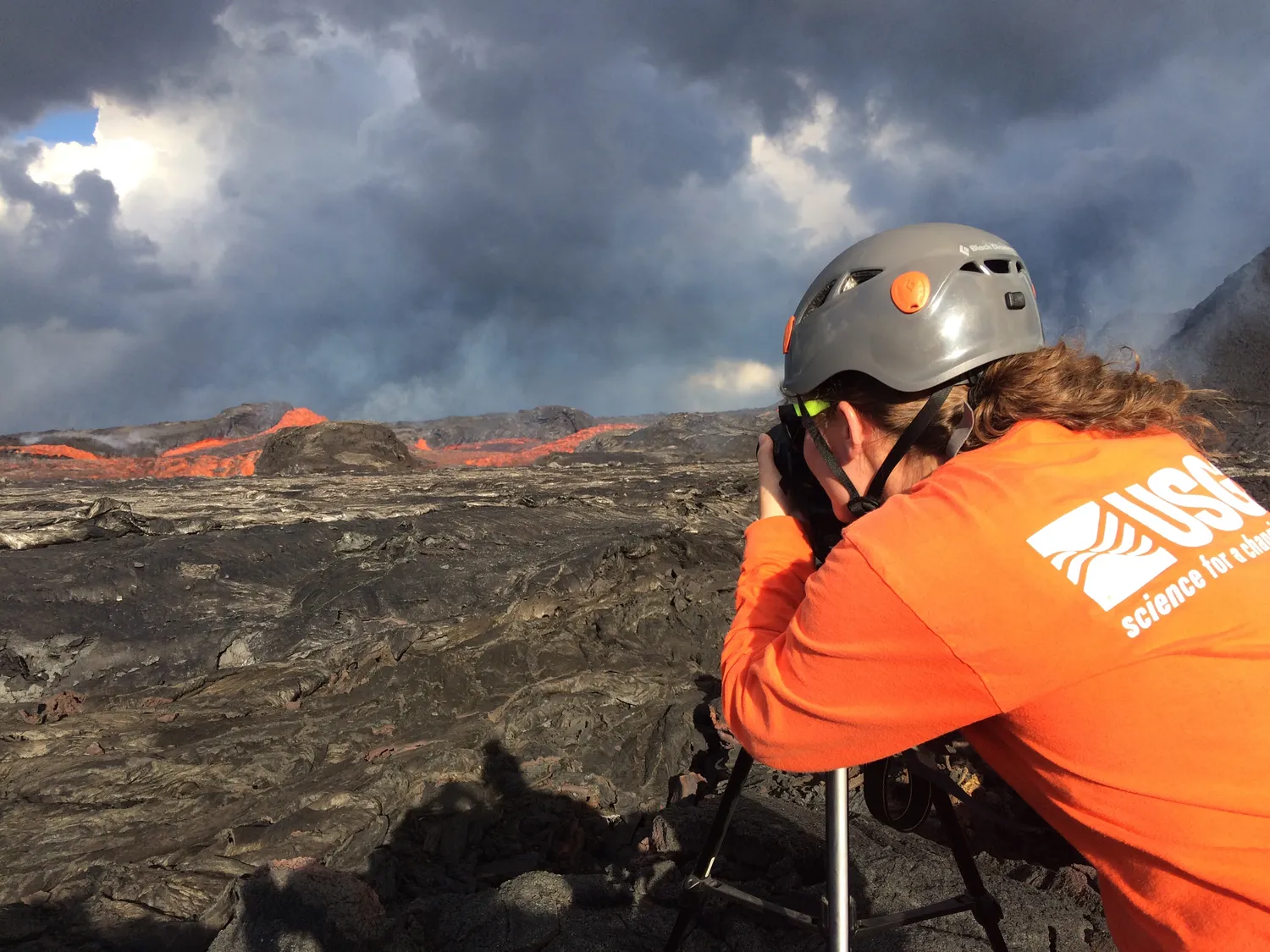
USGS Hawaiian Volcano Observatory scientist monitors Kīlauea Volcano's Lower East Rift Zone lava flow on 6-25-2018 (45542229424)

"USGS Hawaiian Volcano Observatory scientist monitors Kīlauea Volcano's Lower East Rift Zone lava flow on by Hawai‘i Volcanoes NPS / Wikimedia Commons 

Unlike earthquakes, volcanic eruptions usually give warning signs that scientists can detect. Evidence shows that eruptions can often be predicted days to weeks ahead. This ability to forecast volcanic activity saves lives by giving people time to evacuate safely.

As magma rises inside a volcano, it creates several measurable changes. The magma pushes against surrounding rock and causes it to crack. These cracks trigger swarms of small earthquakes that seismometers can detect. Scientists use the same instruments from earthquake monitoring to track these seismic signals. The ground surface also swells and tilts as magma fills the magma chamber below. Scientists track these changes with GPS devices and tiltmeters, which measure tiny shifts in the angle of the ground.

Changes in gases escaping from volcanic vents provide another important clue. As magma rises, it releases gases like sulfur dioxide and carbon dioxide. Scientists collect gas samples and measure their amounts regularly. Rising ground temperatures near the volcano can also signal that magma is moving closer to the surface. Thermal cameras and temperature sensors help scientists monitor these heat changes.

By combining all these signals, volcano observatories can warn people in time to evacuate. Scientists explain that volcanoes are generally easier to forecast than earthquakes. The rising magma announces itself through multiple warning signs. In 1991, scientists at Mount Pinatubo in the Philippines detected increasing earthquakes and ground swelling. They issued warnings that led to the evacuation of more than 60,000 people. When the volcano erupted, thousands of lives were saved because of this advance warning.

This monitoring matters because millions of people live near active volcanoes worldwide. Scientists observe volcanic activity continuously at hundreds of locations. Their work helps communities prepare for eruptions and reduces the risk to human life and property.

Interesting Fact: Some volcanoes show warning signs for months or even years before erupting, while others may give only a few days of notice. Scientists must carefully interpret each volcano's unique pattern of signals.

Comprehension quiz (10 questions)

1. What is one main reason volcanic eruptions are easier to predict than earthquakes?

Volcanoes only erupt during certain seasons
Rising magma creates multiple warning signs that can be measured
Volcanic eruptions happen less frequently than earthquakes
Volcanoes are always located near the ocean

2. What instrument do scientists use to detect small earthquakes caused by rising magma?

Thermometer
Barometer
Seismometer
Compass

3. In the context of the passage, what does 'swells' mean when describing the ground surface?

Becomes wet and muddy
Expands and rises upward
Cracks and breaks apart
Cools down rapidly

4. What are tiltmeters used to measure?

The temperature of magma
The amount of gas released
Tiny changes in the angle of the ground
The speed of lava flow

5. Based on the passage, why do scientists monitor gas emissions from volcanic vents?

Changes in gas amounts can indicate rising magma
Gases help cool down the volcano
Gas emissions prevent earthquakes
Measuring gases is easier than other methods

6. How did volcano monitoring help save lives at Mount Pinatubo in 1991?

Scientists stopped the eruption from happening
Warning signs allowed scientists to issue evacuation orders before the eruption
The monitoring equipment blocked the lava flow
Scientists predicted the exact minute of eruption

7. If a volcano shows increasing earthquake activity, ground swelling, and rising gas emissions, what can scientists infer?

The volcano will never erupt
The volcano is becoming dormant
Magma may be rising and an eruption could occur
The monitoring equipment is broken

8. A scientist notices that ground temperatures near a volcano are increasing. Which tool would be most useful for monitoring this change?

Seismometer
Thermal camera
Tiltmeter
GPS device

9. True or False: All volcanoes show the exact same warning signs for the same amount of time before erupting.

True
False

10. True or False: Scientists can predict volcanic eruptions by combining data from earthquakes, ground deformation, gas emissions, and temperature changes.

True
False
Who it's for

Perfect for the way you teach

Teachers
  • Build comprehension skills
  • Auto-graded quiz
  • Differentiated reading
Parents
  • Read together at home
  • Improve fluency
  • Quiet reading time
Homeschoolers
  • Reading curriculum support
  • Independent practice
  • Track Lexile growth
Topics

Reviews & Ratings

No reviews yet. Be the first to share your experience!

More reading you might love

20 more
Passage
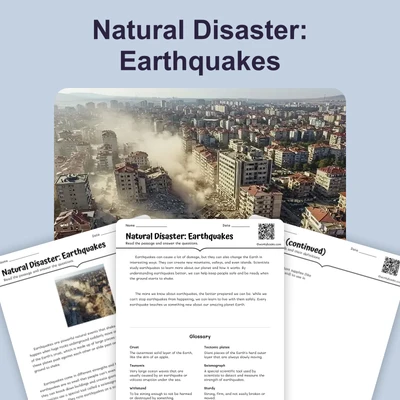
Natural Disaster: Earthquake - reading educational content
Grades 4–5

Natural Disaster: Earthquake

weather and climate · RI.3.1

Free
Passage
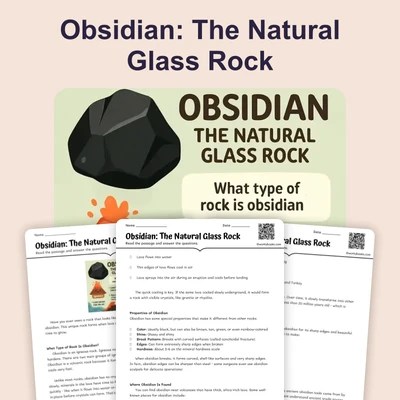
Obsidian: The Natural Glass Rock - reading educational content
Grades 5–8

Obsidian: The Natural Glass Rock

earth and space science · MS-ESS2-3

Free
Passage
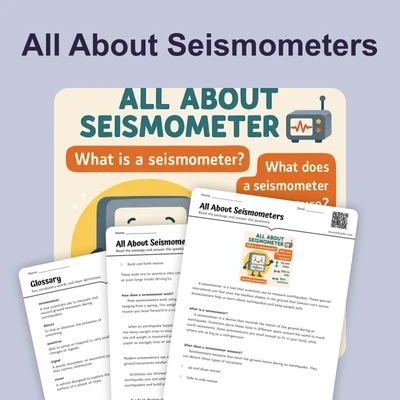
All About Seismometers - reading educational content
Grades 5–8

All About Seismometers

earth and space science · MS-ESS3-2

Free
Passage
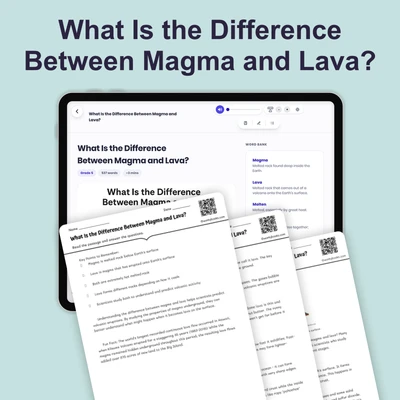
What Is the Difference Between Magma and Lava? - reading educational content
Grades 5–8

What Is the Difference Between Magma and Lava?

earth and space science · MS-ESS2-3

$1.50
Passage
Tools and Technology in Earth Science - reading educational content
Grades 5–8

Tools and Technology in Earth Science

science · MS-ESS2-2

$1.50
Passage
Maps and Their Uses - reading educational content
Grades 5–8

Maps and Their Uses

earth and space science · MS-ESS2-2

$1.50
Passage
Mass Movements - reading educational content
Grades 5–8

Mass Movements

science · MS-ESS2-1

$1.50
Passage
What Causes Earthquakes? - reading educational content
Grades 5–8

What Causes Earthquakes?

earth and space science · MS-ESS2-2

$1.50
Passage
Floods: Causes and Types - reading educational content
Grades 5–8

Floods: Causes and Types

weather and climate · MS-ESS3-2

$1.50
Passage
Hurricanes and Tropical Cyclones - reading educational content
Grades 5–8

Hurricanes and Tropical Cyclones

weather and climate · MS-ESS3-2

$1.50
Passage
Hurricane Preparedness and Safety - reading educational content
Grades 5–8

Hurricane Preparedness and Safety

weather and climate · MS-ESS3-2

$1.50
Passage
Tornadoes - reading educational content
Grades 5–8

Tornadoes

weather and climate · MS-ESS3-2

$1.50
Passage
Tsunamis - reading educational content
Grades 5–8

Tsunamis

earth and space science · MS-ESS3-2

$1.50
Passage
Tsunami Warning and Safety - reading educational content
Grades 5–8

Tsunami Warning and Safety

weather and climate · MS-ESS3-2

$1.50
Passage
Earthquake Hazards and Damage - reading educational content
Grades 5–8

Earthquake Hazards and Damage

earth and space science · MS-ESS3-2

$1.50
Passage
Earthquake Zones and Patterns - reading educational content
Grades 5–8

Earthquake Zones and Patterns

earth and space science · MS-ESS2-2

$1.50
Passage
Seismic Waves - reading educational content
Grades 5–8

Seismic Waves

earth and space science · MS-ESS2-2

$1.50
Passage
Measuring Earthquakes - reading educational content
Grades 5–8

Measuring Earthquakes

earth and space science · MS-ESS2-2

$1.50
Passage
Earthquake Safety and Preparedness - reading educational content
Grades 5–8

Earthquake Safety and Preparedness

earth and space science · MS-ESS3-2

$1.50
Passage
Volcanic Eruptions and Products - reading educational content
Grades 5–8

Volcanic Eruptions and Products

earth and space science · MS-ESS2-2

$1.50
Copyright © 2026 Workybooks. Made with ♥ in California.