How Spacewalks Work
Interactive passage with audio narration, comprehension questions, and printable PDF.
By completing this purchase you agree to our Terms of Use and Privacy Policy. Your subscription renews automatically until you cancel. You can cancel anytime from your account settings. All sales are final and non-refundable. Digital content is available for download in your account immediately upon purchase.
What's included
How Spacewalks Work preview and details
About this printable How Spacewalks Work science reading passage, NGSS-aligned (Grades 5-8)
Sample passage and quiz from How Spacewalks Work
Reading passage and comprehension quiz preview
How Spacewalks Work
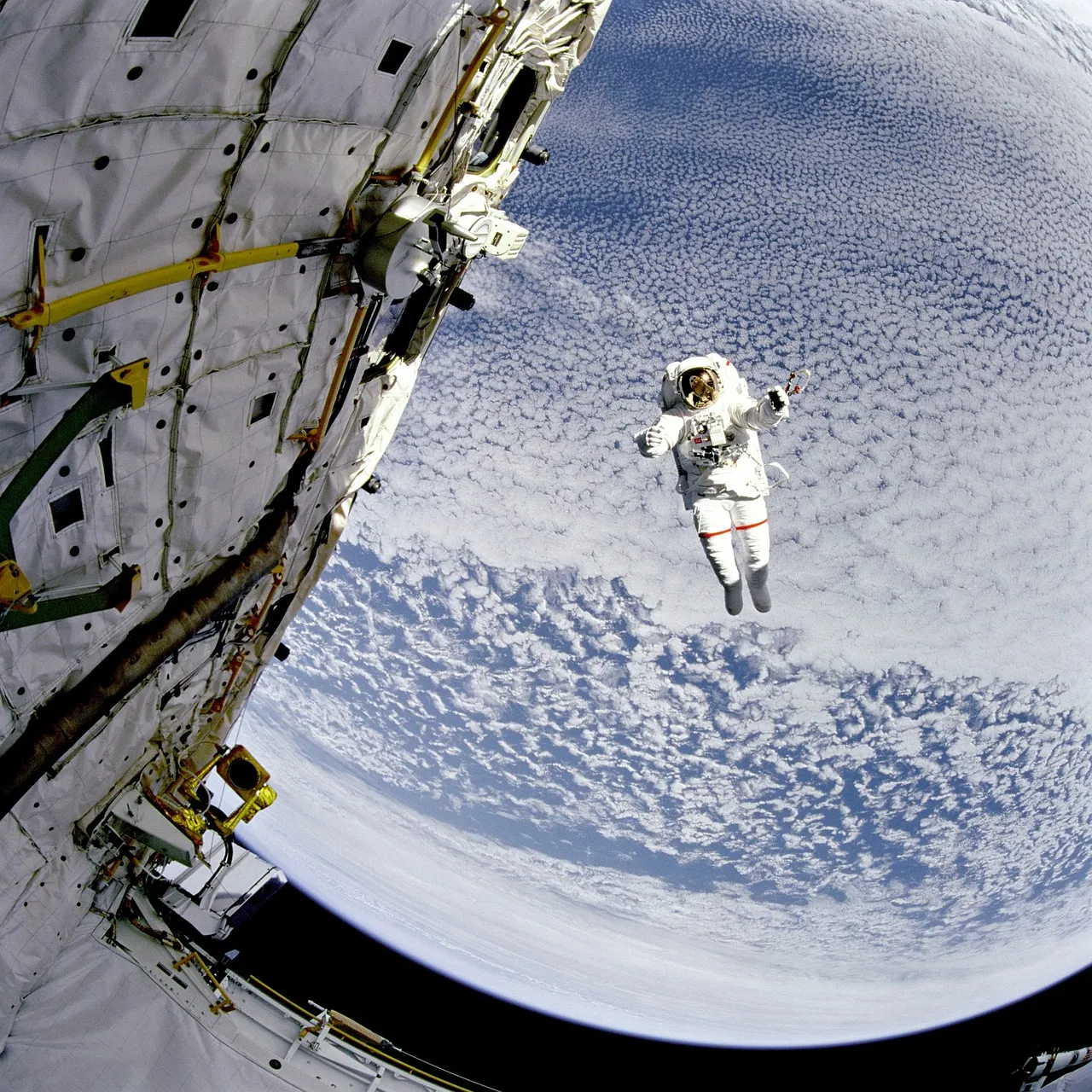
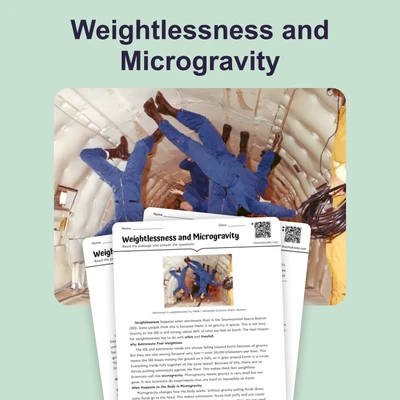
When astronauts leave their spacecraft to work outside, they perform what scientists call an Extravehicular Activity, or EVA. These spacewalks happen while the astronaut and spacecraft orbit Earth together. Both are in continuous free fall toward our planet. However, their forward motion keeps them moving around Earth rather than falling straight down. This creates the condition scientists call microgravity.
During a spacewalk, astronauts experience the same microgravity as the International Space Station itself. They float freely but must stay connected to the spacecraft with a tether. Evidence shows that without this safety line, an astronaut could drift away from the station. The tether can extend up to 85 feet and contains communication wires and safety cables. Astronauts also wear a small jet pack called SAFER as backup. This device can propel them back to the station if the tether fails.
The spacesuit provides life support in the harsh space environment. Scientists explain that space has no air pressure, creating a vacuum. The suit maintains pressure around the astronaut's body, similar to atmospheric pressure on Earth. Without this protection, gases dissolved in body fluids would form bubbles. The suit also supplies oxygen for breathing and removes carbon dioxide that astronauts exhale.
Temperature control presents another major challenge during EVAs. The side of the suit facing the Sun can reach 250 degrees Fahrenheit. Meanwhile, the shaded side may drop to negative 250 degrees Fahrenheit. The suit contains multiple layers of insulation and a cooling system. Water flows through tubes in an undergarment to absorb body heat. Astronaut Peggy Whitson completed ten spacewalks totaling more than 60 hours outside the station. She reported that temperature regulation remains critical throughout each EVA.
Understanding how spacewalks work helps scientists plan future space exploration missions. Engineers continue improving spacesuit designs for longer EVAs. These advances may support missions to the Moon and Mars. Astronauts can repair satellites, build space structures, and conduct experiments that benefit research on Earth.
Interesting Fact: The longest single spacewalk lasted 8 hours and 56 minutes. Astronauts need this much time because working in bulky pressurized gloves makes even simple tasks difficult and time-consuming.
Comprehension quiz (10 questions)
1. What does EVA stand for in the context of spacewalks?
2. Why do astronauts and the space station experience microgravity?
3. What is the main purpose of the tether during a spacewalk?
4. Based on the passage, what does the term 'vacuum' mean in the context of space?
5. How does the spacesuit help astronauts deal with extreme temperatures?
6. What can you infer about why working in space takes longer than on Earth?
7. If an astronaut's tether broke during a spacewalk, what backup system could help them return to the station?
8. How might improvements in spacesuit technology benefit future space exploration?
9. True or False: Astronauts during a spacewalk are not affected by Earth's gravity at all.
10. True or False: The spacesuit provides oxygen for breathing and removes carbon dioxide that astronauts exhale.
Perfect for the way you teach
- Build comprehension skills
- Auto-graded quiz
- Differentiated reading
- Read together at home
- Improve fluency
- Quiet reading time
- Reading curriculum support
- Independent practice
- Track Lexile growth