Reading PassagePremium

How to Stay Safe During an Earthquake

Interactive passage with audio narration, comprehension questions, and printable PDF.

No ratings yet
Grades 5–8ScienceElaEnglish · SpanishInteractive · Printable
Aligned toMS-ESS3-2
Just this resource
$1.50
One-time purchase
Best value
Unlock everything
$49.99$29.99/yr
40% off until Aug 1 — 10,000+ resources
Renews at $49.99/year.
Unlock above to use these actions

What's included

Reading passage
Audio narration
Comprehension quiz
Writing activity
Glossary & flashcards
Differentiated version
Spanish translation

How to Stay Safe During an Earthquake preview and details

About this printable How to Stay Safe During an Earthquake science reading passage, NGSS-aligned (Grades 5-8)

This comprehensive 500-word reading passage teaches middle school students (grades 6-8) essential earthquake safety procedures aligned with NGSS standard MS-ESS3-2 and Disciplinary Core Idea MS-ESS3.B. Students learn the internationally recommended Drop, Cover, and Hold On technique, understanding why dropping to hands and knees prevents falls, how taking cover under sturdy furniture protects from falling objects, and why holding on is crucial until shaking stops. The passage covers indoor and outdoor safety protocols, explains the dangers of windows and elevators during earthquakes, and emphasizes preparation through emergency kits, family communication plans, and securing heavy furniture. Students explore real-world applications including aftershock awareness and evidence-based safety recommendations. The lesson includes audio integration for accessibility, a simplified differentiated version for English Language Learners and struggling readers, Spanish translations, comprehensive glossary, multiple-choice assessments, writing activities, and graphic organizers. This practical knowledge connects Earth science concepts to life-saving actions, helping students apply their understanding of seismic hazards to protect themselves and their families during earthquake events.
Written by Workybooks TeamPublished by Workybooks
Preview

Sample passage and quiz from How to Stay Safe During an Earthquake

Reading passage and comprehension quiz preview

How to Stay Safe During an Earthquake
earthquakes-4
Earthquake Safety and Preparedness

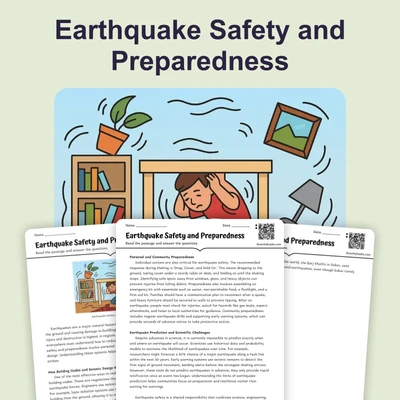
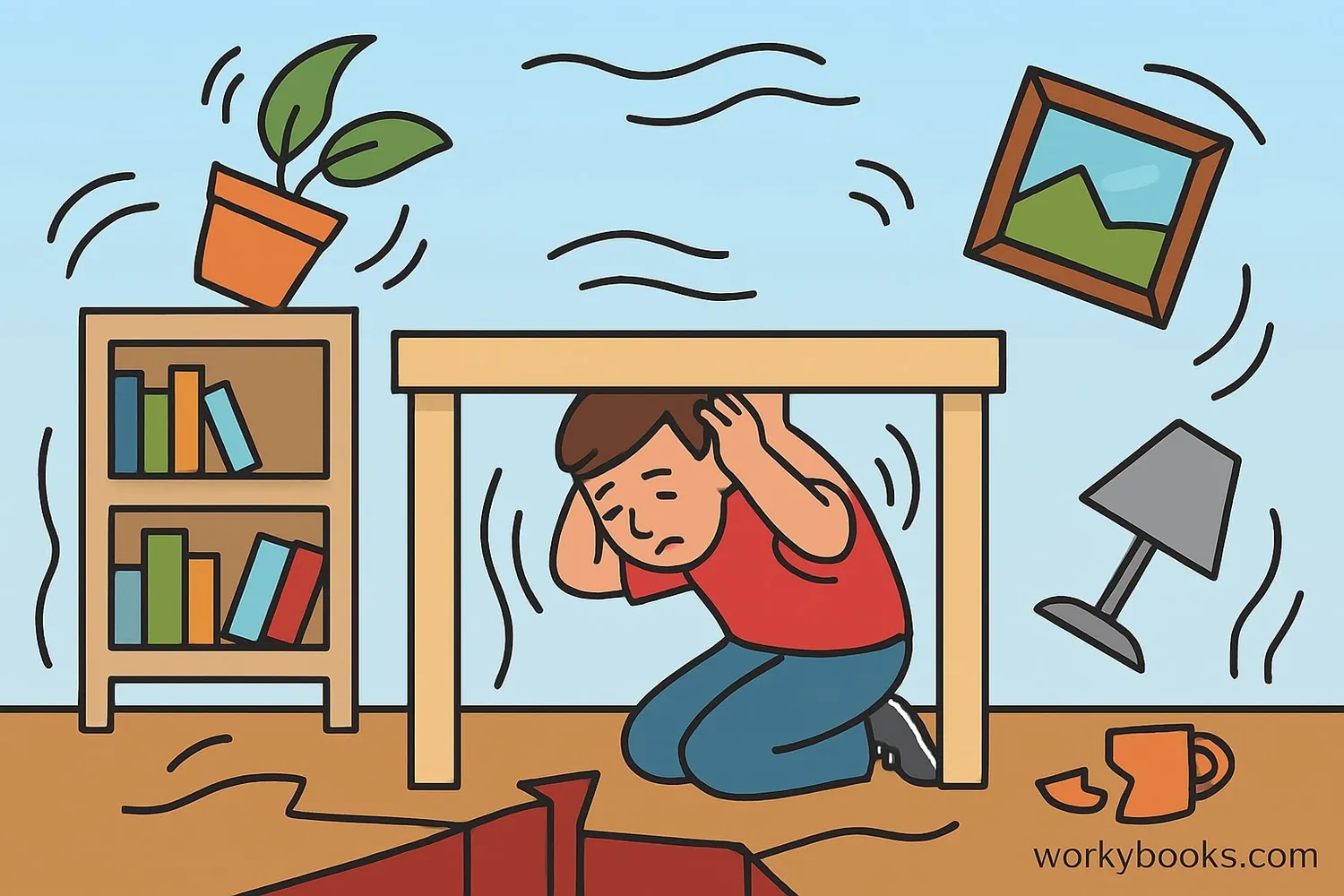
When an earthquake strikes, knowing what to do can protect your life. Scientists and emergency experts recommend one main action worldwide: Drop, Cover, and Hold On. This three-step process keeps you safe from the two biggest dangers during earthquakes—falling down from shaking ground and getting hit by falling objects. Evidence shows that following these steps reduces injuries during seismic events.

The first step is to drop to your hands and knees immediately when you feel shaking. This position prevents the earthquake from knocking you over. Strong ground motion can make it impossible to walk or run safely. Getting low to the ground gives you stability and control. The second step is to take cover under a sturdy desk or table. This shelter protects your head and body from falling ceiling tiles, light fixtures, and other objects. If no table is available, crawl next to an interior wall away from windows. Cover your head and neck with your arms. The third step is to hold on to your shelter until the shaking stops completely. The desk or table may move during strong shaking, so grip a leg firmly.

Stay away from windows during an earthquake because glass can shatter and cause serious cuts. Avoid tall furniture like bookcases that can tip over. Never run outside during shaking—falling debris from buildings poses major risks. Do not use elevators because they can stop working or become stuck between floors. If you are outdoors when shaking starts, move quickly to an open area away from buildings, trees, and power lines. Drop to the ground and protect your head until the shaking ends.

Being prepared before an earthquake happens is just as important as knowing what to do during one. Families should create an emergency kit with water, food, flashlights, batteries, and a first aid kit. Make a communication plan so family members know how to contact each other if separated. Secure heavy furniture and water heaters to walls using straps or brackets. This mitigation work prevents items from falling during shaking. After the main earthquake, stay alert for aftershocks—smaller earthquakes that follow the main event. Aftershocks can cause additional damage to weakened structures.

In 2011, Japan experienced a magnitude 9.0 earthquake. Many lives were saved because people practiced earthquake drills regularly and knew to Drop, Cover, and Hold On. This real-world example demonstrates how preparation and quick action protect communities during seismic hazards. Understanding earthquake safety connects what you learn about Earth's processes to actions that can save your life and help others. Taking these steps seriously means you are ready to respond when shaking begins.

Interesting Fact: Scientists estimate that millions of earthquakes occur each year worldwide, but most are too small for people to feel. Only about 100 earthquakes each year are strong enough to cause damage.

Comprehension quiz (10 questions)

1. What is the first step in the Drop, Cover, and Hold On procedure?

Drop to your hands and knees
Run outside immediately
Take cover under a table
Hold on to furniture

2. Why should you drop to your hands and knees during an earthquake?

To make yourself smaller
To prevent the shaking from knocking you over
To see under furniture better
To move faster across the room

3. According to the passage, what does the term 'mitigation' mean?

Predicting when earthquakes will occur
Measuring earthquake strength
Actions taken to reduce harmful effects of natural hazards
Cleaning up after an earthquake

4. What are aftershocks?

The main earthquake event
Smaller earthquakes that follow the main earthquake
Earthquakes that happen before the main event
Earthquakes that only occur underwater

5. Why is taking cover under a sturdy desk important during an earthquake?

It keeps you warm during the shaking
It protects your head and body from falling objects
It helps you see what is happening around you
It prevents the floor from shaking

6. What should you do if you are outdoors when an earthquake starts?

Run into the nearest building
Climb a tree for safety
Move to an open area away from buildings, trees, and power lines
Stand still and wait

7. According to the passage, what happened in Japan in 2011 that demonstrates earthquake safety?

Japan created the first earthquake drill
A magnitude 9.0 earthquake occurred and many lives were saved through preparation
Scientists predicted the exact time of an earthquake
Japan built the first earthquake-proof building

8. What items should be included in an emergency kit according to the passage?

Video games and toys
Water, food, flashlights, batteries, and first aid kit
Books and school supplies
Sports equipment

9. True or False: You should use elevators during an earthquake to get out of a building quickly.

True
False

10. True or False: Most earthquakes that occur each year are too small for people to feel.

True
False
Who it's for

Perfect for the way you teach

Teachers
  • Build comprehension skills
  • Auto-graded quiz
  • Differentiated reading
Parents
  • Read together at home
  • Improve fluency
  • Quiet reading time
Homeschoolers
  • Reading curriculum support
  • Independent practice
  • Track Lexile growth
Topics

Reviews & Ratings

No reviews yet. Be the first to share your experience!

More reading you might love

20 more
Passage
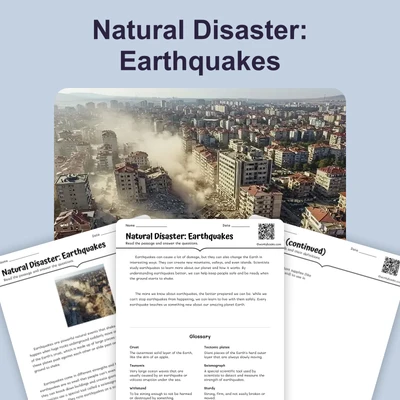
Natural Disaster: Earthquake - reading educational content
Grades 4–5

Natural Disaster: Earthquake

weather and climate · RI.3.1

Free
Passage
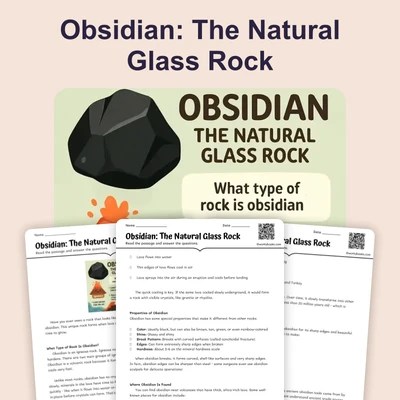
Obsidian: The Natural Glass Rock - reading educational content
Grades 5–8

Obsidian: The Natural Glass Rock

earth and space science · MS-ESS2-3

Free
Passage
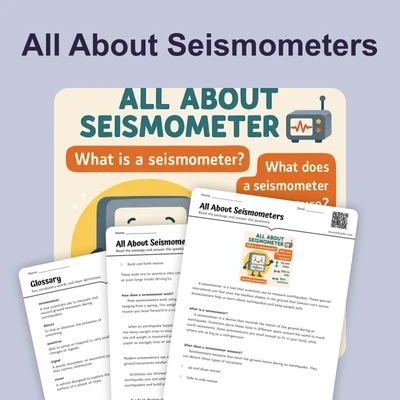
All About Seismometers - reading educational content
Grades 5–8

All About Seismometers

earth and space science · MS-ESS3-2

Free
Passage
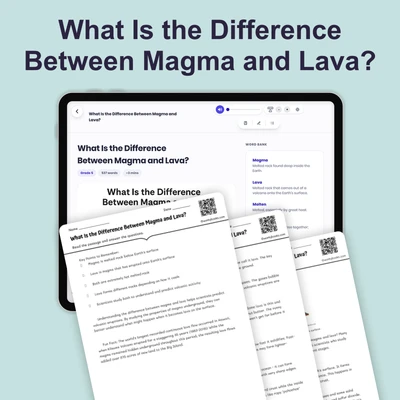
What Is the Difference Between Magma and Lava? - reading educational content
Grades 5–8

What Is the Difference Between Magma and Lava?

earth and space science · MS-ESS2-3

$1.50
Passage
Tools and Technology in Earth Science - reading educational content
Grades 5–8

Tools and Technology in Earth Science

science · MS-ESS2-2

$1.50
Passage
Maps and Their Uses - reading educational content
Grades 5–8

Maps and Their Uses

earth and space science · MS-ESS2-2

$1.50
Passage
Mass Movements - reading educational content
Grades 5–8

Mass Movements

science · MS-ESS2-1

$1.50
Passage
What Causes Earthquakes? - reading educational content
Grades 5–8

What Causes Earthquakes?

earth and space science · MS-ESS2-2

$1.50
Passage
Floods: Causes and Types - reading educational content
Grades 5–8

Floods: Causes and Types

weather and climate · MS-ESS3-2

$1.50
Passage
Hurricanes and Tropical Cyclones - reading educational content
Grades 5–8

Hurricanes and Tropical Cyclones

weather and climate · MS-ESS3-2

$1.50
Passage
Hurricane Preparedness and Safety - reading educational content
Grades 5–8

Hurricane Preparedness and Safety

weather and climate · MS-ESS3-2

$1.50
Passage
Tornadoes - reading educational content
Grades 5–8

Tornadoes

weather and climate · MS-ESS3-2

$1.50
Passage
Tsunamis - reading educational content
Grades 5–8

Tsunamis

earth and space science · MS-ESS3-2

$1.50
Passage
Tsunami Warning and Safety - reading educational content
Grades 5–8

Tsunami Warning and Safety

weather and climate · MS-ESS3-2

$1.50
Passage
Earthquake Hazards and Damage - reading educational content
Grades 5–8

Earthquake Hazards and Damage

earth and space science · MS-ESS3-2

$1.50
Passage
Earthquake Zones and Patterns - reading educational content
Grades 5–8

Earthquake Zones and Patterns

earth and space science · MS-ESS2-2

$1.50
Passage
Seismic Waves - reading educational content
Grades 5–8

Seismic Waves

earth and space science · MS-ESS2-2

$1.50
Passage
Measuring Earthquakes - reading educational content
Grades 5–8

Measuring Earthquakes

earth and space science · MS-ESS2-2

$1.50
Passage
Earthquake Safety and Preparedness - reading educational content
Grades 5–8

Earthquake Safety and Preparedness

earth and space science · MS-ESS3-2

$1.50
Passage
Volcanic Eruptions and Products - reading educational content
Grades 5–8

Volcanic Eruptions and Products

earth and space science · MS-ESS2-2

$1.50
Copyright © 2026 Workybooks. Made with ♥ in California.