How Tsunami Warnings Work
Interactive passage with audio narration, comprehension questions, and printable PDF.
By completing this purchase you agree to our Terms of Use and Privacy Policy. Your subscription renews automatically until you cancel. You can cancel anytime from your account settings. All sales are final and non-refundable. Digital content is available for download in your account immediately upon purchase.
What's included
How Tsunami Warnings Work preview and details
About this printable How Tsunami Warnings Work science reading passage, NGSS-aligned (Grades 3-5)
Sample passage and quiz from How Tsunami Warnings Work
Reading passage and comprehension quiz preview
How Tsunami Warnings Work
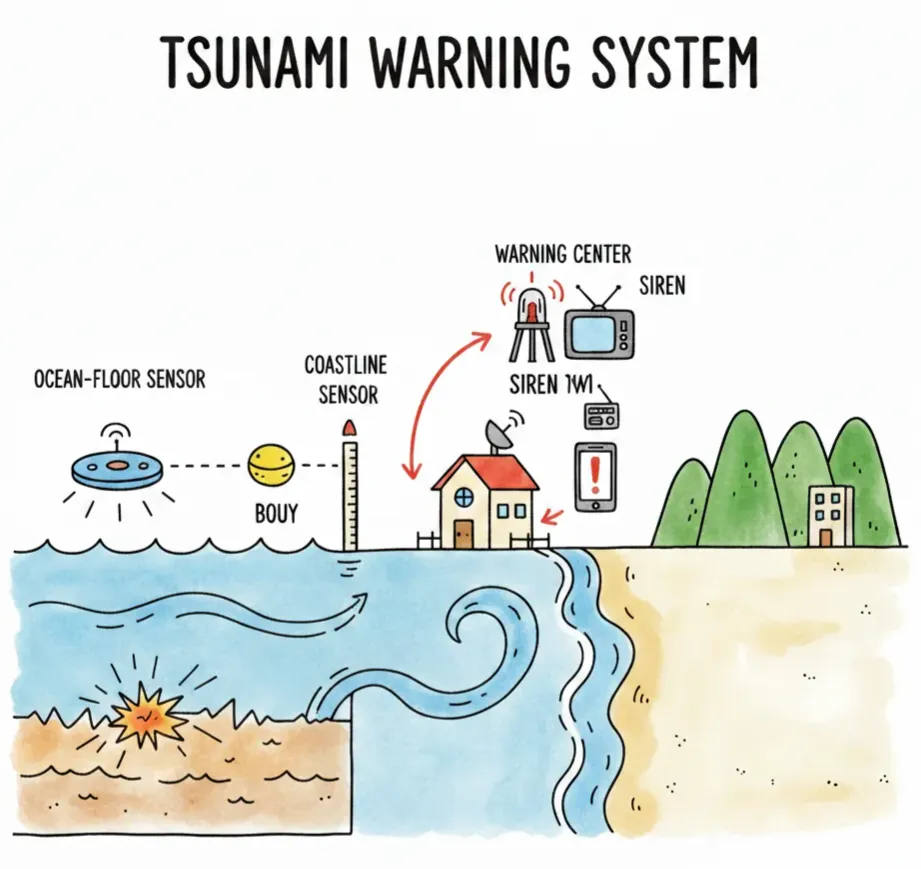
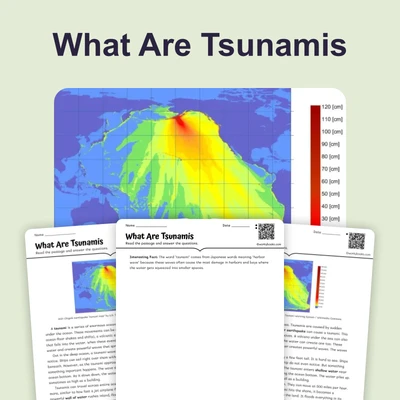
A tsunami is a series of very large ocean waves caused by underwater earthquakes or landslides. Tsunami warning systems are special networks of sensors and communication tools that help protect people living near coastlines. These systems detect dangerous waves early and give people time to move to safety.
The warning system starts with sensors, which are devices that measure changes in the ocean. Some sensors sit on the ocean floor where they can detect unusual water movements after an underwater earthquake happens. Other sensors are placed along coastlines to measure wave height. When sensors detect a potential tsunami, they send information to warning centers, which are buildings where scientists monitor ocean activity 24 hours a day.
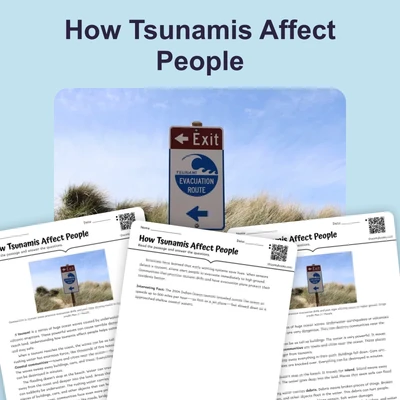
When warning centers confirm a tsunami threat, they immediately send alerts, or emergency messages, to coastal communities. These alerts go out through sirens, television, radio, and cell phone messages. People in the warning zone are told to move immediately to higher ground, which means areas at higher elevation where waves cannot reach. Tsunami warning signs posted along beaches show people which direction to go, like arrows pointing toward hills or tall buildings.
Because tsunamis travel across entire oceans, warning systems can give people hours to prepare if the earthquake happened far away. This extra time saves lives.
Interesting Fact: The Pacific Tsunami Warning Center in Hawaii monitors the entire Pacific Ocean and can detect tsunamis that might affect coastlines thousands of miles away!
Comprehension quiz (8 questions)
1. What causes a tsunami?
2. Where are some tsunami sensors located?
3. How do warning centers send alerts?
4. Why can distant earthquakes give more warning time?
5. What do tsunami warning signs show?
6. Why is moving to higher ground important?
7. Tsunami warning systems can save lives. True or false?
8. What does the word 'sensor' mean?
Perfect for the way you teach
- Build comprehension skills
- Auto-graded quiz
- Differentiated reading
- Read together at home
- Improve fluency
- Quiet reading time
- Reading curriculum support
- Independent practice
- Track Lexile growth