Reading Passage

How Volcanic Mountains Differ From Tectonic

Interactive passage with audio narration, comprehension questions, and printable PDF.

No ratings yet
Grades 5–8ScienceElaEnglish · SpanishInteractive · Printable
Aligned toMS-ESS2-2

What's included

Reading passage
Audio narration
Comprehension quiz
Writing activity
Glossary & flashcards
Differentiated version
Spanish translation

How Volcanic Mountains Differ From Tectonic preview and details

About this printable How Volcanic Mountains Differ From Tectonic science reading passage, NGSS-aligned (Grades 5-8)

This engaging 400-500 word reading passage aligned to NGSS standard MS-ESS2-2 helps middle school students understand how volcanic mountains differ from tectonic mountains. The passage explains that volcanic mountains like Mount Fuji and Mount St. Helens form when lava, ash, and rock erupt from inside Earth and pile up in layers. In contrast, tectonic mountains including fold mountains, fault-block mountains, and dome mountains form when plate forces deform and lift rock that already exists at Earth's surface. Students explore real-world examples and learn to distinguish between mountains built by eruptions versus those created by bending and breaking of the crust. Audio integration supports diverse learners. The lesson includes comprehension questions, writing activities, and graphic organizers that reinforce understanding of plate tectonics and Earth's dynamic surface processes.
Written by Workybooks TeamPublished by Workybooks
Preview

Sample passage and quiz from How Volcanic Mountains Differ From Tectonic

Reading passage and comprehension quiz preview

How Volcanic Mountains Differ From Tectonic
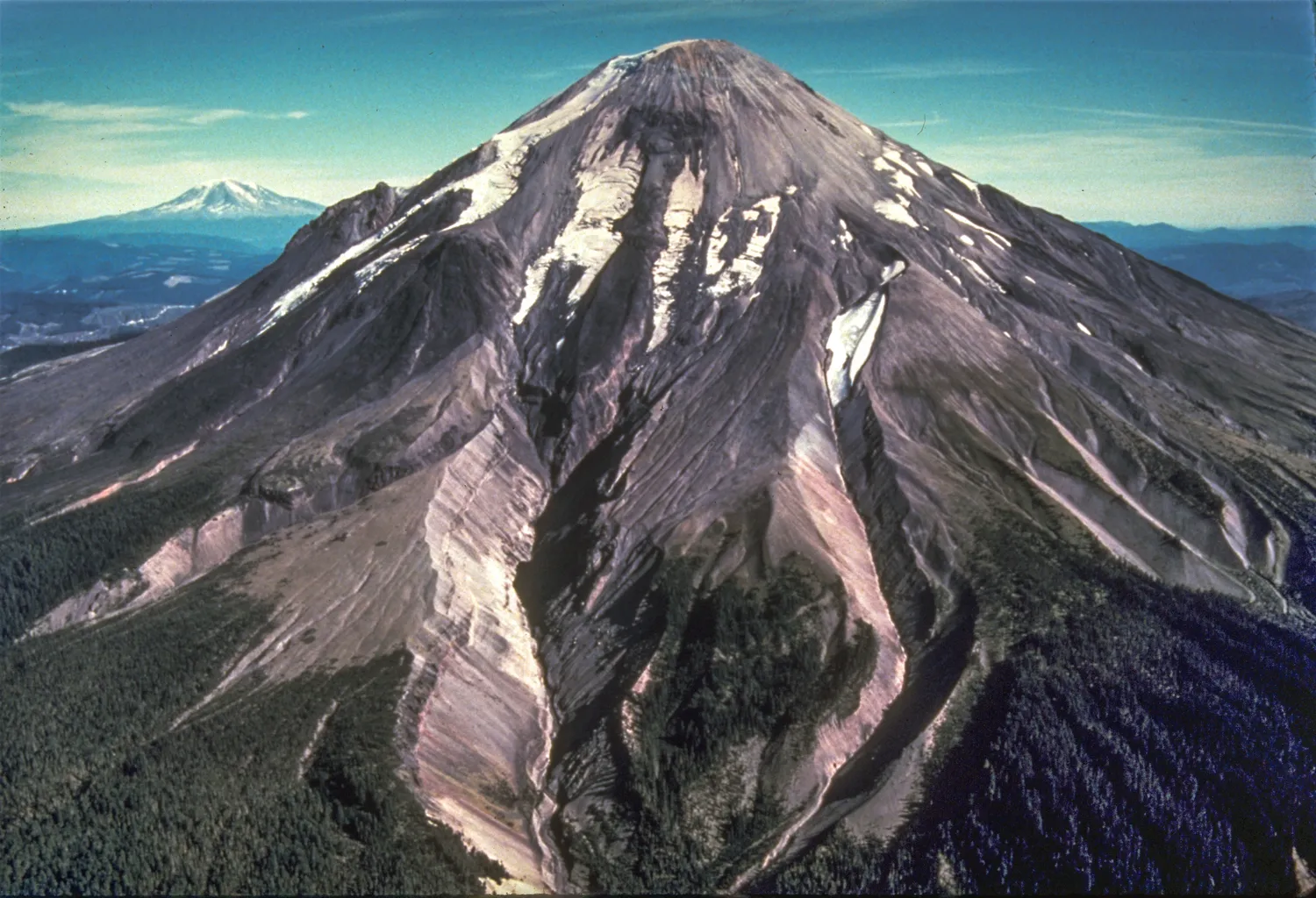
Mount St. Helens 1979

"Mount St. Helens 1979" by USGS / Wikimedia Commons.

Mountains can form in two very different ways. Volcanic mountains build up from material erupted from inside Earth. Tectonic mountains form when forces deform and lift rock that already exists at the surface. Understanding this difference helps scientists explain how Earth's landscape changes over time.

Volcanic mountains grow when magma rises from deep within Earth and erupts at the surface. The erupted material includes lava, ash, and rock fragments. These materials pile up around the opening, called a vent, layer by layer. Each eruption adds more material to the growing mountain. Over thousands of years, this process can build tall cone-shaped peaks. Scientists observe that volcanic mountains often have steep sides and a crater at the top. Mount Fuji in Japan and Mount St. Helens in Washington State are examples of volcanic mountains.

Tectonic mountains form through completely different processes. These mountains develop when forces from plate tectonics push, pull, or break the crust. Fold mountains form when rock layers bend under pressure from colliding plates. Fault-block mountains develop when large blocks of crust break and tilt along cracks called faults. Dome mountains rise when magma pushes rock upward without erupting. Evidence shows that tectonic mountains reshape rock that was already present rather than adding new material from below.

The Himalayas demonstrate tectonic mountain building on a massive scale. These mountains formed when the Indian plate collided with the Eurasian plate about 50 million years ago. The collision continues today, pushing the mountains higher each year. Scientists measure that Mount Everest rises about 4 millimeters annually. No volcanic eruptions built these peaks—only the slow, powerful forces of converging plates.

Recognizing whether a mountain formed from eruptions or crustal deformation matters for several reasons. It helps scientists understand the geologic history of a region. It can also indicate potential hazards, since volcanic mountains may erupt again. The distinction between volcanic and tectonic mountains reveals how dynamic processes shape Earth's surface.

Interesting Fact: Some mountains combine both processes! The Cascade Range in the Pacific Northwest includes volcanic peaks like Mount Rainier built on top of older tectonic mountains.

Comprehension quiz (10 questions)

1. What is the main difference between volcanic and tectonic mountains?

Volcanic mountains are taller than tectonic mountains
Volcanic mountains build up from erupted material while tectonic mountains form from existing rock
Volcanic mountains are found only in Japan
Tectonic mountains always have craters at the top

2. Which of the following is an example of a volcanic mountain mentioned in the passage?

Mount Everest
The Himalayas
Mount Fuji
The Cascade Range

3. What does the term 'magma' mean in the context of the passage?

Rock that has already erupted onto Earth's surface
Hot, melted rock beneath Earth's surface
The outer layer of Earth
A crack in Earth's crust

4. According to the passage, how do fold mountains form?

When lava piles up in layers
When magma pushes rock upward without erupting
When rock layers bend under pressure from colliding plates
When large blocks of crust break and tilt

5. Based on the passage, what can scientists infer about a region by knowing how its mountains formed?

The exact height of the mountains
The geologic history and potential hazards of the area
The number of people living there
The weather patterns in the region

6. How does the formation of the Himalayas demonstrate tectonic mountain building?

Volcanic eruptions created the peaks over millions of years
The mountains formed when two plates collided and continue to push together
Lava and ash piled up to create Mount Everest
The mountains were formed by a single large earthquake

7. If a mountain has steep sides and a crater at the top, it is most likely which type of mountain?

Fold mountain
Fault-block mountain
Volcanic mountain
Dome mountain

8. Which statement best describes why understanding mountain formation is important?

It helps predict the color of rocks in the mountains
It reveals how dynamic processes shape Earth's surface and indicates potential hazards
It determines the best locations for ski resorts
It shows which mountains are the oldest

9. True or False: Tectonic mountains add new material from below Earth's surface.

True
False

10. True or False: Mount Everest rises about 4 millimeters each year due to ongoing plate collision.

True
False
Who it's for

Perfect for the way you teach

Teachers
  • Build comprehension skills
  • Auto-graded quiz
  • Differentiated reading
Parents
  • Read together at home
  • Improve fluency
  • Quiet reading time
Homeschoolers
  • Reading curriculum support
  • Independent practice
  • Track Lexile growth
Topics

Reviews & Ratings

No reviews yet. Be the first to share your experience!

More reading you might love

20 more
Passage
Talus Slopes: Formation and Features - reading educational content
Grades 5–8

Talus Slopes: Formation and Features

science · MS-ESS2-1+2

Free
Passage
Stratigraphic Columns: Decoding Earth’s Geological Layers - reading educational content
Grades 5–8

Stratigraphic Columns: Decoding Earth’s Geological Layers

science · MS-ESS2-2+2

Free
Passage
Frost Wedging: How Ice Splits Rock - reading educational content
Grades 5–8

Frost Wedging: How Ice Splits Rock

earth and space science · MS-ESS2-1+2

$1.50
Passage
Chemical Weathering: The Breakdown of Rocks Through Chemical Reactions - reading educational content
Grades 5–8

Chemical Weathering: The Breakdown of Rocks Through Chemical Reactions

earth and space science · MS-ESS2-1+2

Free
Passage
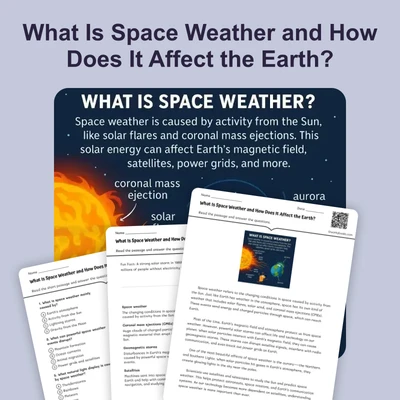
What Is Space Weather and How Does It Affect the Earth? - reading educational content
Grades 3–7

What Is Space Weather and How Does It Affect the Earth?

earth and space science · MS-ESS2-2

$1.50
Passage
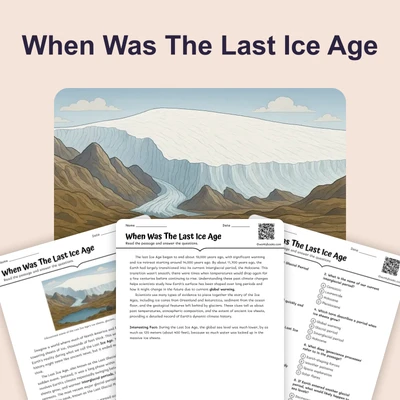
When Was The Last Ice Age - reading educational content
Grade 6

When Was The Last Ice Age

earth and space science · MS-ESS2-2

$1.50
Passage
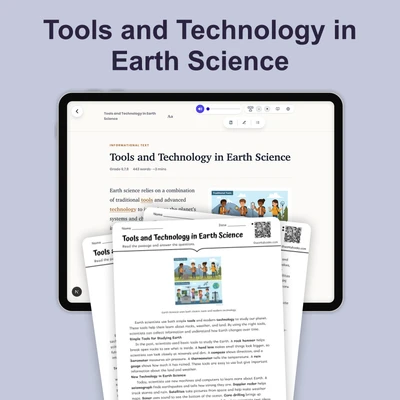
Tools and Technology in Earth Science - reading educational content
Grades 5–8

Tools and Technology in Earth Science

science · MS-ESS2-2+4

$1.50
Passage
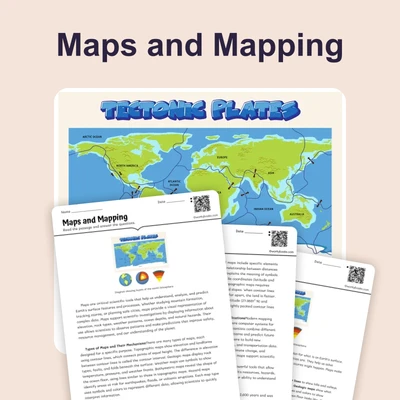
Maps and Mapping - reading educational content
Grades 5–8

Maps and Mapping

earth and space science · MS-ESS2-2

$1.50
Passage
Latitude and Longitude - reading educational content
Grades 5–8

Latitude and Longitude

earth and space science · MS-ESS2-2

$1.50
Passage
Topographic Maps - reading educational content
Grades 5–8

Topographic Maps

earth and space science · MS-ESS2-2+3

$1.50
Passage
Contour Lines and Elevation - reading educational content
Grades 5–8

Contour Lines and Elevation

earth and space science · MS-ESS2-2+3

$1.50
Passage
Maps and Their Uses - reading educational content
Grades 5–8

Maps and Their Uses

earth and space science · MS-ESS2-2+5

$1.50
Passage
Mountains and Mountain Building - reading educational content
Grades 5–8

Mountains and Mountain Building

earth and space science · MS-ESS2-1+1

$1.50
Passage
Earth's Interior - reading educational content
Grades 5–8

Earth's Interior

earth and space science · MS-ESS2-1+1

$1.50
Passage
Continental Drift Theory - reading educational content
Grades 5–8

Continental Drift Theory

earth and space science · MS-ESS2-2+1

Free
Passage
Seafloor Spreading - reading educational content
Grades 5–8

Seafloor Spreading

science · MS-ESS2-2+1

$1.50
Passage
Theory of Plate Tectonics - reading educational content
Grades 5–8

Theory of Plate Tectonics

earth and space science · MS-ESS2-2

$1.50
Passage
Divergent Plate Boundaries - reading educational content
Grades 5–8

Divergent Plate Boundaries

earth and space science · MS-ESS2-2

$1.50
Passage
Convergent Plate Boundaries - reading educational content
Grades 5–8

Convergent Plate Boundaries

earth and space science · MS-ESS2-2

$1.50
Passage
Transform Plate Boundaries - reading educational content
Grades 5–8

Transform Plate Boundaries

earth and space science · MS-ESS2-2

$1.50
Copyright © 2026 Workybooks Classroom. Made with ♥ in California.