This learning resource is available in interactive and printable formats. The interactive worksheet can be played online and assigned to students. The Printable PDF version can be downloaded and printed for completion by hand.
This comprehensive world history reading passage explores the Medici family, the influential banking dynasty that ruled Florence for sixty years during the Renaissance. Students will learn how the Medicis used their wealth and power to support famous artists such as Michelangelo and Leonardo da Vinci, and how their patronage helped shape the cultural development of Florence. The passage provides historical context, specific examples, and vocabulary to help students understand the causes and effects of Medici rule, as well as their lasting impact on art, politics, and society. Activities include a multiple-choice quiz, writing prompts, graphic organizers, and a timeline, all aligned with CA HSS 7.8.2 and CCSS RI.6.3. Spanish translation and read aloud audio are provided to support diverse learners. Perfect for building historical analysis skills and vocabulary while exploring the Renaissance.
CONTENT PREVIEW
Expand content preview
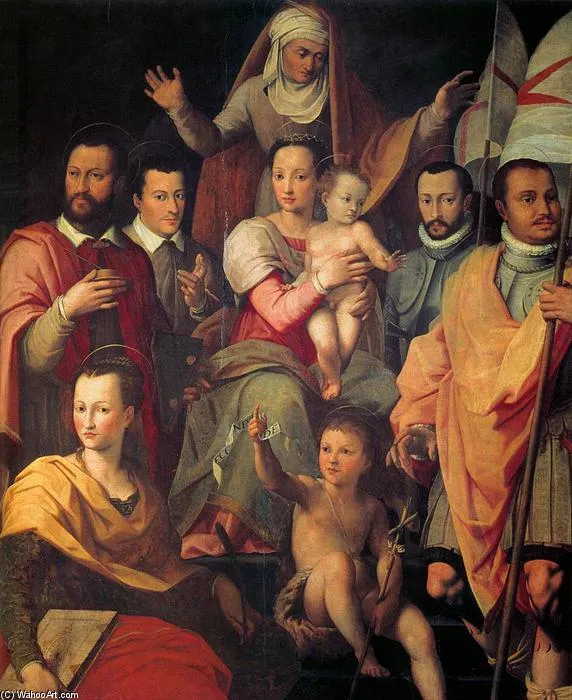
Virgin with Child and Members of the Medici Family as Saints by Giovanni Maria Butteri, Wikimedia Commons
The Medici family was one of the most powerful and influential families in European history. From the early 1400s to the early 1500s, they ruled the city-state of Florence, Italy, for over sixty years. Their rise to power began with banking, but their impact stretched far beyond money. The Medici became famous for their support of the arts, helping to spark the Italian Renaissance.
The foundation of Medici power was their successful banking business. In 1397, Giovanni di Bicci de' Medici established the Medici Bank in Florence, which quickly became one of the most respected financial institutions in Europe. By lending money to merchants, kings, and even the Pope, the Medici gained incredible wealth and influence. Their riches allowed them to rise in the social hierarchy of Florence and to shape the city's future. For example, a 1439 letter from Giovanni’s son, Cosimo de’ Medici, shows how he guided civic decisions and supported public works. Cosimo, known as "Cosimo the Elder," became the unofficial ruler of Florence, even though Florence claimed to be a republic.
One of the Medici family's most important contributions was their role as patrons of the arts. They spent large sums of money to commission paintings, sculptures, and buildings from talented artists. Without the Medici, masterpieces like Michelangelo’s David and Botticelli’s Birth of Venus might not exist. Lorenzo de’ Medici, called "Lorenzo the Magnificent," was especially known for supporting artists, poets, and scholars. He welcomed famous thinkers such as Leonardo da Vinci and Michelangelo into his palace. A letter from Lorenzo in 1482 mentions his invitation to Leonardo to work in Florence. The Medici also funded the construction of Florence’s iconic cathedral dome, designed by Filippo Brunelleschi in 1436, which remains a symbol of Renaissance innovation.
The Medici influence extended into politics and religion. Several family members became rulers, and even two Medici—Leo X and Clement VII—became Popes. Their power allowed them to shape laws and culture in Florence and beyond. However, their rule was not always accepted. Some citizens opposed their dominance, leading to plots and uprisings. In 1494, the family was forced out of Florence for a time, but they eventually returned and continued to shape the city.
The Medici family's support of the arts and learning helped transform Florence into a center of the Renaissance. Their combination of banking, political leadership, and artistic patronage changed not only their city but also the future of Europe. The legacy of the Medici can still be seen in Florence’s museums, palaces, and public spaces today. Their story connects to wider themes of how wealth, power, and creativity can shape societies.
Interesting Fact: The Medici family’s coat of arms features six round balls, or "palle," on a shield—one of the most recognized symbols in Florence.
Who founded the Medici Bank?
Giovanni di Bicci de' MediciLorenzo de' MediciLeo XFilippo Brunelleschi
What city did the Medici rule?
VeniceRomeFlorenceMilan
Which artist did Lorenzo invite to Florence?
Leonardo da VinciRaphaelDonatelloTitian
Why did the Medici support artists?
To decorate their homesTo gain power and fameTo support the artsAll of the above
What happened in 1494?
Medici built a bankMedici left FlorenceFlorence became a republicMichelangelo was born
How did Medici power affect Florence?
Made it a center of artStopped art from growingWeakened the cityNo effect
The Medici family supported the Renaissance. True or False?
TrueFalse
What is 'patron' in this passage?
An artistA bankerA supporter of artA city leader
Perfect For:
👩🏫 Teachers
• Reading comprehension practice
• Auto-graded assessments
• Literacy skill development
👨👩👧👦 Parents
• Reading practice at home
• Comprehension improvement
• Educational reading time
🏠 Homeschoolers
• Reading curriculum support
• Independent reading practice
• Progress monitoring
Reading Features:
📖
Reading Passage
Engaging fiction or nonfiction text
❓
Comprehension Quiz
Auto-graded questions
📊
Instant Feedback
Immediate results and scoring
📄
Printable Version
Download for offline reading
🔊
Read Aloud
Voice-over with word highlighting
Reviews & Ratings
No reviews yet. Be the first to share your experience!
Related Content
Renaissance Clothing
This passage explores the fascinating world of Renaissance fashion clothing in Europe, focusing on how clothing reflecte...
Renaissance Poetry
This engaging world history reading passage introduces students to the Renaissance sonnet, focusing on the influential w...
Renaissance Philosophy
This passage explores the main ideas of Renaissance philosophy, which emerged in Europe during the 14th to 16th centurie...
Renaissance Art
This reading passage examines the enduring legacy of Renaissance art in world history, focusing on key techniques such a...
CA HSS 7.8.3CCSS RH.6-8.2CCSS W.6.2
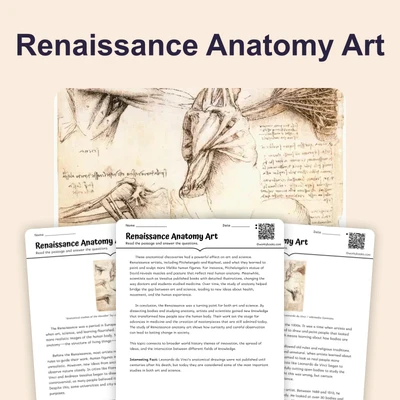
Renaissance Anatomy Art
This engaging passage explores the intersection of art, science, and society during the Renaissance through the lens of ...
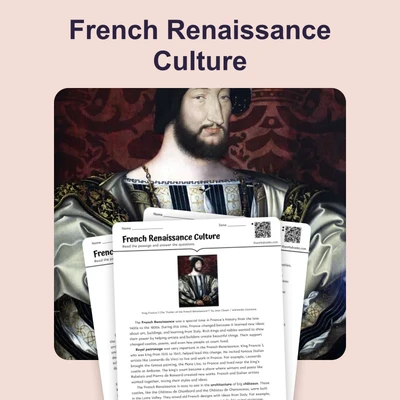
French Renaissance
This passage explores the rich culture of the French Renaissance, focusing on the influence of Italian art and architect...
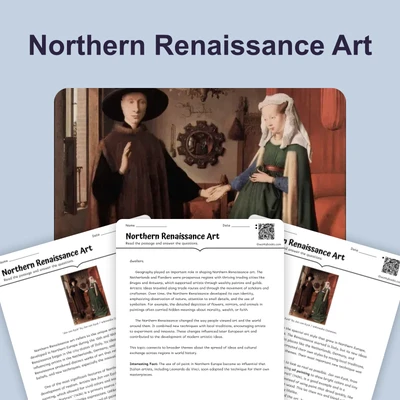
Northern Renaissance
This passage examines the development and significance of Northern Renaissance art, focusing on how Renaissance ideas sp...
Renaissance Art and Artists
This history reading passage delves into the world of Renaissance art, focusing on the revolutionary works and lives of ...
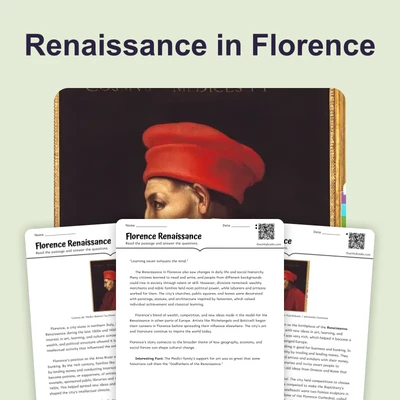
Florence Renaissance
This history reading passage examines Florence during the Renaissance, highlighting its cultural richness, the influence...
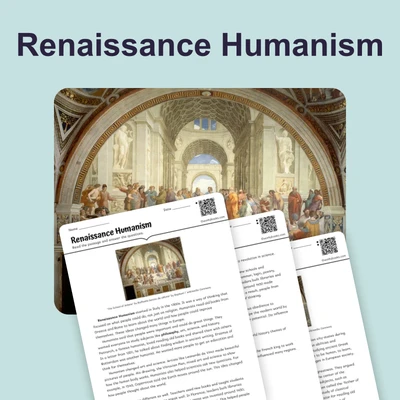
Renaissance Humanism
This passage introduces students to the transformative concept of Renaissance Humanism, a philosophical movement that em...
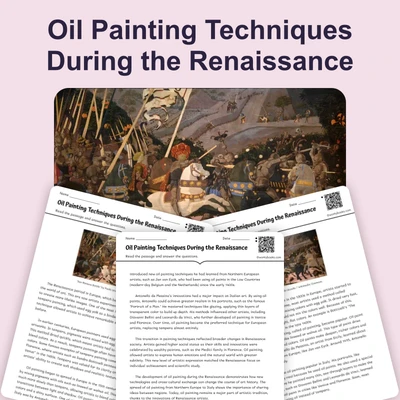
Renaissance Oil Painting
This passage explores the development of oil painting techniques during the Renaissance, focusing on the comparison betw...
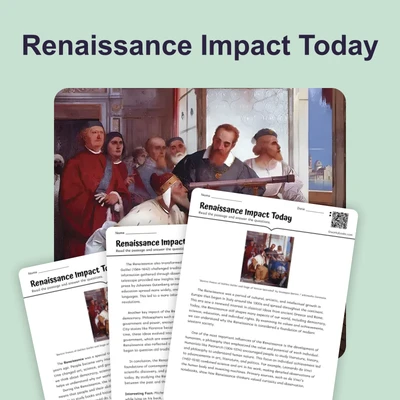
Renaissance Impact Today
This engaging world history passage examines the enduring impact of the Renaissance on modern society, focusing on how R...
English Renaissance
This comprehensive passage explores the English Renaissance, a transformative period in England marked by a flourishing ...
Renaissance Education
This engaging history reading passage examines the transformation of education during the Renaissance and its impact on ...
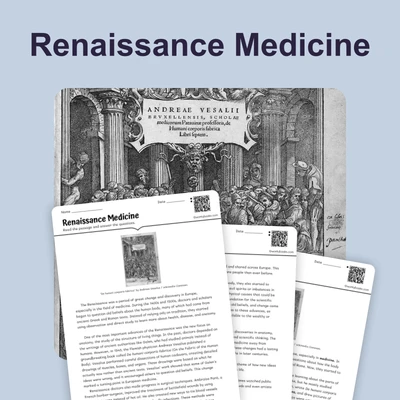
Renaissance Medicine
This engaging world history reading passage explores medical advances during the Renaissance in Europe, focusing on chan...
Renaissance Music
This world history reading passage examines the development of music during the Renaissance, a period of profound cultur...
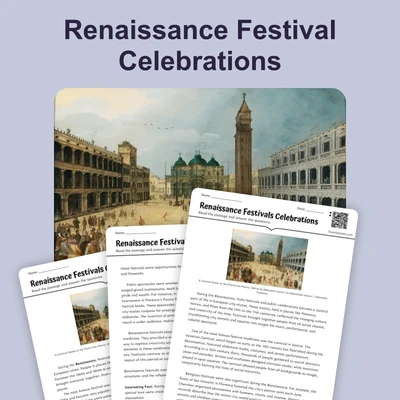
Renaissance Festivals Celebrations
This passage explores the vibrant role of festivals and celebrations during the Renaissance, focusing on how public spec...
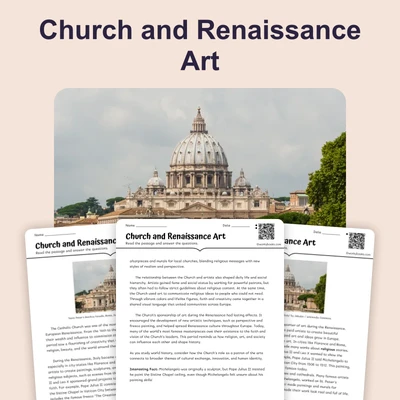
Catholic Church and Renaissance
This passage explores the major role the Catholic Church played as a patron of Renaissance art in Europe. It examines ho...
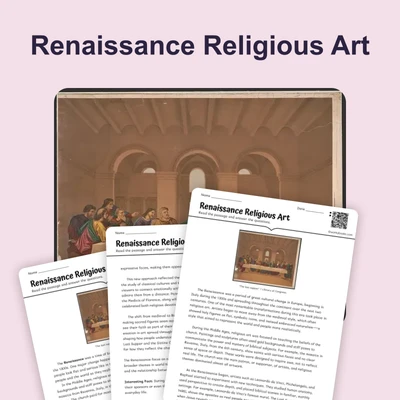
Renaissance Religious Art
This passage explores the dramatic changes in religious art during the Renaissance, focusing on the shift from medieval ...
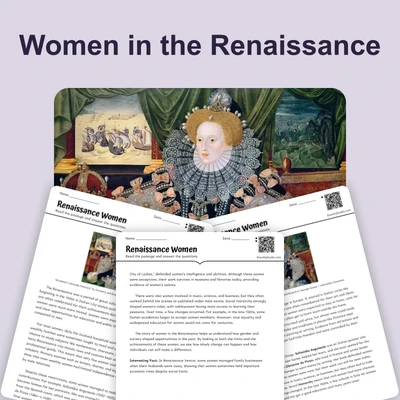
Renaissance Women
This reading passage explores the lives and contributions of women during the Renaissance period in Europe. Students wil...