Michelangelo
Interactive passage with audio narration, comprehension questions, and printable PDF.
By completing this purchase you agree to our Terms of Use and Privacy Policy. Your subscription renews automatically until you cancel. You can cancel anytime from your account settings. All sales are final and non-refundable. Digital content is available for download in your account immediately upon purchase.
What's included
Michelangelo preview and details
About this printable Michelangelo reading passage (Grades 5-8)
Sample passage and quiz from Michelangelo
Reading passage and comprehension quiz preview
Michelangelo
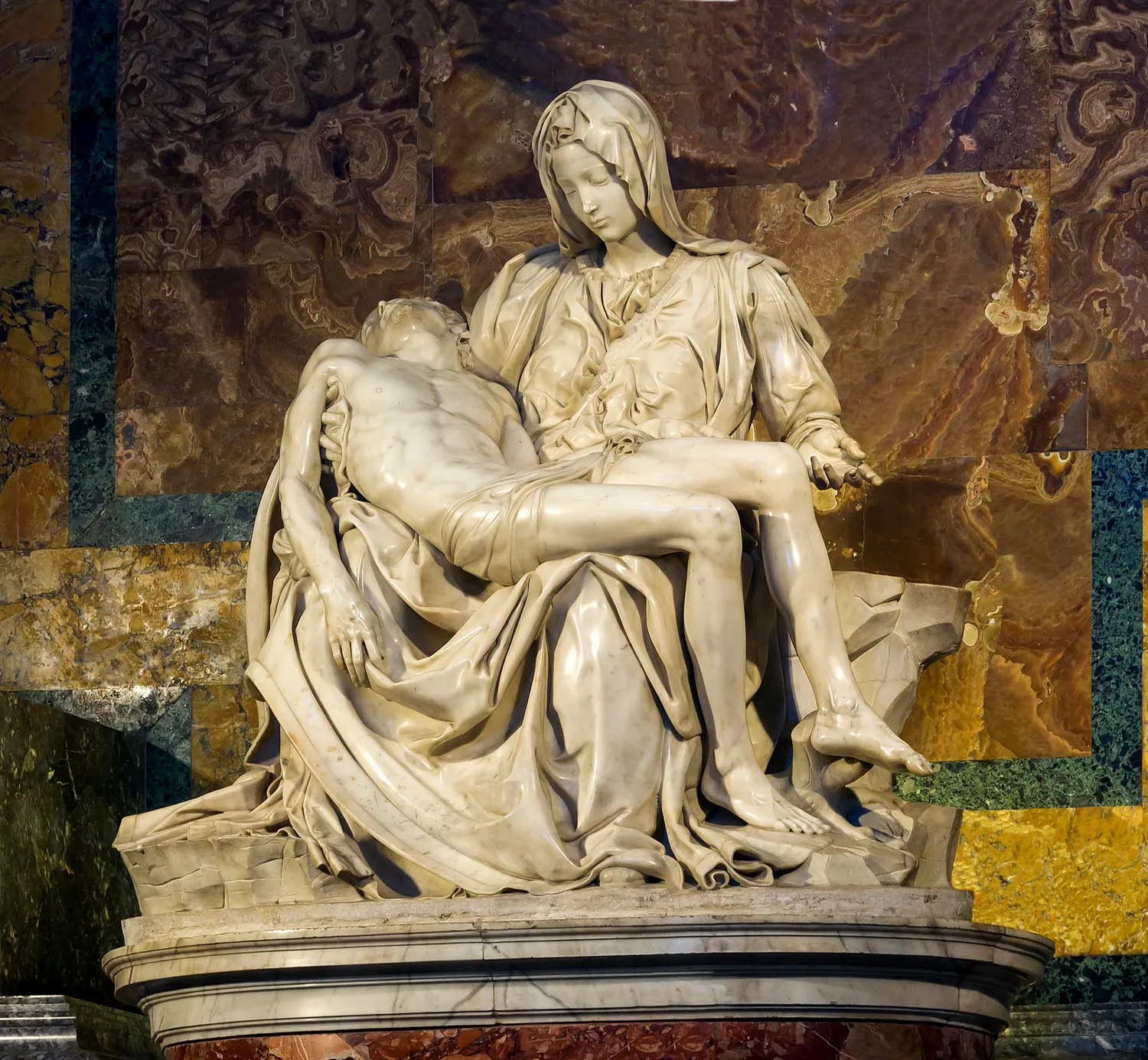
"Michelangelo's Pietà Saint Peter's Basilica Vatican City" by Jebulon / Wikimedia Commons.
Michelangelo Buonarroti was one of the most important artists of the Renaissance, a period of great cultural change in Europe that began in Italy during the 14th century. Born in 1475 in Caprese, near Florence, Michelangelo showed exceptional artistic talent from an early age. He became known for his mastery in several fields, including sculpture, painting, and architecture. His works are celebrated for their beauty, emotional intensity, and technical brilliance.
Michelangelo's early life was deeply influenced by the city-state of Florence, a center of art and learning. He apprenticed with the famous artist Domenico Ghirlandaio and soon attracted the attention of the powerful Medici family. The Medici were great patrons of the arts and supported Michelangelo's education and career. By the age of 24, he had completed the Pietà, a marble sculpture showing Mary holding Jesus after his death. This masterpiece, now in St. Peter's Basilica in Rome, displayed Michelangelo's ability to carve delicate detail and realistic human forms from stone.
Michelangelo's understanding of anatomy was extraordinary for his time. He studied human bodies, sometimes even dissecting cadavers, to learn how muscles and bones worked. This knowledge helped him create sculptures like David (1501-1504), which stands over 17 feet tall and represents the biblical hero with lifelike realism and strength. The statue of David became a symbol of Florence's independence and courage. Michelangelo's perfectionism led him to destroy works he thought were not good enough, showing his commitment to excellence.
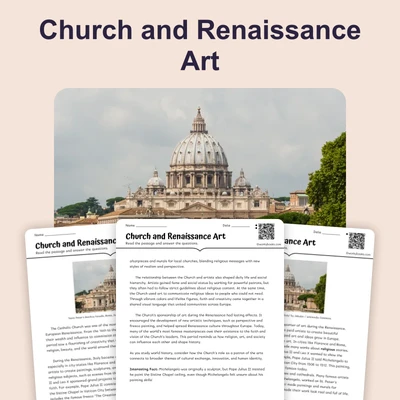
Michelangelo was also a remarkable painter. In 1508, Pope Julius II invited him to paint the ceiling of the Sistine Chapel in the Vatican. Although Michelangelo considered himself mainly a sculptor, he accepted the challenge. Over four years, he painted over 300 figures from the Bible, creating scenes like the Creation of Adam. The ceiling is famous for its powerful figures and rich colors, and it remains one of the greatest achievements in Western art. Besides painting and sculpture, Michelangelo designed buildings such as the dome of St. Peter's Basilica, blending art and engineering.
Michelangelo's impact on art and culture was immense. He inspired generations of artists and set new standards for beauty and expression. His works connect us to the values and ideas of the Renaissance, emphasizing human potential and creativity. Through his dedication and talent, Michelangelo helped shape the history of art and left a legacy that endures today.
Michelangelo's life and work demonstrate the importance of creativity and determination in shaping history, linking to the broader themes of cultural change, innovation, and the influence of individual achievement during the Renaissance.
Interesting Fact: Michelangelo often signed his sculptures, but he only signed one work—the Pietà—after hearing that people thought it was made by someone else.
Comprehension quiz (8 questions)
1. Where was Michelangelo born?
2. Which sculpture shows Mary holding Jesus?
3. Who invited Michelangelo to paint the Sistine Chapel?
4. Why did Michelangelo study anatomy?
5. How did the Medici family help Michelangelo?
6. What does the statue of David represent?
7. Michelangelo painted the Sistine Chapel ceiling. True or false?
8. What is a patron?
Perfect for the way you teach
- Build comprehension skills
- Auto-graded quiz
- Differentiated reading
- Read together at home
- Improve fluency
- Quiet reading time
- Reading curriculum support
- Independent practice
- Track Lexile growth