This learning resource is available in interactive and printable formats. The interactive worksheet can be played online and assigned to students. The Printable PDF version can be downloaded and printed for completion by hand.
This middle school science passage explores the fascinating differences between additive color mixing (light) and subtractive color mixing (pigments), perfectly aligned to NGSS standard MS-PS4-2. Students will learn how red, green, and blue light combine to create white light, a process used in screens and stage lighting. The passage also explains how cyan, magenta, and yellow pigments absorb and reflect light, combining to form black, which is essential in painting and printing. Real-world applications and scientific mechanisms are explained, helping students connect these concepts to technology and art. The passage features a glossary, quiz, writing prompts, and graphic organizers, and is available in Spanish and simplified English for accessibility. Audio integration supports diverse learners. This resource is ideal for developing a deep understanding of physical science concepts related to light, color, and perception.
CONTENT PREVIEW
Expand content preview
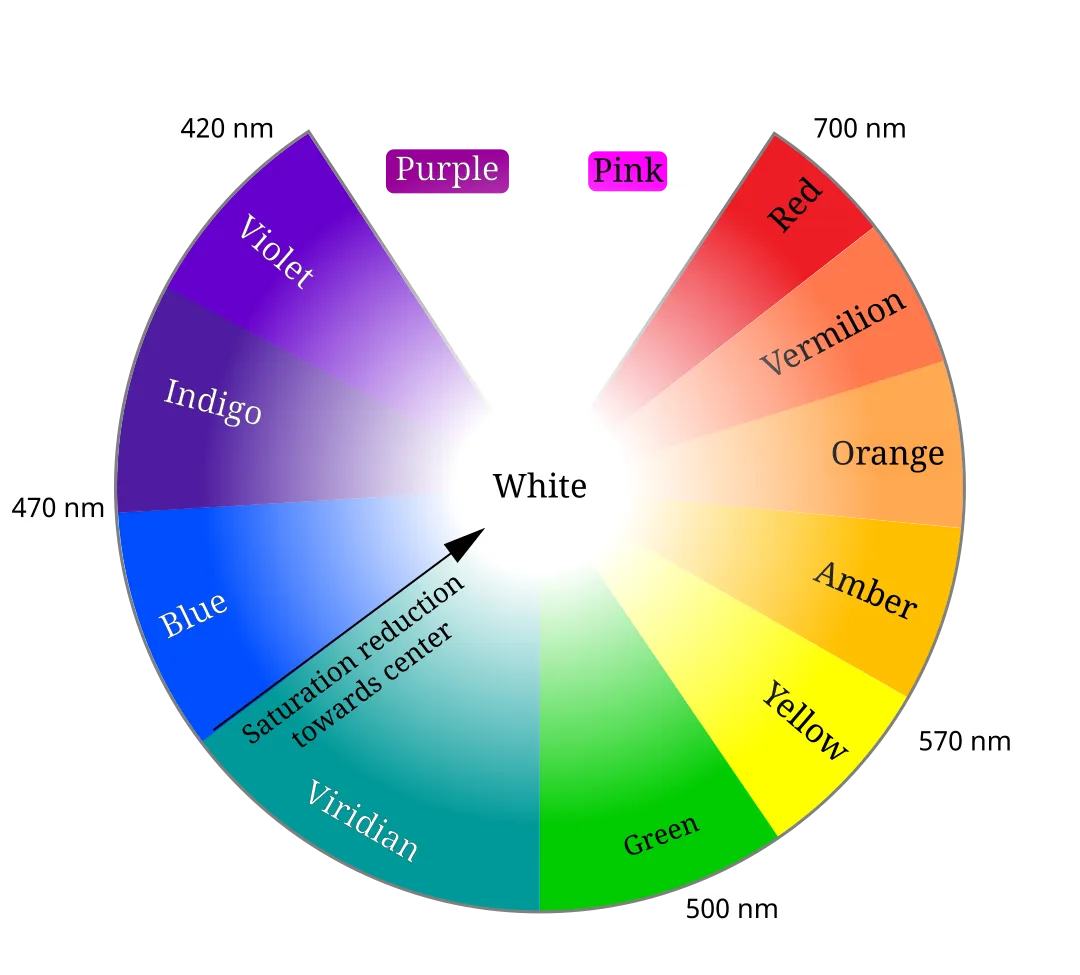
"Additive light spectrum color circle (Schiffman, 1990)" by Jim McKeeth / Source: Wikimedia Commons (CC0).
Color is a result of how light interacts with our eyes and the world around us. In science, there are two main ways to mix colors: by combining light and by combining pigments. Understanding these two types of color mixing helps explain why screens, stage lights, and printed images all look different, even when they show the same picture. The way colors mix depends on the properties of light and the substances that reflect or absorb it.
Additive Color Mixing: Making White with Light
In additive color mixing, different colored lights are combined. The primary colors for light are red, green, and blue, known as RGB. When you shine red, green, and blue light together in equal amounts, the result is white light. This happens because each color adds more light to the mixture, increasing the overall brightness. The process is used in TV screens, smartphones, and stage lighting. For example, a pixel on a screen contains tiny red, green, and blue LEDs that adjust their brightness to create millions of colors. Scientific experiments with prisms and colored spotlights have shown how combining different wavelengths of light produces new colors. When only red and green lights are mixed, they create yellow; green and blue make cyan; red and blue form magenta. This mixing is predictable because light waves add together.
Subtractive Color Mixing: Making Black with Pigments
Subtractive color mixing works differently. Here, the focus is on pigments—substances that absorb some colors of light and reflect others. The primary colors for pigments are cyan, magenta, and yellow (CMY). When you mix these pigments, each one absorbs (or subtracts) certain wavelengths of light. Mixing all three in equal amounts absorbs almost all visible light, resulting in black or a very dark color. This is how printers and artists blend paints to create different shades. For example, mixing cyan and yellow makes green because cyan absorbs red and yellow absorbs blue, leaving green to be reflected. The mechanism is based on the subtraction of light rather than its addition.
Interactions and Real-World Applications
The principles of additive and subtractive color mixing are central to many technologies. Screens rely on additive mixing to produce vivid images using tiny RGB lights. Printers use subtractive mixing with CMY inks to create detailed pictures on paper. Designers must understand both systems to accurately match colors across digital and print media. Studies have shown that the human eye perceives color based on the combination and intensity of light wavelengths, making the science of color essential for everything from photography to medicine. These interactions also explain why colors may appear different under various lighting conditions or when viewed on different devices.
In summary, color mixing is a complex interaction between light, pigments, and human perception. Additive color mixing involves combining different light sources to increase brightness and create white, while subtractive color mixing uses pigments to absorb light, resulting in darker colors. Understanding both systems helps us create and interpret the colorful world we see every day and connects to broader scientific ideas about energy, waves, and technology.
Interesting Fact: The human eye can distinguish more than 10 million different colors because of specialized cells called cones that detect light’s wavelengths!
What are the primary colors of light in additive color mixing?
What do you get when you mix equal amounts of red, green, and blue light?
Black lightYellow lightWhite lightMagenta light
In subtractive color mixing, what happens when you mix cyan and yellow pigments?
You get redYou get greenYou get blueYou get magenta
What is the main difference between additive and subtractive color mixing?
Additive mixing uses pigments, subtractive uses lightAdditive mixing makes things darker, subtractive makes things brighterAdditive uses light to create colors, subtractive uses pigments to absorb lightBoth use the same process
Which technology uses additive color mixing?
PrintersScreen displaysPaintingsPaper drawings
Which vocabulary word means 'mixing pigments to absorb light'?
Additive color mixingPigmentSubtractive color mixingCones
What is the result of mixing cyan, magenta, and yellow pigments in equal amounts?
White or bright colorBlack or a very dark colorYellow onlyRed
Why is understanding both color mixing systems important for designers?
So they can match colors on screens and printed materialsSo they can save moneySo they can use less inkSo they can ignore colors
True or False: Additive color mixing is used in stage lighting to create different effects.
TrueFalse
True or False: Mixing pigments always makes the colors brighter.
TrueFalse
Perfect For:
👩🏫 Teachers
• Reading comprehension practice
• Auto-graded assessments
• Literacy skill development
👨👩👧👦 Parents
• Reading practice at home
• Comprehension improvement
• Educational reading time
🏠 Homeschoolers
• Reading curriculum support
• Independent reading practice
• Progress monitoring
Reading Features:
📖
Reading Passage
Engaging fiction or nonfiction text
❓
Comprehension Quiz
Auto-graded questions
📊
Instant Feedback
Immediate results and scoring
📄
Printable Version
Download for offline reading
🔊
Read Aloud
Voice-over with word highlighting
Reviews & Ratings
No reviews yet. Be the first to share your experience!
Related Content
Remote Sensing
This middle school science passage introduces students to the concept of remote sensing—the collection of information ab...
MS-ESS3-3MS-PS4-2MS-ETS1-1MS-ETS1-3
The Electromagnetic Spectrum
This comprehensive science reading passage introduces middle school students (grades 6-8) to the electromagnetic spectru...
MS-PS4-1MS-PS4-2
Visible Light and Color
This comprehensive science passage for grades 6-8 explores visible light as the part of the electromagnetic spectrum tha...
MS-PS4-2
Light Waves
This middle school science passage introduces students in grades 6-8 to the concept of light as an electromagnetic wave,...
MS-PS4-2
Wave Absorption
This engaging science passage for grades 6-8 explores the mechanism of wave absorption, where waves transfer energy to m...
MS-PS4-2
Wave Behavior: Transmission
This informational science reading passage for grades 6-8 explores the concept of wave behavior, focusing on transmissio...
MS-PS4-2
Wave Refraction
This comprehensive science passage introduces middle school students to the concept of refraction, a key phenomenon in w...
MS-PS4-2
Wave Reflection
This middle school science passage explores the behavior of waves during reflection, focusing on how and why waves bounc...
MS-PS4-2
Reflection and Mirrors
This engaging passage explores the science behind reflection and mirrors, designed for students in grades 6-8. Aligned w...
MS-PS4-2
Lasers
This passage explores the science of lasers for middle school students, aligning with NGSS standard MS-PS4-2. Students l...
MS-PS4-2
How We See
This informational science passage for grades 6-8 explores the mechanisms behind human vision, focusing on how light ent...
MS-PS4-2
Optical Instruments
This passage introduces middle school students to the fascinating world of optical instruments. Aligned to NGSS standard...
MS-PS4-2
What Is Sound?
This passage explores the science of sound for middle school students, aligned with NGSS standards MS-PS4-1 and MS-PS4-2...
MS-PS4-1MS-PS4-2
Speed of Sound
This comprehensive passage for grades 6-8 explores the science behind the speed of sound and how it varies depending on ...
MS-PS4-1MS-PS4-2
Absorption of Sound
This comprehensive passage, aligned to NGSS MS-PS4-2, explores the science behind the absorption of sound. Students in g...
MS-PS4-2
Sound Through Different Materials
This comprehensive middle school science passage, aligned to NGSS standard MS-PS4-2, explores the fascinating topic of h...
MS-PS4-2
Reflection of Sound: Echoes
This comprehensive middle school science passage explores the phenomenon of echoes, focusing on the reflection of sound ...
MS-PS4-2
How We Hear
This engaging middle school science passage explores the fascinating process of how we hear, tracing sound’s journey fro...
MS-PS4-2
Sonar and Echolocation
This engaging middle school science passage explores the science behind sonar and echolocation, aligned to NGSS standard...
MS-PS4-2
Noise Pollution
This comprehensive, NGSS-aligned middle school science passage explores the concept of noise pollution as harmful or unw...