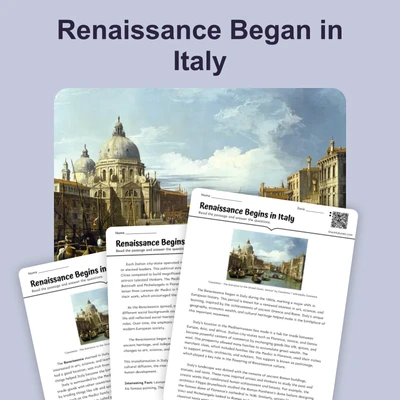
Mona Lisa Painting
Interactive passage with audio narration, comprehension questions, and printable PDF.
By completing this purchase you agree to our Terms of Use and Privacy Policy. Your subscription renews automatically until you cancel. You can cancel anytime from your account settings. All sales are final and non-refundable. Digital content is available for download in your account immediately upon purchase.
What's included
Mona Lisa Painting preview and details
About this printable Mona Lisa Painting reading passage (Grades 5-8)
Sample passage and quiz from Mona Lisa Painting
Reading passage and comprehension quiz preview
Mona Lisa Painting
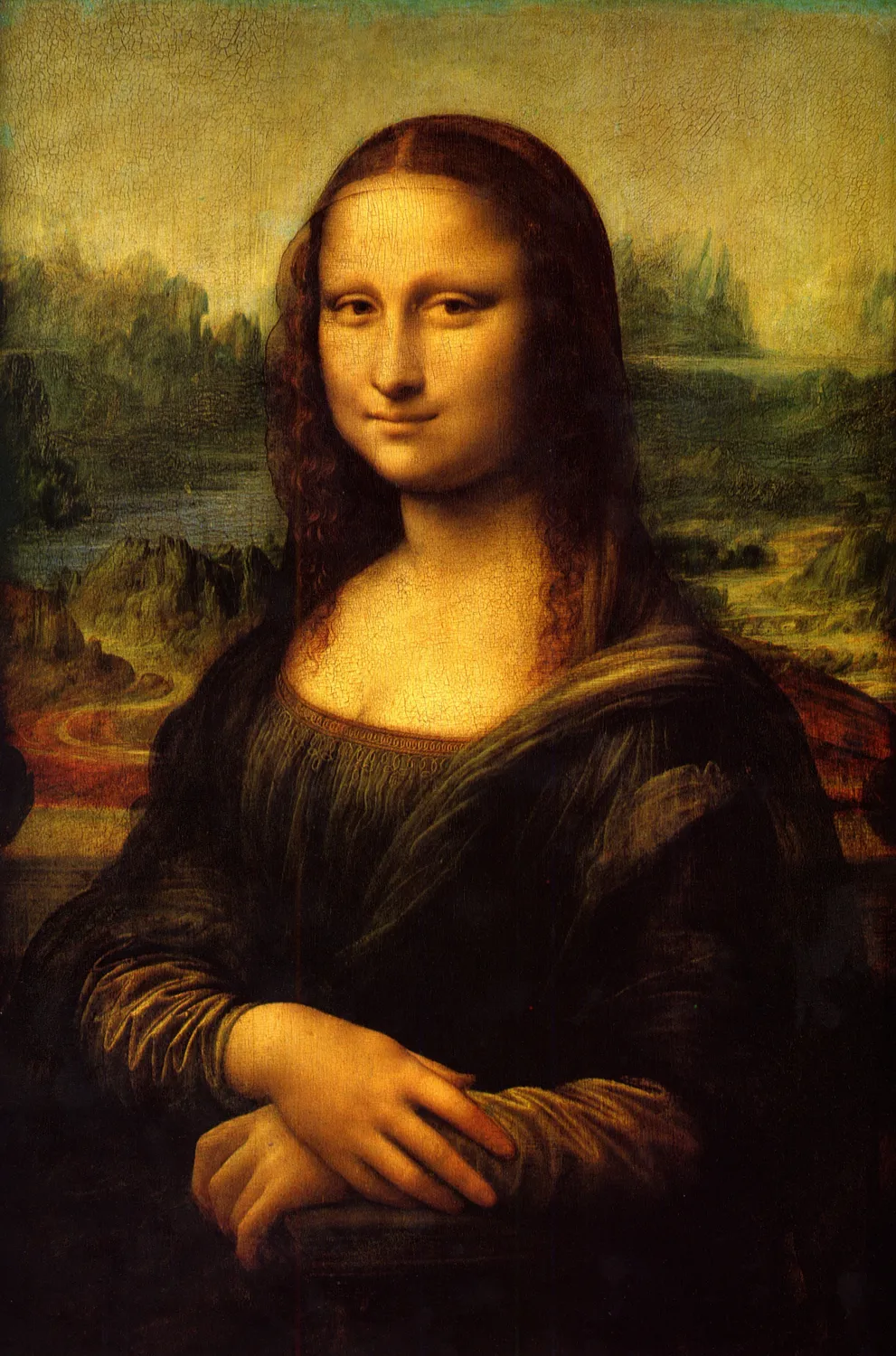
Mona Lisa by Leonardo da Vinci. Wikimedia Commons
The Mona Lisa, painted by Leonardo da Vinci between 1503 and 1506, is one of the most celebrated portraits in world history. Created during the Renaissance in Florence, Italy, the painting is admired for its realistic representation and the subject's mysterious smile. Today, the Mona Lisa hangs in the Louvre Museum in Paris, where millions visit each year to see its subtle beauty and remarkable detail.
Leonardo da Vinci was a master of innovation. In the Mona Lisa, he used a groundbreaking technique called sfumato. Sfumato involves blending colors and tones so that there are no harsh outlines, creating a smoky, lifelike effect. This method allowed da Vinci to paint the Mona Lisa’s skin so softly that her face seems to glow, and her expression appears to change depending on where you stand. Art historians believe that this technique was revolutionary, making the Mona Lisa seem more human and natural than earlier portraits.
Another key feature of the Mona Lisa is her enigmatic smile. The smile has inspired debate for centuries among scholars and viewers. Some believe it reflects happiness, while others see sadness or mystery. Giorgio Vasari, a Renaissance writer, described the smile as so lifelike that it seemed "divine." Scientific studies using X-ray technology have shown how da Vinci carefully layered paint to achieve this effect, proving just how advanced his techniques were. The setting of the portrait, with its winding paths and distant mountains, also adds to the painting’s sense of depth and realism.
The Mona Lisa has survived theft, vandalism, and even a move during wartime. Each challenge has only increased its fame. The painting’s universal recognition today is not just because of its artistic style but also its fascinating history. It has influenced countless artists and inspired imitations all over the world. The Mona Lisa is a symbol of the Renaissance spirit—combining scientific observation with creative imagination. Primary sources like Vasari’s writings and modern scientific analysis help us understand why this portrait is considered a masterpiece.
In summary, the Mona Lisa’s innovative techniques, mysterious expression, and rich history make it a singular work in the story of art. Its continued popularity shows how Renaissance ideas still shape our world. Studying the Mona Lisa connects us to broader themes in world history, such as the development of human creativity and the spread of cultural ideas across time and place.
Interesting Fact: The Mona Lisa was once stolen from the Louvre in 1911 and was missing for two years before being recovered in Italy.
Comprehension quiz (8 questions)
1. Who painted the Mona Lisa?
2. Where is the Mona Lisa displayed today?
3. During which period was the Mona Lisa painted?
4. What artistic technique did da Vinci use?
5. Why is the Mona Lisa's smile famous?
6. What effect did sfumato create?
7. The Mona Lisa was stolen in 1911. True or false?
8. What does 'enigmatic' mean?
Perfect for the way you teach
- Build comprehension skills
- Auto-graded quiz
- Differentiated reading
- Read together at home
- Improve fluency
- Quiet reading time
- Reading curriculum support
- Independent practice
- Track Lexile growth