Petrarch Father of Humanism
Interactive passage with audio narration, comprehension questions, and printable PDF.
By completing this purchase you agree to our Terms of Use and Privacy Policy. Your subscription renews automatically until you cancel. You can cancel anytime from your account settings. All sales are final and non-refundable. Digital content is available for download in your account immediately upon purchase.
What's included
Petrarch Father of Humanism preview and details
About this printable Petrarch Father of Humanism reading passage (Grades 5-8)
Sample passage and quiz from Petrarch Father of Humanism
Reading passage and comprehension quiz preview
Petrarch: Father of Humanism
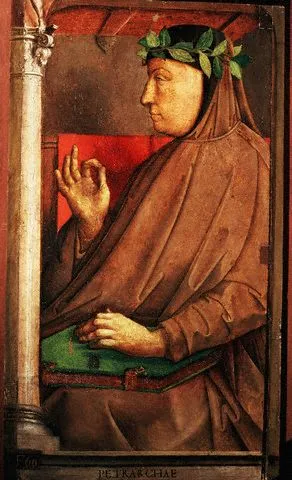
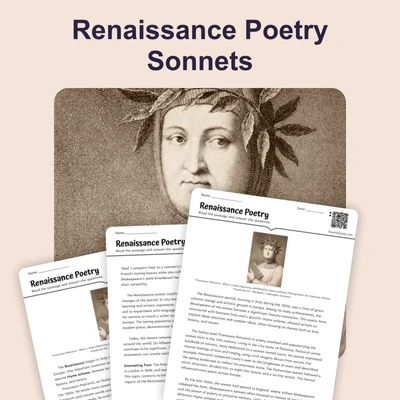
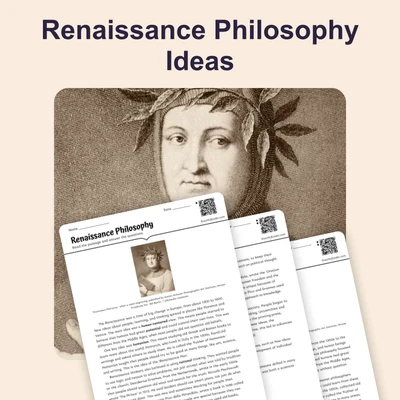
"Francesco Petrarch by Justo de Gante" by Justus van Gent / Wikimedia Commons.
Francesco Petrarch (1304–1374) is often called the Father of Humanism, a movement that changed the course of European history during the Renaissance. Born in Arezzo, Italy, Petrarch dedicated his life to studying and reviving ancient Greek and Roman texts, believing that learning from the past could improve society. His ideas and writings marked a new age in European thought.
Petrarch traveled throughout Italy and France in search of forgotten manuscripts and classical works. He discovered letters by Cicero, a famous Roman orator, which inspired him to study Latin literature and philosophy. Petrarch believed that studying ancient texts could help people become better citizens and live more meaningful lives. He argued that education should focus on the study of humanities, such as history, poetry, and moral philosophy, rather than just religious studies. Petrarch’s admiration for ancient authors led him to write to classical figures as if they were still alive, a practice found in his collection of letters called “Epistolae Familiares.”
As a poet, Petrarch is best known for his “Canzoniere,” a series of sonnets written in Italian about his love for a woman named Laura. These poems introduced new forms of lyric poetry to Europe. By writing in Italian rather than Latin, Petrarch made poetry more accessible to ordinary people. His use of personal emotion, vivid imagery, and elegant language influenced later poets such as Dante and Shakespeare. In 1341, Petrarch was crowned poet laureate in Rome, an honor that had not been given since ancient times. This event showed how much Renaissance society valued classical learning and artistic achievement.
Petrarch’s work helped lay the foundation for the humanist movement. Humanists believed that individuals could improve themselves and their communities through education and critical thinking. This was a major shift from the medieval focus on religious authority. Petrarch’s rediscovery of texts like Cicero’s letters inspired other scholars to search for more ancient works, leading to the creation of libraries and universities. His influence spread across Europe, encouraging artists, writers, and scientists to explore new ideas about human potential and the world.
Petrarch’s contributions signaled a turning point in European history. By promoting the study of the humanities and emphasizing the value of the individual, he helped shape the beliefs and achievements of the Renaissance. His legacy can be seen in the art, literature, and scientific discoveries that followed. Petrarch’s ideas connect to broader themes in world history, such as the development of new ways of thinking and the importance of cultural exchange.
Interesting Fact: Petrarch once climbed Mount Ventoux in France in 1336, describing the experience as a journey of self-discovery—a rare personal adventure for his time.
Comprehension quiz (8 questions)
1. Where was Petrarch born?
2. What did Petrarch discover?
3. What year was Petrarch crowned poet laureate?
4. Why did Petrarch study ancient texts?
5. How did Petrarch's poetry influence others?
6. What made the humanist movement different?
7. Petrarch wrote letters to ancient authors. True or false?
8. What is 'lyric poetry'?
Perfect for the way you teach
- Build comprehension skills
- Auto-graded quiz
- Differentiated reading
- Read together at home
- Improve fluency
- Quiet reading time
- Reading curriculum support
- Independent practice
- Track Lexile growth