What Are Point and Nonpoint Sources of Pollution
Interactive passage with audio narration, comprehension questions, and printable PDF.
By completing this purchase you agree to our Terms of Use and Privacy Policy. Your subscription renews automatically until you cancel. You can cancel anytime from your account settings. All sales are final and non-refundable. Digital content is available for download in your account immediately upon purchase.
What's included
What Are Point and Nonpoint Sources of Pollution preview and details
About this printable What Are Point and Nonpoint Sources of Pollution science reading passage, NGSS-aligned (Grades 6-8)
Sample passage and quiz from What Are Point and Nonpoint Sources of Pollution
Reading passage and comprehension quiz preview
Point vs. Nonpoint Source Pollution
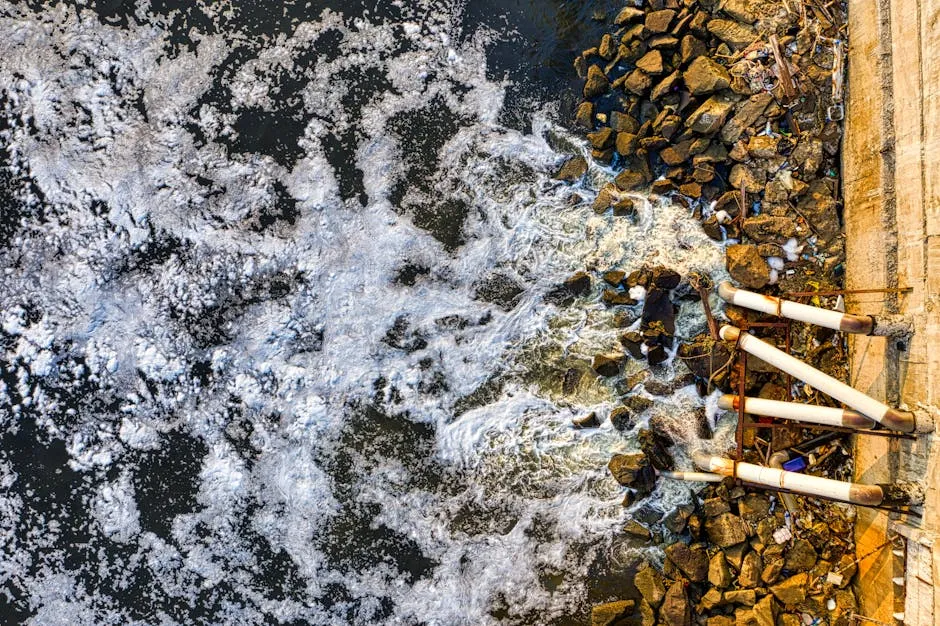
"Aerial view of polluted water flowing through pipes into a Jakarta river, causing environmental concerns." by Tom Fisk / Pexels.
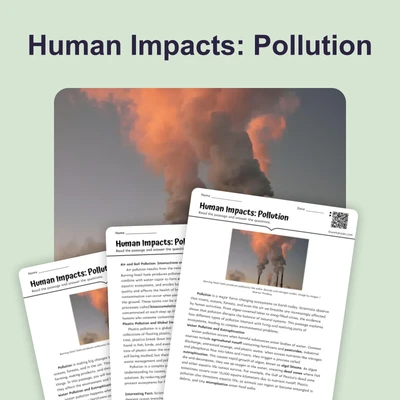
Pollution enters our environment from many different sources. Scientists classify pollution into two main categories based on where it comes from: point source pollution and nonpoint source pollution. Point source pollution comes from a single, identifiable location that can be easily traced. Examples include a factory smokestack releasing chemicals into the air or a pipe from a sewage treatment plant discharging wastewater into a river. Because these sources have a specific origin point, they are relatively easy to identify, measure, and regulate.
Nonpoint source pollution works very differently. This type of pollution comes from many scattered, diffuse sources across a large area rather than one specific location. When rain falls on farmland, it picks up fertilizers and pesticides from the soil and carries them into nearby streams and rivers. This is called agricultural runoff. Similarly, when vehicles drive on roads, they release tiny particles and gases into the air. Rain also washes oil, rubber particles, and other pollutants from roads into storm drains that lead to waterways. Each individual car or farm field might contribute only a small amount of pollution, but together these sources add up to create serious environmental problems.
The key difference between these pollution types affects how we manage them. Point sources are easier to control because regulators can identify the exact location, install monitoring equipment, and require the polluter to reduce emissions. For example, the government can require a factory to install filters on its smokestacks or limit the amount of pollutants a wastewater treatment plant can discharge. The Clean Water Act and Clean Air Act in the United States specifically regulate point sources by requiring permits and setting pollution limits.
Nonpoint source pollution presents much greater challenges for environmental protection. Because the pollution comes from thousands or millions of small sources spread across large areas, it is nearly impossible to monitor each individual source. How can regulators measure the fertilizer running off from every farm field in a county? How can they track emissions from millions of individual cars? The scattered nature of nonpoint sources makes it difficult to assign responsibility and enforce regulations. Instead of targeting specific polluters, efforts to reduce nonpoint source pollution usually involve voluntary programs, education, and incentives to encourage better practices.
Both types of pollution have serious environmental consequences. Point sources can create concentrated pollution problems near the discharge location, such as toxic conditions in a river downstream from a factory. Nonpoint sources often cause widespread, cumulative damage over large areas. Agricultural runoff contributes to algae blooms in lakes and coastal areas, which can kill fish and create dead zones where nothing can survive. Vehicle emissions from millions of cars contribute to smog and air quality problems in cities across the world.
Understanding the distinction between point and nonpoint sources helps scientists and policymakers develop effective strategies to protect our environment. While significant progress has been made in controlling point source pollution through regulations and technology, nonpoint source pollution remains one of the biggest challenges in environmental protection today. Addressing this challenge requires cooperation from farmers, homeowners, businesses, and individuals who must all take responsibility for reducing their contribution to pollution.
Interesting Fact: The Chesapeake Bay, the largest estuary in the United States, receives nonpoint source pollution from farms, cities, and roads across six states and covers 64,000 square miles of watershed area, making cleanup efforts incredibly complex.
Comprehension quiz (10 questions)
1. What is the main characteristic of point source pollution?
2. Which of the following is an example of nonpoint source pollution?
3. What does the term 'agricultural runoff' mean in the passage?
4. Why is nonpoint source pollution harder to regulate than point source pollution?
5. According to the passage, what environmental problem do algae blooms cause?
6. What methods are typically used to reduce nonpoint source pollution?
7. How do the Clean Water Act and Clean Air Act regulate point sources?
8. Based on the passage, which statement best describes the current state of pollution control?
9. Point source pollution can be easily identified and measured.
10. Vehicle emissions are considered point source pollution because they come from individual cars.
Perfect for the way you teach
- Build comprehension skills
- Auto-graded quiz
- Differentiated reading
- Read together at home
- Improve fluency
- Quiet reading time
- Reading curriculum support
- Independent practice
- Track Lexile growth