Renaissance Begins in Italy — Reading Comprehension
Rate this
Premium Resource
Present
Present in classroom. No work saved
Assign
Classroom with student accounts, Track progress
Quick Play
No student accounts, assign with a link
Grades
5
6
7
8
PRINT+DIGITAL RESOURCE
This learning resource is available in interactive and printable formats. The interactive worksheet can be played online and assigned to students. The Printable PDF version can be downloaded and printed for completion by hand.
This passage explores the origins of the Renaissance in Italy, focusing on the geographic, economic, and cultural factors that led to this transformative period in world history. Students will learn how Italy's location encouraged trade, how city-states like Florence and Venice grew wealthy, and how the merchant class supported artists and scholars. The passage connects to primary sources and archaeological evidence, discusses social life and hierarchy, and highlights the continuity and change from medieval times. Activities include a glossary, timeline, graphic organizers, comprehension questions, and Spanish translations. This resource aligns with CA HSS 7.8 and CCSS RH.6-8.2, offering a rigorous, standards-based history reading passage with read aloud audio and Spanish translation, making it ideal for diverse learners.
CONTENT PREVIEW
Expand content preview
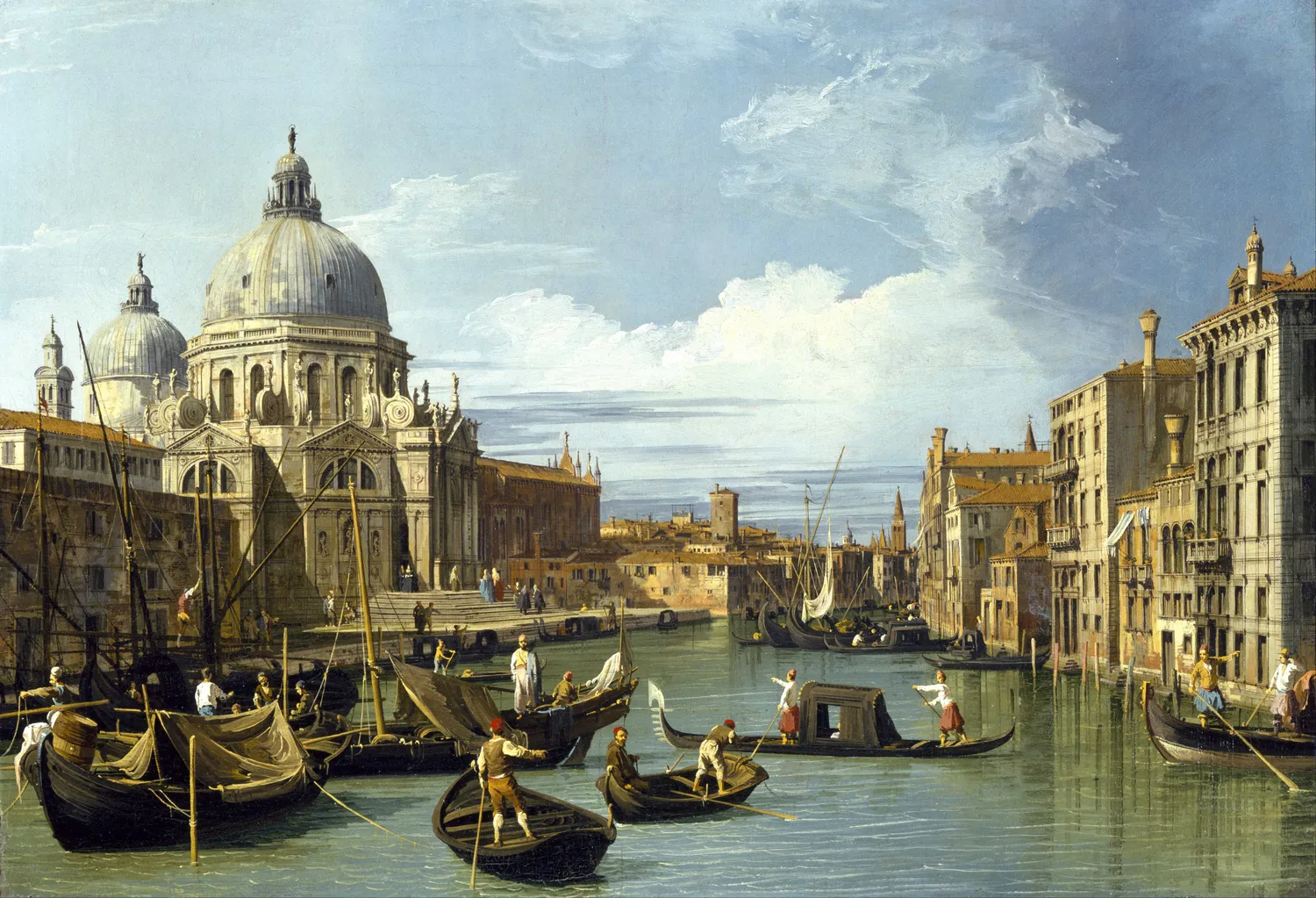
"Canaletto - The Entrance to the Grand Canal, Venice" by Canaletto / Wikimedia Commons.
The Renaissance began in Italy during the 1300s, marking a major shift in European history. This period is known for a renewed interest in art, science, and learning, inspired by the achievements of ancient Greece and Rome. Italy’s unique geography, economic wealth, and cultural heritage helped make it the birthplace of this important movement.
Italy’s location in the Mediterranean Sea made it a hub for trade between Europe, Asia, and Africa. Italian city-states such as Florence, Venice, and Genoa became powerful centers of commerce by exchanging goods like silk, spices, and wool. This prosperity allowed many families to accumulate great wealth. The merchant class, which included families like the Medici in Florence, used their riches to support artists, architects, and scholars. This support is known as patronage, which played a key role in the flowering of Renaissance culture.
Italy’s landscape was dotted with the remains of ancient Roman buildings, statues, and texts. These ruins inspired artists and thinkers to study the past and create works that celebrated human achievement and beauty. For example, the architect Filippo Brunelleschi studied the Roman Pantheon’s dome before designing the famous dome of Florence’s cathedral in 1436. Similarly, artists like Leonardo da Vinci and Michelangelo looked to Roman sculptures for inspiration. Manuscripts of classical texts were copied and studied by scholars, helping to spread new ideas.
Each Italian city-state operated independently, often ruled by powerful families or elected leaders. This political structure encouraged competition and innovation. Cities competed to build magnificent cathedrals, commission famous paintings, and attract talented thinkers. The Medici family’s patronage of artists like Sandro Botticelli and Michelangelo in Florence is a well-documented example. According to a letter from Lorenzo de' Medici in 1482, he invited artists to his court and supported their work, which encouraged the growth of the arts.
As the Renaissance spread, education became more valued, and people from different social backgrounds could rise through talent and learning. However, daily life still reflected social hierarchies—nobles, merchants, and artisans had different roles. Over time, the emphasis on learning and individual achievement helped shape modern European society.
The Renaissance began in Italy because of its unique blend of geography, wealth, ancient heritage, and independent city-states. This movement brought lasting changes to art, science, and society, and its influence can still be seen today.
This transformation in Italy connects to broader world history themes, such as cultural diffusion, the rise of new social classes, and the impact of geography on human development.
Interesting Fact: Leonardo da Vinci used more than 100 different sketches to plan his famous painting, The Last Supper.
What helped Italy become wealthy?
Trade with other countriesFarming onlyIsolation from EuropeGold mining
Which city-state was ruled by the Medici family?
FlorenceRomeVeniceMilan
What did patronage support?
Artists and scholarsSoldiers onlyFarmersSailors
Why did Italian city-states compete?
To attract artistsTo build factoriesTo avoid tradeTo stop learning
How did Roman ruins inspire artists?
By showing past achievementsBy providing goldBy growing foodBy making weapons
What effect did merchant wealth have?
Supported art and learningStopped all tradeLed to warsEnded city-states
The Renaissance began in Italy. True or false?
TrueFalse
What does 'patronage' mean?
Support for artistsTrading goodsBuilding roadsWriting laws
Perfect For:
👩🏫 Teachers
• Reading comprehension practice
• Auto-graded assessments
• Literacy skill development
👨👩👧👦 Parents
• Reading practice at home
• Comprehension improvement
• Educational reading time
🏠 Homeschoolers
• Reading curriculum support
• Independent reading practice
• Progress monitoring
Reading Features:
📖
Reading Passage
Engaging fiction or nonfiction text
❓
Comprehension Quiz
Auto-graded questions
📊
Instant Feedback
Immediate results and scoring
📄
Printable Version
Download for offline reading
🔊
Read Aloud
Voice-over with word highlighting
Reviews & Ratings
No reviews yet. Be the first to share your experience!
Related Content
Renaissance Clothing
This passage explores the fascinating world of Renaissance fashion clothing in Europe, focusing on how clothing reflecte...
Renaissance Poetry
This engaging world history reading passage introduces students to the Renaissance sonnet, focusing on the influential w...
Renaissance Philosophy
This passage explores the main ideas of Renaissance philosophy, which emerged in Europe during the 14th to 16th centurie...
Renaissance Art
This reading passage examines the enduring legacy of Renaissance art in world history, focusing on key techniques such a...
CA HSS 7.8.3CCSS RH.6-8.2CCSS W.6.2
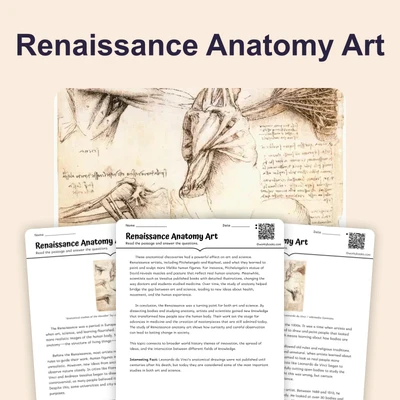
Renaissance Anatomy Art
This engaging passage explores the intersection of art, science, and society during the Renaissance through the lens of ...
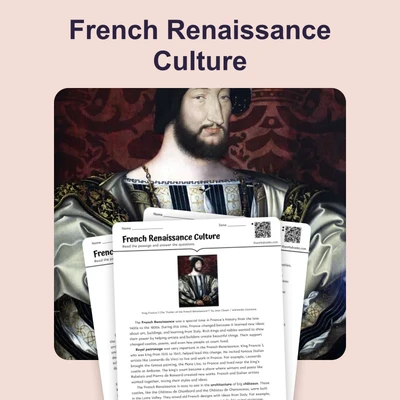
French Renaissance
This passage explores the rich culture of the French Renaissance, focusing on the influence of Italian art and architect...
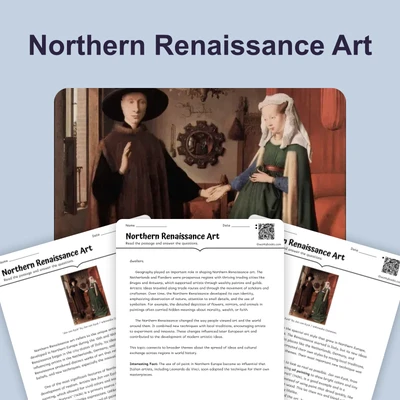
Northern Renaissance
This passage examines the development and significance of Northern Renaissance art, focusing on how Renaissance ideas sp...
Renaissance Art and Artists
This history reading passage delves into the world of Renaissance art, focusing on the revolutionary works and lives of ...
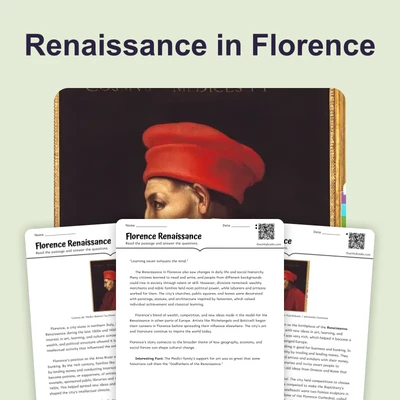
Florence Renaissance
This history reading passage examines Florence during the Renaissance, highlighting its cultural richness, the influence...
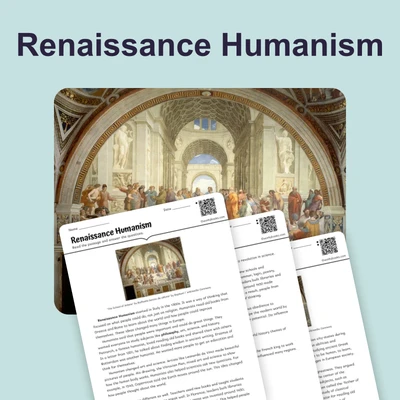
Renaissance Humanism
This passage introduces students to the transformative concept of Renaissance Humanism, a philosophical movement that em...
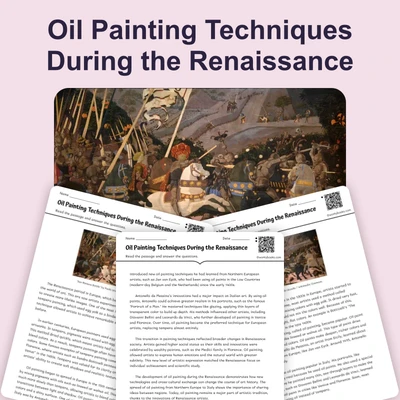
Renaissance Oil Painting
This passage explores the development of oil painting techniques during the Renaissance, focusing on the comparison betw...
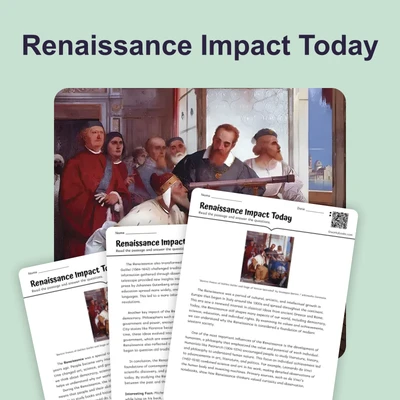
Renaissance Impact Today
This engaging world history passage examines the enduring impact of the Renaissance on modern society, focusing on how R...
English Renaissance
This comprehensive passage explores the English Renaissance, a transformative period in England marked by a flourishing ...
Renaissance Education
This engaging history reading passage examines the transformation of education during the Renaissance and its impact on ...
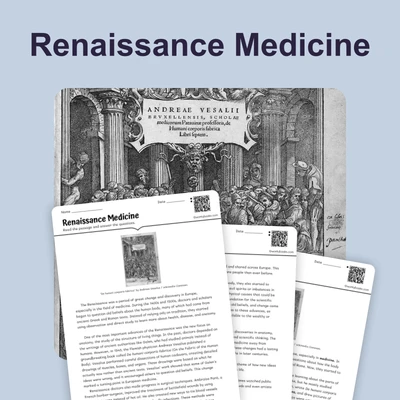
Renaissance Medicine
This engaging world history reading passage explores medical advances during the Renaissance in Europe, focusing on chan...
Renaissance Music
This world history reading passage examines the development of music during the Renaissance, a period of profound cultur...
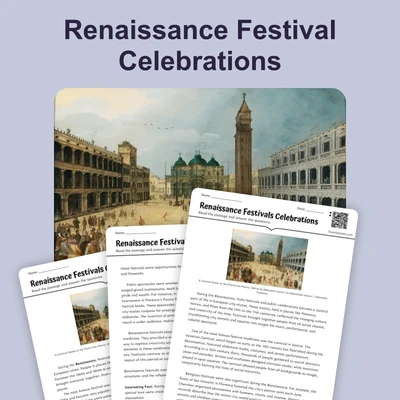
Renaissance Festivals Celebrations
This passage explores the vibrant role of festivals and celebrations during the Renaissance, focusing on how public spec...
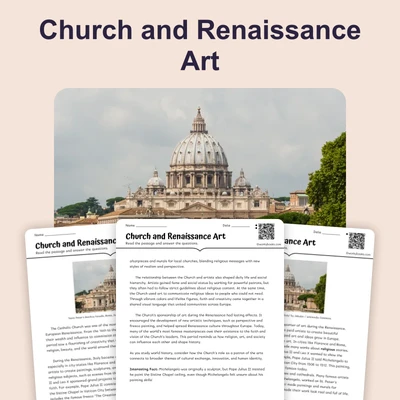
Catholic Church and Renaissance
This passage explores the major role the Catholic Church played as a patron of Renaissance art in Europe. It examines ho...
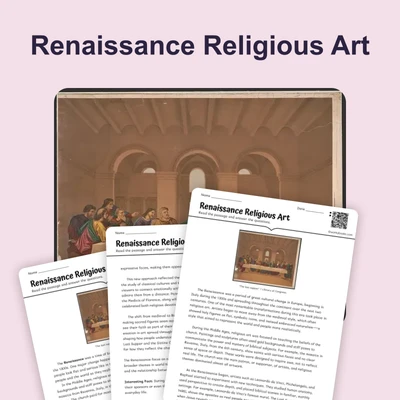
Renaissance Religious Art
This passage explores the dramatic changes in religious art during the Renaissance, focusing on the shift from medieval ...
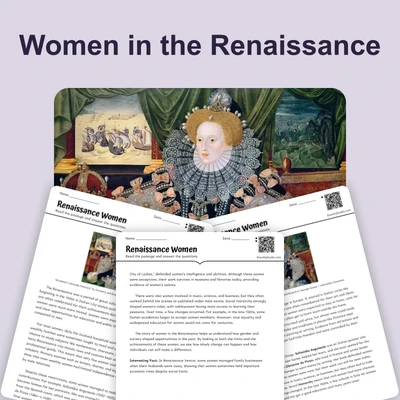
Renaissance Women
This reading passage explores the lives and contributions of women during the Renaissance period in Europe. Students wil...