This learning resource is available in interactive and printable formats. The interactive worksheet can be played online and assigned to students. The Printable PDF version can be downloaded and printed for completion by hand.
This passage provides an in-depth look at daily routines and social structures during the Renaissance, a period of cultural and economic change in Europe. Students will learn about the differences between urban and rural life, the roles of nobles, peasants, and the emerging merchant class, and how society shifted due to new ideas and economic growth. The passage uses specific historical evidence, such as records from Florence and Venice, and connects these developments to broader themes in world history. It is aligned with CA HSS 7.8 and CCSS RH.6-8.2, and includes a glossary, reading comprehension quiz, writing prompts, graphic organizers, and a timeline. Spanish translations of the passage and activities are included, as well as read aloud audio for accessibility. This resource is ideal for history educators seeking rigorous, standards-aligned content.
CONTENT PREVIEW
Expand content preview
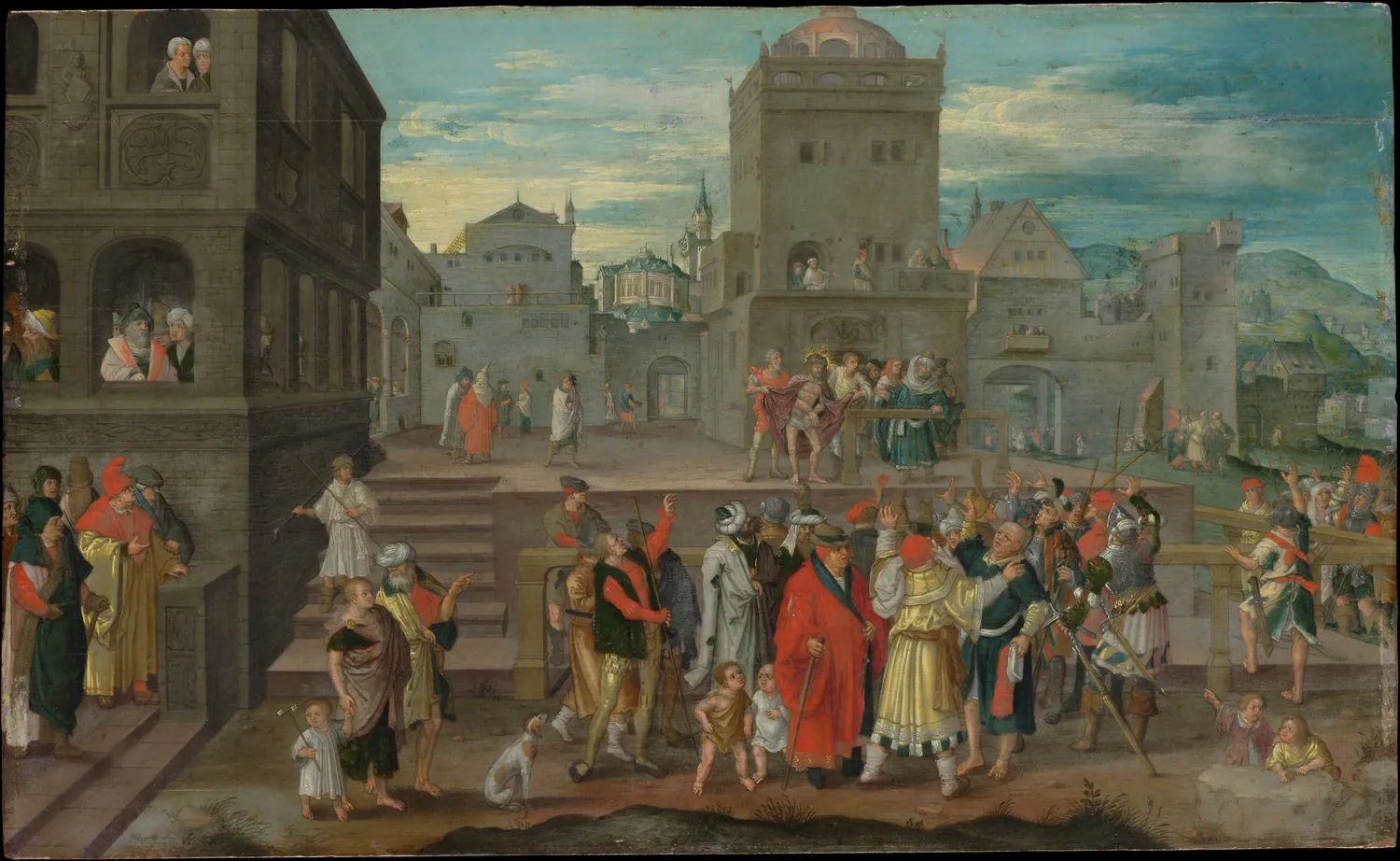
"Christ Presented to the People MET DP164849" by Lucas van Leyden / Wikimedia Commons
The Renaissance was a period of great cultural, social, and economic change in Europe, beginning in the 1300s in cities like Florence, Italy. Daily life during the Renaissance was shaped by social class, location, and new ideas that challenged traditional ways of living. Historians have learned about this era through surviving letters, paintings, and city records.
In Renaissance city-states such as Florence and Venice, life was bustling and energetic. Streets were filled with merchants, artisans, and laborers. Wealthy families, like the Medici in Florence, played a powerful role in politics and the arts. Members of the noble class lived in large, decorated houses, often supporting artists and scholars. City records from 1427 show that Florence had over 33,000 skilled workers and more than 8,000 merchants. These urban centers became places where people from different backgrounds exchanged ideas, goods, and news.
Outside the cities, rural life centered around farming and tradition. Most peasants worked long hours in the fields, growing wheat, grapes, and olives for local markets and nobility. Village life was organized around the landowner’s estate, and peasants had limited opportunities to improve their status. Archaeological evidence, including farm tools and household pottery, reveals the daily routines of rural families. Despite the hard work, rural festivals and church holidays offered moments of celebration and community.
During the Renaissance, a new merchant middle class began to grow. Merchants and bankers traveled between cities, trading goods like silk and spices from distant places. Their success allowed them to buy property, educate their children, and influence city governments. As a result, rigid social classes began to change. More people could gain wealth and power through trade instead of birth. In response, traditional guilds—organizations for skilled workers—set rules for training and business. Women also played important roles in family businesses, although their legal rights were limited compared to men.
These changes in daily life had lasting effects on European society. New ideas about individual achievement and education spread, leading to advances in science, art, and literature. The Renaissance helped shape the modern world by encouraging curiosity and innovation. City growth, economic opportunities, and shifting social roles created a dynamic society open to change.
Studying Renaissance daily life connects to larger themes in world history, such as how societies adapt to economic and cultural change, and how everyday people contribute to historical progress.
Interesting Fact: Some Renaissance city councils passed laws requiring people to wear clothing that matched their social rank, to keep class divisions clear!
Where did the Renaissance begin?
Florence, ItalyLondon, EnglandMadrid, SpainParis, France
Who were the Medici?
A powerful family in FlorenceFarmers in rural areasLeaders in VeniceArtists from Rome
What did most rural peasants do?
Grow crops on farmsTrade silk and spicesPaint and sculptTeach at universities
Why did social classes start to change?
Trade and new wealthFewer farmersWars in EuropeDecline in population
How did city growth affect daily life?
More ideas and goods sharedLess work for merchantsFewer celebrationsReduced trade
What role did women have in business?
Helped in family businessesLed city councilsOwned banksNo role at all
The Renaissance led to new ideas. True or false?
TrueFalse
What is a merchant?
Someone who buys and sells goodsA person who grows cropsA leader of a guildA palace builder
Perfect For:
👩🏫 Teachers
• Reading comprehension practice
• Auto-graded assessments
• Literacy skill development
👨👩👧👦 Parents
• Reading practice at home
• Comprehension improvement
• Educational reading time
🏠 Homeschoolers
• Reading curriculum support
• Independent reading practice
• Progress monitoring
Reading Features:
📖
Reading Passage
Engaging fiction or nonfiction text
❓
Comprehension Quiz
Auto-graded questions
📊
Instant Feedback
Immediate results and scoring
📄
Printable Version
Download for offline reading
🔊
Read Aloud
Voice-over with word highlighting
Reviews & Ratings
No reviews yet. Be the first to share your experience!
Related Content
Renaissance Clothing
This passage explores the fascinating world of Renaissance fashion clothing in Europe, focusing on how clothing reflecte...
Renaissance Poetry
This engaging world history reading passage introduces students to the Renaissance sonnet, focusing on the influential w...
Renaissance Philosophy
This passage explores the main ideas of Renaissance philosophy, which emerged in Europe during the 14th to 16th centurie...
Renaissance Art
This reading passage examines the enduring legacy of Renaissance art in world history, focusing on key techniques such a...
CA HSS 7.8.3CCSS RH.6-8.2CCSS W.6.2
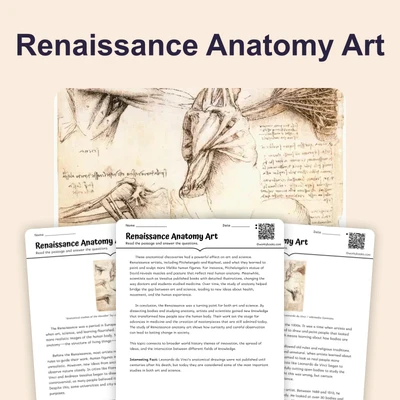
Renaissance Anatomy Art
This engaging passage explores the intersection of art, science, and society during the Renaissance through the lens of ...
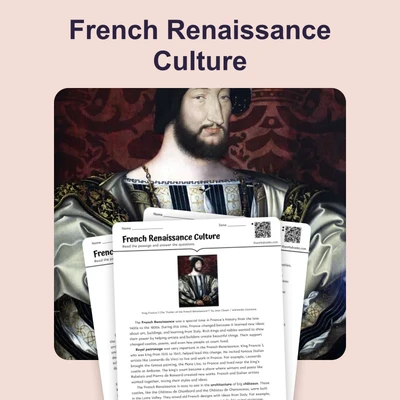
French Renaissance
This passage explores the rich culture of the French Renaissance, focusing on the influence of Italian art and architect...
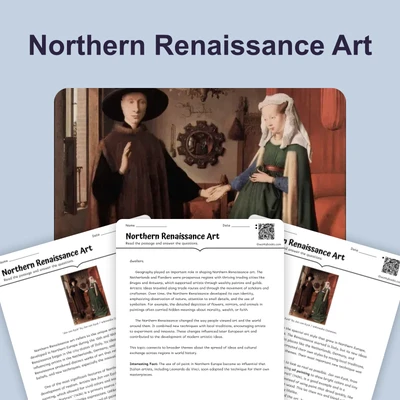
Northern Renaissance
This passage examines the development and significance of Northern Renaissance art, focusing on how Renaissance ideas sp...
Renaissance Art and Artists
This history reading passage delves into the world of Renaissance art, focusing on the revolutionary works and lives of ...
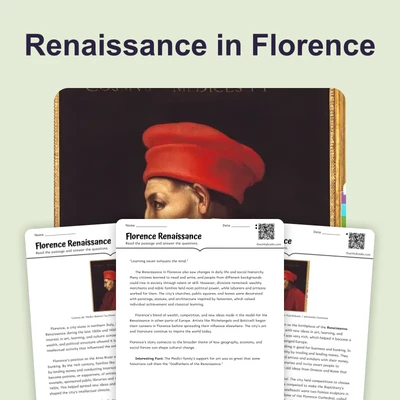
Florence Renaissance
This history reading passage examines Florence during the Renaissance, highlighting its cultural richness, the influence...
Renaissance Humanism
This passage introduces students to the transformative concept of Renaissance Humanism, a philosophical movement that em...
Renaissance Oil Painting
This passage explores the development of oil painting techniques during the Renaissance, focusing on the comparison betw...
Renaissance Impact Today
This engaging world history passage examines the enduring impact of the Renaissance on modern society, focusing on how R...
English Renaissance
This comprehensive passage explores the English Renaissance, a transformative period in England marked by a flourishing ...
Renaissance Education
This engaging history reading passage examines the transformation of education during the Renaissance and its impact on ...
Renaissance Medicine
This engaging world history reading passage explores medical advances during the Renaissance in Europe, focusing on chan...
Renaissance Music
This world history reading passage examines the development of music during the Renaissance, a period of profound cultur...
Renaissance Festivals Celebrations
This passage explores the vibrant role of festivals and celebrations during the Renaissance, focusing on how public spec...
Catholic Church and Renaissance
This passage explores the major role the Catholic Church played as a patron of Renaissance art in Europe. It examines ho...
Renaissance Religious Art
This passage explores the dramatic changes in religious art during the Renaissance, focusing on the shift from medieval ...
Renaissance Women
This reading passage explores the lives and contributions of women during the Renaissance period in Europe. Students wil...