Renaissance to Reformation
Interactive passage with audio narration, comprehension questions, and printable PDF.
By completing this purchase you agree to our Terms of Use and Privacy Policy. Your subscription renews automatically until you cancel. You can cancel anytime from your account settings. All sales are final and non-refundable. Digital content is available for download in your account immediately upon purchase.
What's included
Renaissance to Reformation preview and details
About this printable Renaissance to Reformation reading passage (Grades 5-8)
Sample passage and quiz from Renaissance to Reformation
Reading passage and comprehension quiz preview
Renaissance to Reformation
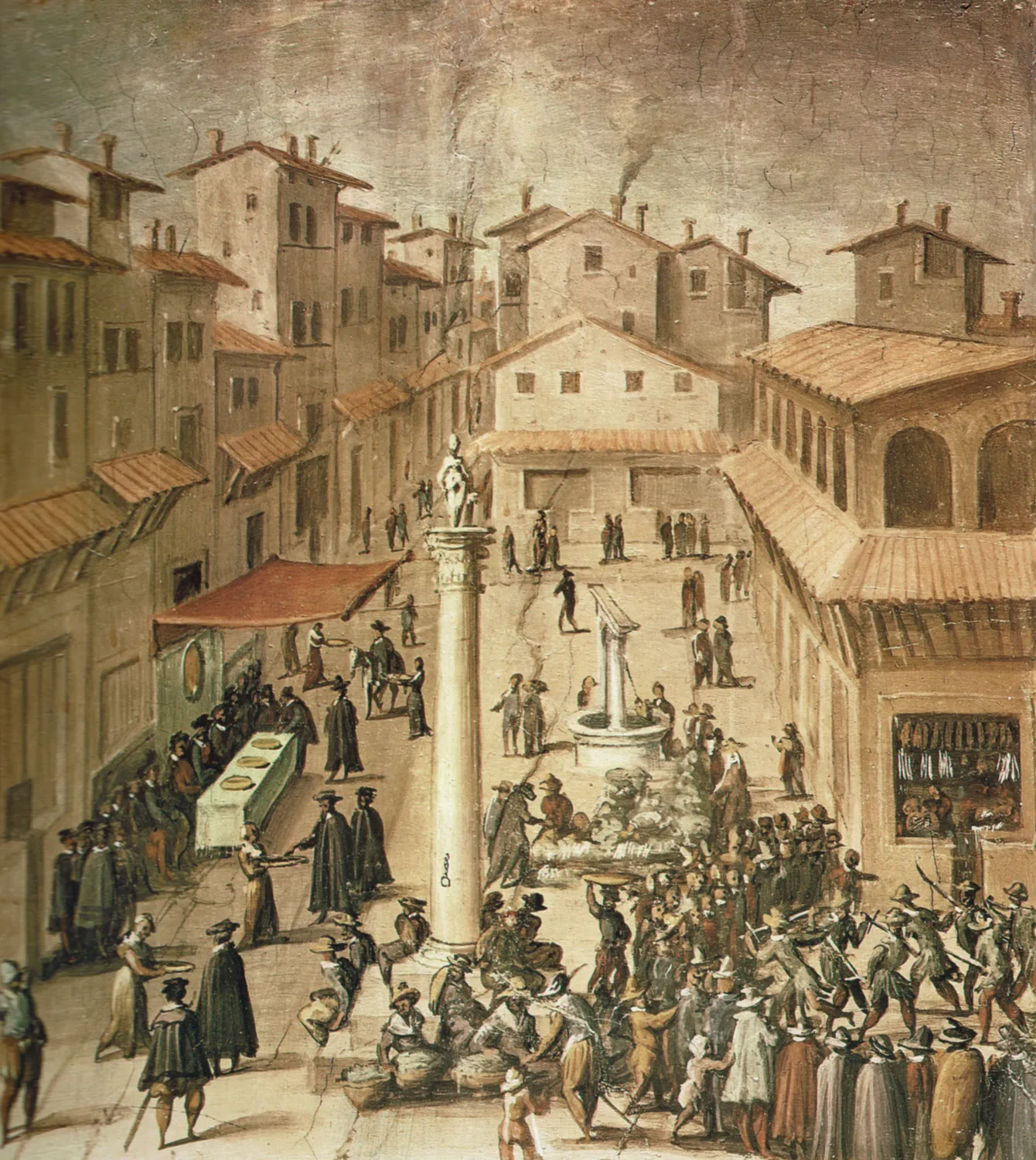
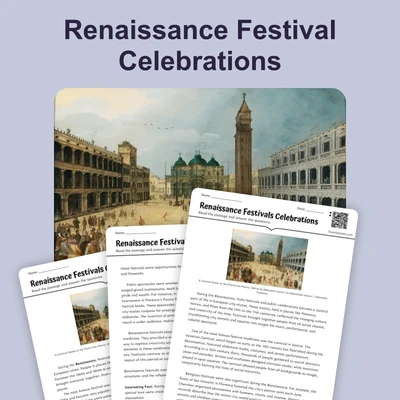
"Straet, Jan van der - Old Market - Room of Gualdrada" by Stradanus / Wikimedia Commons.
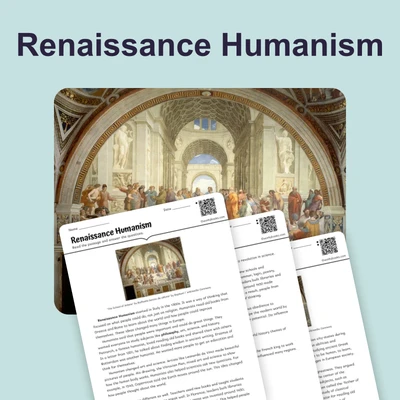
The Renaissance was a period of great change in Europe that began around the 14th century, especially in Italian city-states like Florence and Venice. During this time, people became interested in studying ancient Greek and Roman texts, leading to a new way of thinking known as humanism. Humanists believed that individuals could think for themselves and that education should focus on history, literature, and philosophy. This movement encouraged people to question old ideas and look for new answers.
One of the most important inventions of the Renaissance was the printing press, developed by Johannes Gutenberg in the 1450s in Germany. The printing press made it possible to produce books quickly and cheaply. Before this invention, books had to be copied by hand, which took a long time and made books rare and expensive. The spread of printed books, including the Bible, allowed more people to read and interpret religious texts for themselves. For example, a 1455 copy of the Gutenberg Bible still exists today and is considered a key primary source for historians studying this period.
The Catholic Church was the most powerful religious institution in Europe during the Renaissance. However, as more people read the Bible and other texts, some began to notice differences between church practices and the teachings of early Christianity. Humanist scholars like Erasmus of Rotterdam used their knowledge of ancient languages to translate and criticize errors in Church documents. At the same time, some church leaders became very wealthy and powerful, which led to criticism of corruption and the sale of indulgences—payments for forgiveness of sins. These changes in thought and access to information set the stage for major religious debates.
In 1517, a German monk named Martin Luther challenged the Catholic Church by posting his Ninety-Five Theses in Wittenberg. Luther argued that salvation could not be bought and that everyone should read the Bible in their own language. Luther’s actions, inspired by Renaissance ideas of questioning and individual understanding, sparked the Protestant Reformation. This movement led to the creation of new Christian churches and changed the religious and political landscape of Europe. Over time, these ideas spread further through printed pamphlets, letters, and translated Bibles, affecting people from all levels of society.
The connection between the Renaissance and the Reformation shows how new ways of thinking can lead to major social and cultural changes. The Renaissance encouraged questioning and learning, while the printing press made information available to more people. This combination helped create an environment where old traditions could be challenged, leading to the birth of the Reformation and shaping the future of Europe.
This period links to broader world history themes of innovation, the spread of ideas, and the impact of geography on cultural exchange.
Interesting Fact: The word "Renaissance" means "rebirth" in French, reflecting the revival of art and learning across Europe.
Comprehension quiz (8 questions)
1. Where did the Renaissance begin?
2. Who invented the printing press?
3. What did Luther post in 1517?
4. What is humanism?
5. How did the printing press affect Europe?
6. Why were indulgences criticized?
7. Renaissance means 'rebirth.' True or false?
8. What is the Protestant Reformation?
Perfect for the way you teach
- Build comprehension skills
- Auto-graded quiz
- Differentiated reading
- Read together at home
- Improve fluency
- Quiet reading time
- Reading curriculum support
- Independent practice
- Track Lexile growth