Sistine Chapel
Interactive passage with audio narration, comprehension questions, and printable PDF.
By completing this purchase you agree to our Terms of Use and Privacy Policy. Your subscription renews automatically until you cancel. You can cancel anytime from your account settings. All sales are final and non-refundable. Digital content is available for download in your account immediately upon purchase.
What's included
Sistine Chapel preview and details
About this printable Sistine Chapel reading passage (Grades 5-8)
Sample passage and quiz from Sistine Chapel
Reading passage and comprehension quiz preview
Sistine Chapel
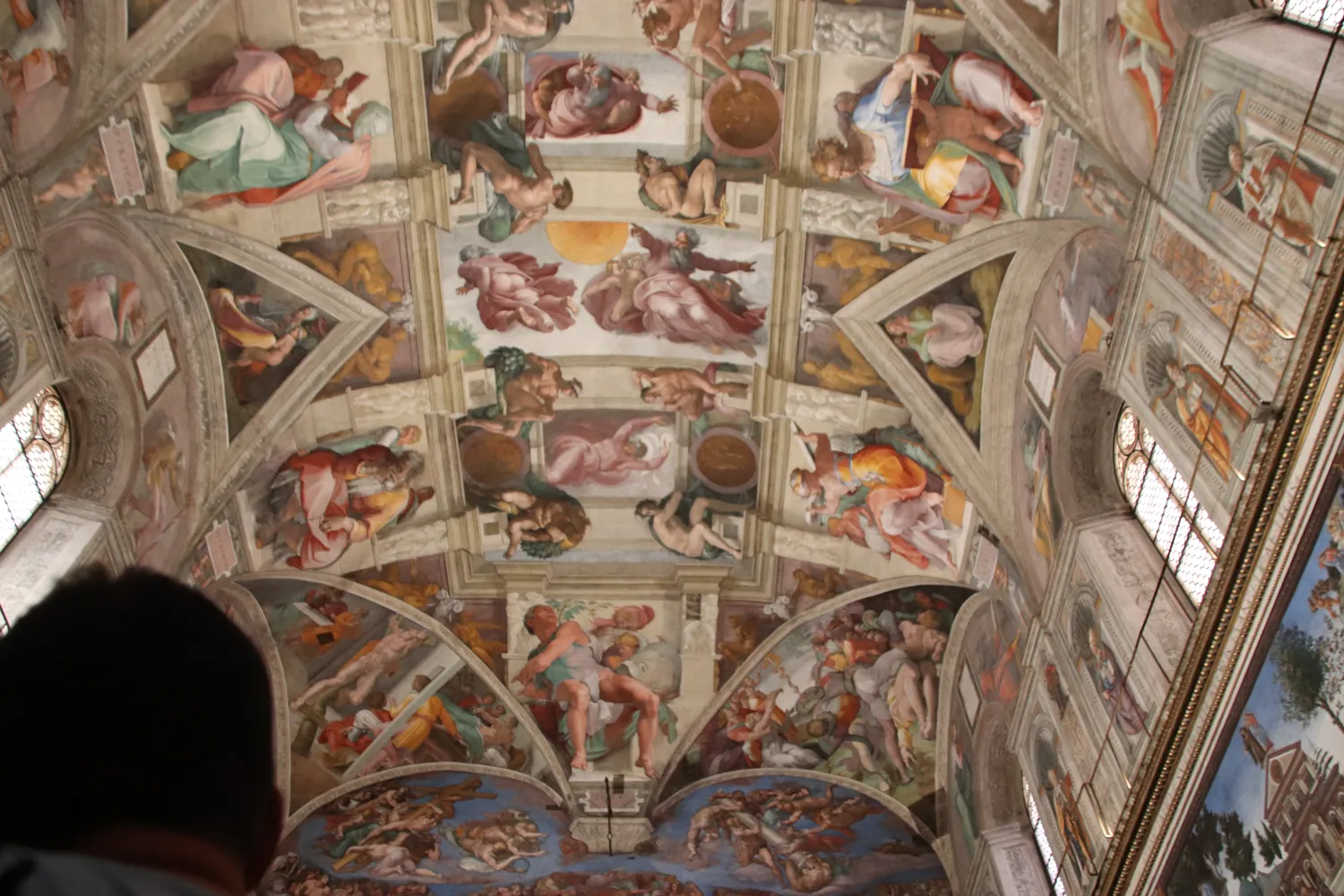
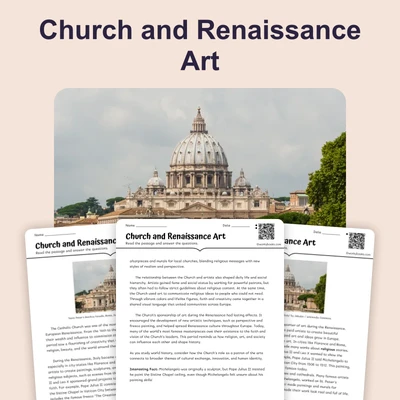
The Sistine Chapel ceiling, painted by Michelangelo between 1508 and 1512, is a masterpiece of Renaissance art. Gary Todd from Xinzheng, China, Wikimedia Commons
The Sistine Chapel ceiling is one of the most famous works of art from the Renaissance period. It was painted by the Italian artist Michelangelo between 1508 and 1512 in Vatican City, the center of the Roman Catholic Church. The chapel itself was used for important religious ceremonies, including the election of new popes. Michelangelo’s work on the ceiling is considered an artistic breakthrough that changed the history of Western art.
Michelangelo was originally known as a sculptor, not a painter. In 1508, Pope Julius II asked him to decorate the vaulted ceiling of the Sistine Chapel with frescoes—paintings made on wet plaster. Although Michelangelo was reluctant, he accepted the challenge. The task was physically demanding. He designed a special scaffold so he could work high above the floor. For four years, he painted while lying on his back, reaching overhead for hours each day. This caused him pain in his neck and arms, and he even wrote letters describing his struggles. Michelangelo had to mix pigments, organize assistants, and work quickly before the plaster dried. His determination and innovation helped him overcome these obstacles.
The main theme of the ceiling is the story of humanity from the Book of Genesis. Michelangelo painted nine central scenes showing the creation of the world, Adam and Eve, and the story of Noah. The most famous scene is the Creation of Adam, where God reaches out to give life to Adam with a single touch. This image has become a symbol of human potential and creativity. Around the central scenes, Michelangelo included prophets, sibyls (female prophets from ancient myth), and ancestors of Jesus, connecting the Old Testament with Christian beliefs.
Michelangelo’s use of perspective, anatomy, and vibrant color set new standards for religious art. He studied human bodies to make his figures lifelike, a practice typical of the Renaissance focus on realism and classical knowledge. The ceiling also reflects the power of the Catholic Church during this period, as only such a wealthy institution could commission such a massive and complex project. Primary sources, like Michelangelo’s letters and early guidebooks, help historians understand both the technical process and the artist’s feelings.
The Sistine Chapel ceiling has influenced artists for centuries. It remains a masterpiece of religious and artistic expression, visited by millions today. Michelangelo’s achievement demonstrates how art can shape culture and history, while also showing the importance of determination and vision.
Interesting Fact: Michelangelo signed only one work in his life, but not the Sistine Chapel ceiling. His name appears on his sculpture of the Pietà.
Comprehension quiz (8 questions)
1. Who painted the Sistine Chapel ceiling?
2. Where is the Sistine Chapel located?
3. When did Michelangelo finish the ceiling?
4. Why was painting the ceiling difficult?
5. What is shown in the Creation of Adam?
6. How did Michelangelo make his figures realistic?
7. The Sistine Chapel ceiling inspired many artists. True or false?
8. What does "innovation" mean?
Perfect for the way you teach
- Build comprehension skills
- Auto-graded quiz
- Differentiated reading
- Read together at home
- Improve fluency
- Quiet reading time
- Reading curriculum support
- Independent practice
- Track Lexile growth