The Prince Machiavelli
Interactive passage with audio narration, comprehension questions, and printable PDF.
By completing this purchase you agree to our Terms of Use and Privacy Policy. Your subscription renews automatically until you cancel. You can cancel anytime from your account settings. All sales are final and non-refundable. Digital content is available for download in your account immediately upon purchase.
What's included
The Prince Machiavelli preview and details
About this printable The Prince Machiavelli reading passage (Grades 5-8)
Sample passage and quiz from The Prince Machiavelli
Reading passage and comprehension quiz preview
The Prince Machiavelli
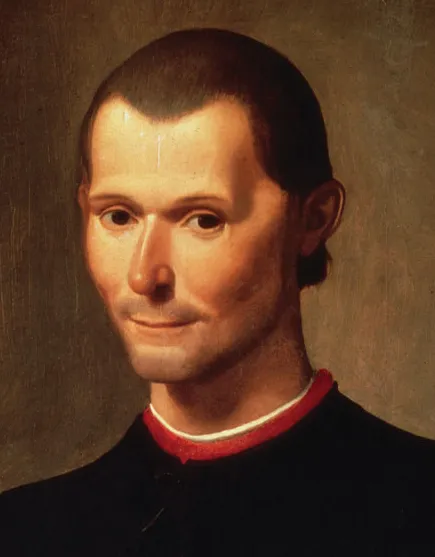
"Niccolo Machiavelli's portrait headcrop" by Santi di Tito / Wikimedia Commons.
Niccolò Machiavelli wrote The Prince in 1513 while living in Florence, Italy. The book is a political treatise, which means it gives advice about how leaders should govern. Machiavelli wrote during the Renaissance, a time when art, science, and ideas were changing in Europe. Italy was not a united country then; instead, it was made up of many city-states like Florence, Venice, and Milan. These city-states often fought for power, and rulers needed to make careful decisions to keep control.
The Prince offers practical advice to rulers about how to gain and keep power. Machiavelli argued that leaders should focus on what works, not just on what is morally right. He believed that a ruler sometimes must use force or trickery to protect their state. For example, Machiavelli wrote, "it is much safer to be feared than loved" if a leader cannot be both. He also said that the main goal of a leader is to keep the state safe and strong, even if that means making unpopular choices. This idea is often summed up as "the ends justify the means," meaning that good results can excuse bad actions.
Machiavelli’s ideas were controversial. Some people thought his advice was too harsh, while others saw it as realistic. Historians know that Machiavelli based his writing on real events and leaders he observed. For instance, he admired Cesare Borgia, a powerful Italian ruler who used cunning tactics to unite parts of Italy. Machiavelli also used examples from ancient Rome, showing how strong leaders made difficult decisions to protect their people. In one case, he described how Agathocles of Syracuse rose from humble beginnings to rule his city through bold actions. These examples show that Machiavelli valued effectiveness and results over popularity.
Over time, The Prince became one of the most famous books about politics. Even though it was not published until 1532, five years after Machiavelli’s death, its impact spread across Europe. Many rulers, including kings in France and England, read Machiavelli’s work to learn how to rule their own countries. Today, the phrase "Machiavellian" is used to describe clever, sometimes dishonest, political strategies. Scholars still debate whether Machiavelli truly believed all his advice or if he was warning readers about ruthless leaders.
Machiavelli’s The Prince continues to influence political thinking around the world. Its practical approach to leadership changed how people viewed government, focusing on real-world results rather than just ideals. The book connects to bigger themes in world history, such as the rise of strong governments, the role of ethics in leadership, and the importance of understanding human nature in politics.
Interesting Fact: The Catholic Church banned The Prince for over 200 years because it challenged traditional ideas of morality and leadership.
Comprehension quiz (8 questions)
1. Who wrote The Prince?
2. Where was Machiavelli from?
3. When was The Prince published?
4. What is a city-state?
5. What did Machiavelli believe about rulers?
6. Why was The Prince banned by the Church?
7. The Prince is still important today. (true/false)
8. What does 'ends justify the means' mean?
Perfect for the way you teach
- Build comprehension skills
- Auto-graded quiz
- Differentiated reading
- Read together at home
- Improve fluency
- Quiet reading time
- Reading curriculum support
- Independent practice
- Track Lexile growth