Trade and Renaissance Art
Interactive passage with audio narration, comprehension questions, and printable PDF.
By completing this purchase you agree to our Terms of Use and Privacy Policy. Your subscription renews automatically until you cancel. You can cancel anytime from your account settings. All sales are final and non-refundable. Digital content is available for download in your account immediately upon purchase.
What's included
Trade and Renaissance Art preview and details
About this printable Trade and Renaissance Art reading passage (Grades 5-8)
Sample passage and quiz from Trade and Renaissance Art
Reading passage and comprehension quiz preview
Trade and Renaissance Art
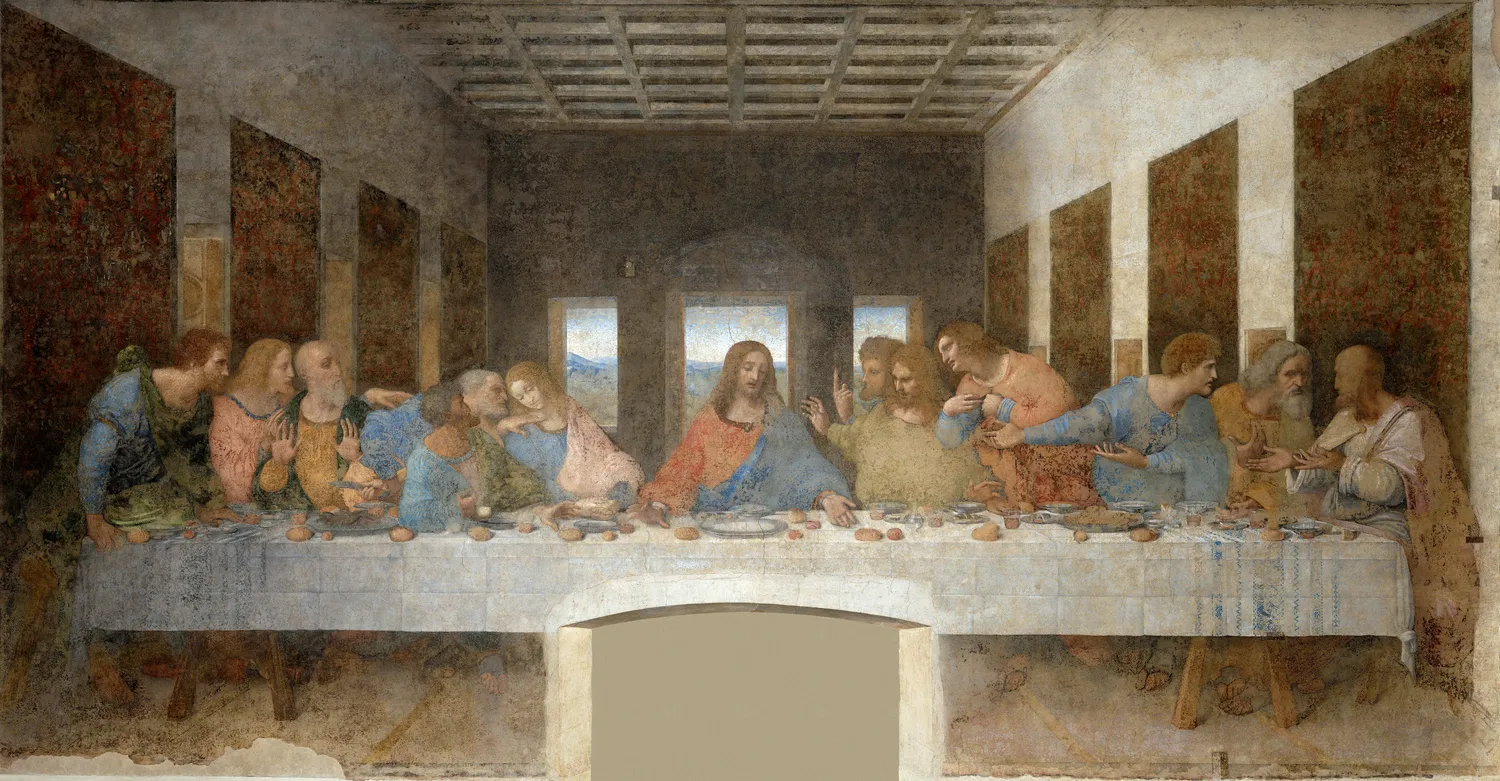
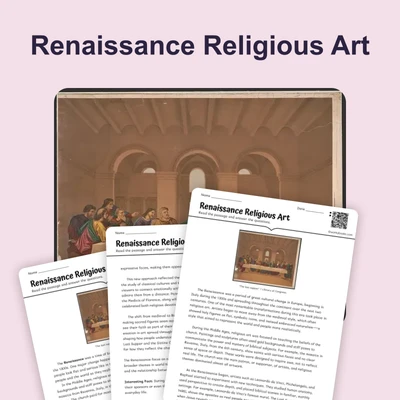
"Leonardo da Vinci (1452-1519) - The Last Supper (1495-1498)" by Leonardo da Vinci / Wikimedia Commons.
The Renaissance was a period of great cultural change in Europe, starting in the 1300s and lasting into the 1600s. During this time, the growth of trade and international finance played a major role in transforming society, especially in the Italian city-states like Florence and Venice. These economic changes did not just make some people richer—they also helped create a new age of art and learning.
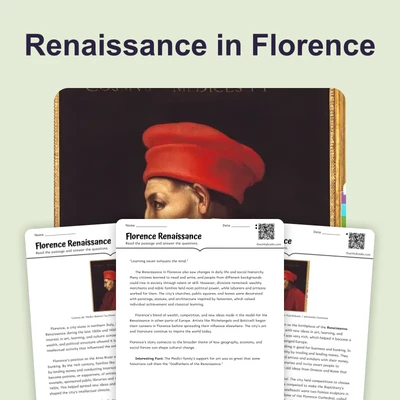
Italian city-states grew wealthy through trade with places as far away as the Middle East and Asia. Goods like silk, spices, and precious metals traveled along trade routes such as the Silk Road and the Mediterranean Sea. Merchant families, such as the powerful Medici family in Florence, earned fortunes by financing trade and banking. Their wealth allowed them to become patrons—people who supported artists, architects, and scholars financially. For example, the Medici sponsored artists like Leonardo da Vinci and Michelangelo, whose works still inspire people today. Primary sources, such as letters and contracts, show that artists often depended on these patrons for their livelihood.
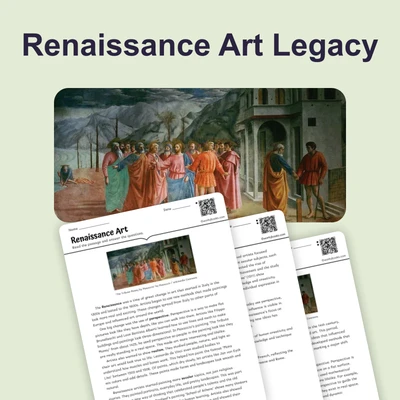
The support of wealthy merchants led to a burst of creativity. Artists were able to experiment with new styles and techniques, such as perspective in painting, which made images look more realistic. Public buildings, churches, and private homes were decorated with paintings and sculptures. In Venice, merchant wealth funded masterpieces by artists like Titian, while in Florence, the dome of the cathedral was designed by Filippo Brunelleschi, who was supported by the city’s leaders. Archaeological evidence, such as uncovered workshop tools and unfinished sketches, reveals the busy daily life of Renaissance artists.
This system of patronage changed the relationship between artists and society. Before the Renaissance, most artists worked for the Church or royalty. Now, talented individuals could rise in status by pleasing wealthy patrons from the merchant class. As art became more widespread, new ideas about humanism and individual achievement spread across Europe. Trade routes also helped ideas and artworks travel to other regions, connecting distant cultures and sparking further change.
The impact of trade-driven patronage during the Renaissance can still be seen in the world’s museums and cities. It shows how economic changes can lead to cultural transformations that shape history. Understanding this connection helps explain why the Renaissance is remembered as a turning point in art, ideas, and society.
This story of trade and art connects to broader themes in world history, showing how economics, geography, and human creativity interact to make lasting change.
Interesting Fact: Some Renaissance artists, such as Leonardo da Vinci, wrote shopping lists and receipts on the back of their sketches, giving us a glimpse into their daily lives and the business side of art.
Comprehension quiz (8 questions)
1. Which city-state was ruled by the Medici?
2. What new technique did painters use?
3. Who designed the Florence Cathedral dome?
4. How did trade impact Renaissance art?
5. What is patronage?
6. Why did art spread across Europe?
7. Renaissance artists only worked for the Church. True or false?
8. What is a city-state?
Perfect for the way you teach
- Build comprehension skills
- Auto-graded quiz
- Differentiated reading
- Read together at home
- Improve fluency
- Quiet reading time
- Reading curriculum support
- Independent practice
- Track Lexile growth