This 400-500 word informational science reading passage for middle school students (grades 6-8) explores the fascinating world of comets. Aligned with NGSS standards MS-ESS1.B and MS-ESS1-3, the passage defines comets as icy bodies from the outer solar system and explains their composition of ice, dust, and rock. Students learn why comets develop glowing comas and long tails only when they swing close to the Sun, understanding the behavior and characteristics of these celestial objects. The audio-integrated passage includes real-world examples, such as Comet NEOWISE, and connects to Earth and space systems. Supporting materials include a Spanish translation, simplified differentiated version for English Language Learners, glossary of key terms, multiple-choice comprehension questions, writing activities, and graphic organizers. This comprehensive resource helps students understand the nature of comets and their place in our solar system while developing scientific literacy and critical thinking skills.
Written by Workybooks TeamPublished by Workybooks
Preview
Sample passage and quiz content
CONTENT PREVIEW
Expand content preview
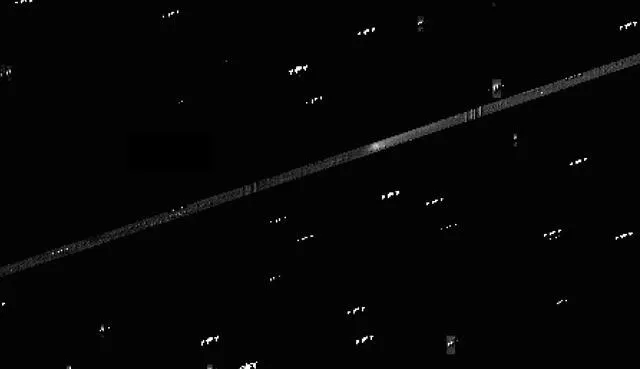
Comets are icy bodies that travel through the solar system. They come from the cold, distant regions beyond the planets. Comet 67P Seen by Kepler/ NASA
Comets are icy bodies that travel through the solar system. They come from the cold, distant regions beyond the planets. Scientists describe comets as frozen mixtures of ice, dust, and rock. Most of the time, comets remain dark and invisible as they orbit far from the Sun. However, when a comet swings close to the Sun, something remarkable happens.
The solid center of a comet is called the nucleus. The nucleus can range from a few hundred meters to tens of kilometers wide. It contains water ice, frozen gases, dust particles, and rocky material. Scientists often compare the nucleus to a dirty snowball. As a comet approaches the Sun, solar heat causes the ice to change directly from solid to gas. This process is called sublimation. The escaping gases carry dust particles with them, creating a glowing cloud around the nucleus.
This glowing cloud is called the coma. The coma can grow to be hundreds of thousands of kilometers across. Evidence shows that sunlight reflects off the dust and gas in the coma, making it visible from Earth. The coma and nucleus together form the head of the comet. But the most striking feature appears next. Solar wind and radiation pressure push gas and dust away from the head. This creates the comet's famous tail.
Comets can develop two different types of tails. The dust tail appears yellowish-white because sunlight reflects off dust particles. The ion tail appears bluish and forms when solar wind strips electrons from gas molecules. Both tails always point away from the Sun, not behind the comet's direction of travel. This means a comet's tail can actually lead the way as it moves away from the Sun.
In July 2020, Comet NEOWISE became visible to observers on Earth. Scientists tracked its journey as it passed within 103 million kilometers of the Sun. Skywatchers could see its bright coma and long tail stretching across the night sky. This event reminded people that comets continue to visit the inner solar system regularly.
Understanding comets matters because they may contain material from the early solar system. Scientists explain that studying comets can reveal information about conditions billions of years ago. Comets also remind us that our solar system remains an active and changing place. These icy travelers connect us to the vast space beyond our planet.
Interesting Fact: Some comets take millions of years to complete one orbit around the Sun, while others return every few decades. Halley's Comet returns approximately every 76 years and will next be visible from Earth in 2061.
What are comets primarily made of?
Ice, dust, and rockOnly frozen waterMetal and mineralsGas and plasma
Where do comets come from in the solar system?
The asteroid belt between Mars and JupiterThe cold, distant regions beyond the planetsThe surface of MarsNear the Sun
What is sublimation?
When water freezes into iceWhen gas turns into liquidWhen a solid changes directly into a gasWhen liquid evaporates slowly
What causes a comet to develop a glowing coma?
The comet colliding with asteroidsSolar heat causing ice to sublimate and release gas and dustThe comet spinning very fastLightning strikes in space
Why do comet tails always point away from the Sun?
Because of Earth's gravityBecause comets always move away from the SunBecause solar wind and radiation pressure push gas and dust away from the SunBecause of magnetic fields in space
What makes the dust tail appear yellowish-white?
Chemical reactions with oxygenSunlight reflecting off dust particlesHeat from the Sun burning the dustElectricity in the tail
How does the ion tail form?
When dust particles collideWhen ice melts into waterWhen solar wind strips electrons from gas moleculesWhen rocks break apart
Why is studying comets important to scientists?
They can predict the weather on EarthThey may contain material from the early solar systemThey can be mined for waterThey help satellites communicate
Comets are visible and have tails even when they are far from the Sun.
TrueFalse
A comet's tail can sometimes lead the way as the comet moves away from the Sun.
TrueFalse
Who it's for
Perfect for the way you teach
Teachers
Build comprehension skills
Auto-graded quiz
Differentiated reading
Parents
Read together at home
Improve fluency
Quiet reading time
Homeschoolers
Reading curriculum support
Independent practice
Track Lexile growth
Topics
cometssolar systemicy bodiescomacomet tailsouter solar systemNGSS MS-ESS1-3middle school sciencespace scienceastronomy
Reviews & Ratings
No reviews yet. Be the first to share your experience!
More reading you might love
20 more
Sunspots and Solar Flares
This quiz is designed to test your understanding of the fascinating phenomena of sunspots and solar flares, as described...
RI.4.1RI.4.4RI.5.1ESS1.A
The Hottest Planet in the Solar System
This NGSS-aligned middle school reading passage explains why Venus is the hottest planet in our solar system. Students l...
MS-ESS1-3
Mercury: Closest to the Sun
This comprehensive, standards-aligned passage explores Mercury—the smallest and closest planet to the Sun. Students in g...
MS-ESS1-2MS-ESS1-3
Venus: Earth's Twin?
This comprehensive science passage for grades 6-8 examines Venus—often called Earth's twin—by exploring its similarities...
MS-ESS1-2MS-ESS1-3
Mars: The Red Planet
This middle school science passage explores Mars, the Red Planet, providing students in grades 6-8 with a comprehensive ...
MS-ESS1-2MS-ESS1-3
What Is the Solar System?
This passage provides a comprehensive overview of the solar system for grades 6-8, aligned with NGSS standards MS-ESS1-2...
MS-ESS1-2MS-ESS1-3
Structure of the Solar System
This comprehensive science reading passage introduces middle school students (grades 6-8) to the structure of the solar ...
MS-ESS1-2MS-ESS1-3
Scale of the Solar System
This passage, aligned to NGSS standard MS-ESS1-3, helps middle school students grasp the immense scale of the solar syst...
MS-ESS1-3
Exploration of the Solar System
This comprehensive passage for grades 6-8 examines how humans explore the solar system, aligning with NGSS standards MS-...
MS-ESS1-3MS-ETS1-1
Optical Telescopes
This comprehensive passage explores the science of optical telescopes for middle school students, aligning with NGSS sta...
MS-ESS1-3MS-ETS1-1
Future of Alien Search
This informational passage for grades 6-8 explores how scientists are using cutting-edge missions and technology to sear...
MS-ESS1-3MS-ETS1-1
Communicating with Aliens
This middle school science passage, aligned with NGSS standard MS-ESS1-3, examines the scientific and technological chal...
MS-ESS1-3
Measuring Distances in Space
This middle school science passage explores how astronomers measure the vast distances in space, aligning with NGSS stan...
MS-ESS1-3
Astronomy
This comprehensive reading passage introduces middle school students to the science of astronomy, which is the study of ...
MS-ESS1-2MS-ESS1-3MS-PS4-2MS-ETS1-1
The Solar System
This middle school science passage introduces students to the solar system, aligning with NGSS standards MS-ESS1-2 and M...
MS-ESS1-2MS-ESS1-3
The Inner Planets
This comprehensive science passage for grades 6-8 explores the inner (terrestrial) planets of our solar system—Mercury, ...
MS-ESS1-2MS-ESS1-3
The Outer Planets
This engaging science passage for grades 6-8 introduces students to the outer planets—Jupiter, Saturn, Uranus, and Neptu...
MS-ESS1-2MS-ESS1-3
Light-Years and Cosmic Distances
This middle school science passage, aligned to NGSS MS-ESS1-3, explores how astronomers measure the vast distances in sp...
MS-ESS1-3
Space Stations
This informational science reading passage for grades 6-8 explores the complex systems and technology behind space stati...
MS-ESS1-3MS-ETS1-1
Types of Spacecraft
This passage introduces middle school students to the various types of spacecraft used to explore our solar system and b...