What Are Convergent Plate Boundaries
Interactive passage with audio narration, comprehension questions, and printable PDF.
By completing this purchase you agree to our Terms of Use and Privacy Policy. Your subscription renews automatically until you cancel. You can cancel anytime from your account settings. All sales are final and non-refundable. Digital content is available for download in your account immediately upon purchase.
What's included
What Are Convergent Plate Boundaries preview and details
About this printable What Are Convergent Plate Boundaries science reading passage, NGSS-aligned (Grades 5-8)
Sample passage and quiz from What Are Convergent Plate Boundaries
Reading passage and comprehension quiz preview
What Are Convergent Plate Boundaries
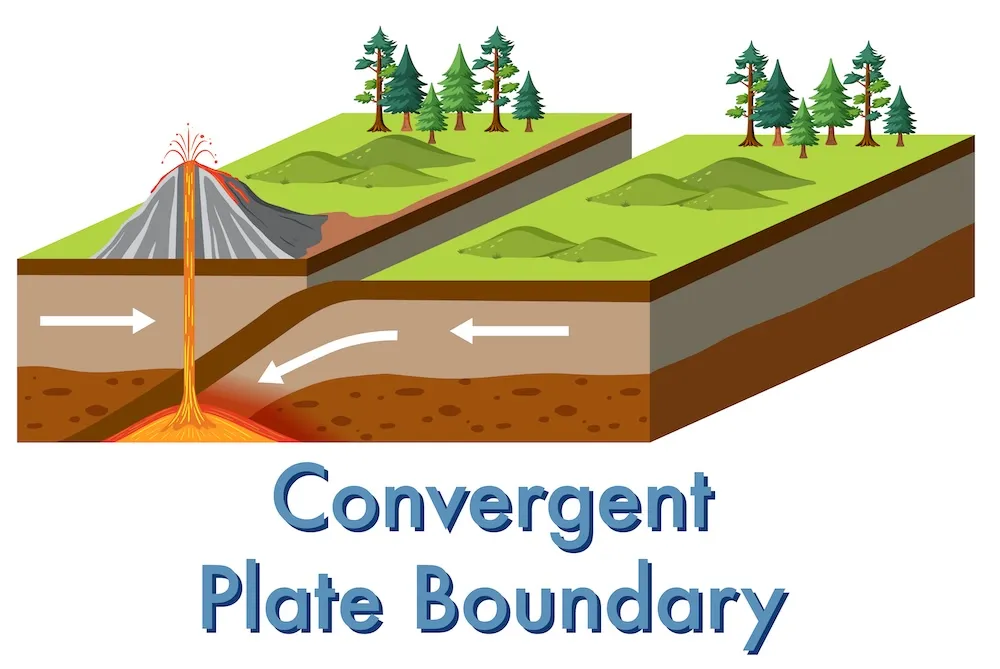
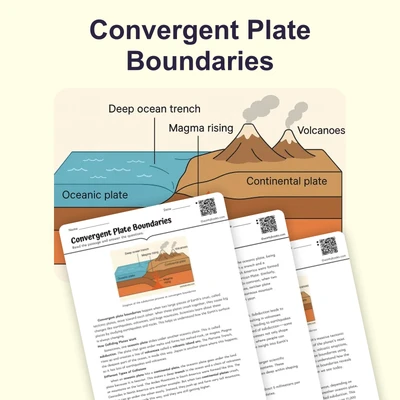
Convergent plate boundaries are places where two of Earth's tectonic plates move toward each other and collide. Scientists observe that these collisions are among the most powerful geological events on our planet. What happens at these boundaries depends on the types of plates that meet. The three main types of convergent boundaries create different landforms and geological features.
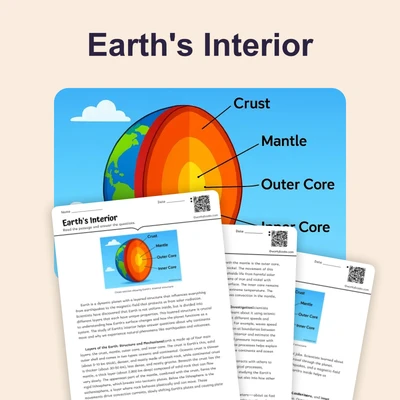
When an oceanic plate collides with a continental plate, the denser oceanic plate sinks beneath the lighter continental plate. This process is called subduction. As the oceanic plate descends into Earth's mantle, it melts and forms magma. The magma rises through the continental plate and creates volcanoes. Evidence shows this type of boundary also builds coastal mountain ranges. The Andes Mountains in South America formed this way as the Nazca oceanic plate subducted beneath the South American continental plate.
When two oceanic plates converge, one plate subducts beneath the other. The subducting plate melts as it sinks into the mantle. Magma rises through the overlying plate and erupts underwater. Over millions of years, these eruptions build volcanic islands that break the ocean surface. Scientists explain that this process created island chains like Japan and the Aleutian Islands in Alaska. These curved chains of islands are called volcanic arcs.
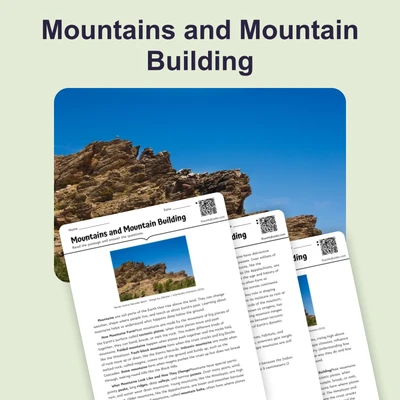
The third type occurs when two continental plates collide. Continental crust is too light and thick to subduct into the mantle. Instead, the plates crumple and fold upward. This collision pushes rock layers into massive mountain ranges. The Himalayas, including Mount Everest, formed when the Indian plate crashed into the Eurasian plate about 50 million years ago. This collision continues today, and the Himalayas grow taller by several millimeters each year.
Convergent boundaries matter because they shape Earth's surface in dramatic ways. At subduction zones, old oceanic crust is recycled back into the mantle. This recycling balances the creation of new crust at other plate boundaries. Continental collisions build the world's highest mountain ranges. These processes can also trigger earthquakes and volcanic eruptions that affect millions of people.
Interesting Fact: Mount Everest, the world's tallest mountain at 8,849 meters, contains rocks that formed on an ancient ocean floor. The collision of India and Asia pushed these marine rocks to the top of the world.
Comprehension quiz (10 questions)
1. What are convergent plate boundaries?
2. What happens when an oceanic plate collides with a continental plate?
3. What is subduction?
4. Which mountain range formed when the Indian plate collided with the Eurasian plate?
5. What are volcanic arcs?
6. Why can't continental plates subduct into the mantle?
7. What happens to oceanic crust at subduction zones?
8. How did the Andes Mountains form?
9. True or False: The Himalayas are still growing taller today.
10. True or False: Convergent boundaries only create mountains and never cause earthquakes or volcanoes.
Perfect for the way you teach
- Build comprehension skills
- Auto-graded quiz
- Differentiated reading
- Read together at home
- Improve fluency
- Quiet reading time
- Reading curriculum support
- Independent practice
- Track Lexile growth