What Are Fossil Fuels
Interactive passage with audio narration, comprehension questions, and printable PDF.
By completing this purchase you agree to our Terms of Use and Privacy Policy. Your subscription renews automatically until you cancel. You can cancel anytime from your account settings. All sales are final and non-refundable. Digital content is available for download in your account immediately upon purchase.
What's included
What Are Fossil Fuels preview and details
About this printable What Are Fossil Fuels science reading passage, NGSS-aligned (Grades 6-8)
Sample passage and quiz from What Are Fossil Fuels
Reading passage and comprehension quiz preview
What Are Fossil Fuels
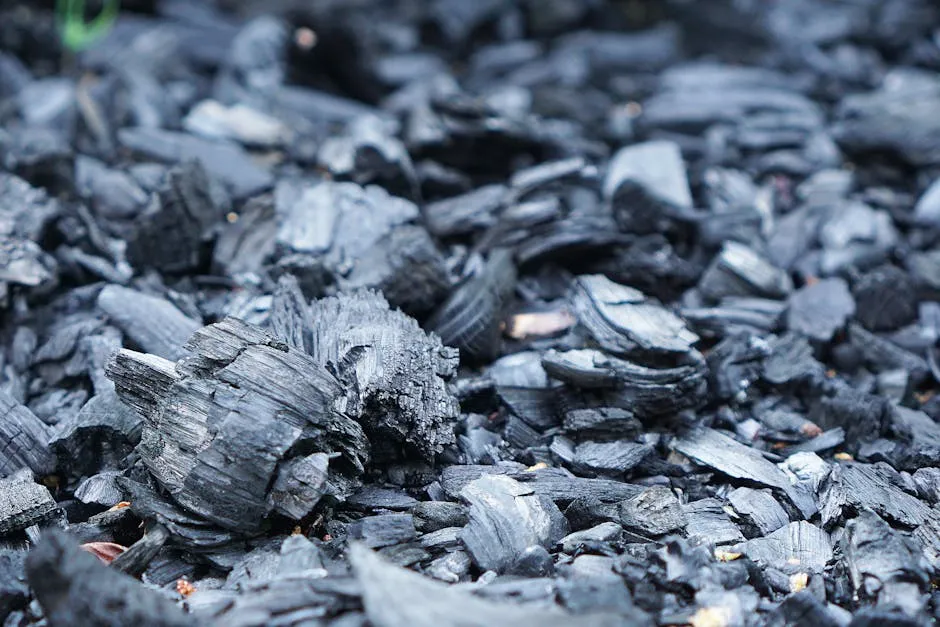
"A pile of charcoal, illustrating the carbon-rich appearance of solid fuels." Image by Pixabay / Pexels.
Fossil fuels are energy resources formed from the remains of ancient plants and animals that lived millions of years ago. The three main types of fossil fuels are coal, petroleum (oil), and natural gas. These fuels provide most of the energy used around the world today for electricity, transportation, and heating. Understanding how fossil fuels formed helps explain why they are considered nonrenewable resources—resources that cannot be replaced within a human lifetime.
The formation of fossil fuels began with photosynthesis, the process plants use to capture energy from sunlight. Millions of years ago, plants on land and tiny organisms called plankton in the oceans used photosynthesis to convert solar energy into chemical energy stored in their bodies. When these organisms died, their remains settled on the ocean floor or in swamps. Over time, layers of sediment buried these remains deeper and deeper underground. This is why fossil fuels are sometimes called stored solar energy—they contain energy that originally came from the sun.
Coal formed primarily from ancient plants that grew in swamps during the Carboniferous Period, approximately 300 million years ago. When these plants died, they fell into swampy water where oxygen levels were low. Without enough oxygen, the plant material did not fully decompose. Instead, it formed a substance called peat. As more sediment piled on top, the peat was buried under increasing pressure and heat. Over millions of years, this geoscience process transformed the peat into coal. The longer and deeper the burial, the more carbon-rich and energy-dense the coal became.
Petroleum and natural gas formed differently from coal. These fuels came mainly from microscopic marine organisms that lived in ancient oceans. When these tiny plankton died, their remains sank to the ocean floor and mixed with mud and sand. Layers of sediment buried this organic matter deep underground. The combination of high heat, intense pressure, and millions of years changed the organic matter into liquid petroleum and gaseous natural gas. These fluids moved through porous rock layers until they became trapped beneath impermeable rock layers, creating underground reservoirs.
Fossil fuels are classified as nonrenewable because their formation requires specific conditions and millions of years. While organic matter is being buried today, it will not become usable fossil fuel for millions of years. Humans are consuming fossil fuels much faster than nature can create them. For example, the coal we burn today took approximately 300 million years to form, but we can extract and burn it in just a few years. This mismatch between formation time and consumption rate is why scientists emphasize that fossil fuels are finite resources.
The connection between fossil fuels and past geoscience processes reveals important information about Earth's history. The specific types of fossils found in coal and oil deposits tell scientists about ancient ecosystems and climates. The depth and location of fossil fuel deposits provide clues about how continents have moved and how Earth's surface has changed over geological time. By studying fossil fuels, scientists can reconstruct what Earth was like hundreds of millions of years ago.
Today, fossil fuels supply approximately 80 percent of the world's energy needs. However, burning fossil fuels releases carbon that was stored underground for millions of years back into the atmosphere. Understanding that fossil fuels represent ancient stored solar energy and recognizing the geological processes required for their formation helps explain both their value as energy resources and the challenges associated with their use.
Interesting Fact: A single gallon of gasoline contains energy from plankton that lived approximately 150 million years ago during the age of dinosaurs. The carbon atoms in that fuel were once part of living organisms swimming in ancient seas.
Comprehension quiz (10 questions)
1. What are the three main types of fossil fuels mentioned in the passage?
2. Why are fossil fuels considered nonrenewable resources?
3. What does the term 'organic matter' mean in the context of fossil fuel formation?
4. According to the passage, what process did ancient plants and plankton use to capture energy from sunlight?
5. What geological conditions were necessary to transform organic matter into fossil fuels?
6. How did coal form differently from petroleum and natural gas?
7. What can scientists learn by studying fossil fuel deposits?
8. Approximately what percentage of the world's energy needs do fossil fuels currently supply?
9. True or False: Fossil fuels are called 'stored solar energy' because they contain energy that originally came from the sun through photosynthesis.
10. True or False: Humans are consuming fossil fuels at approximately the same rate that nature creates them.
Perfect for the way you teach
- Build comprehension skills
- Auto-graded quiz
- Differentiated reading
- Read together at home
- Improve fluency
- Quiet reading time
- Reading curriculum support
- Independent practice
- Track Lexile growth