What Are Natural Resources
Interactive passage with audio narration, comprehension questions, and printable PDF.
By completing this purchase you agree to our Terms of Use and Privacy Policy. Your subscription renews automatically until you cancel. You can cancel anytime from your account settings. All sales are final and non-refundable. Digital content is available for download in your account immediately upon purchase.
What's included
What Are Natural Resources preview and details
About this printable What Are Natural Resources science reading passage, NGSS-aligned (Grades 6-8)
Sample passage and quiz from What Are Natural Resources
Reading passage and comprehension quiz preview
What Are Natural Resources
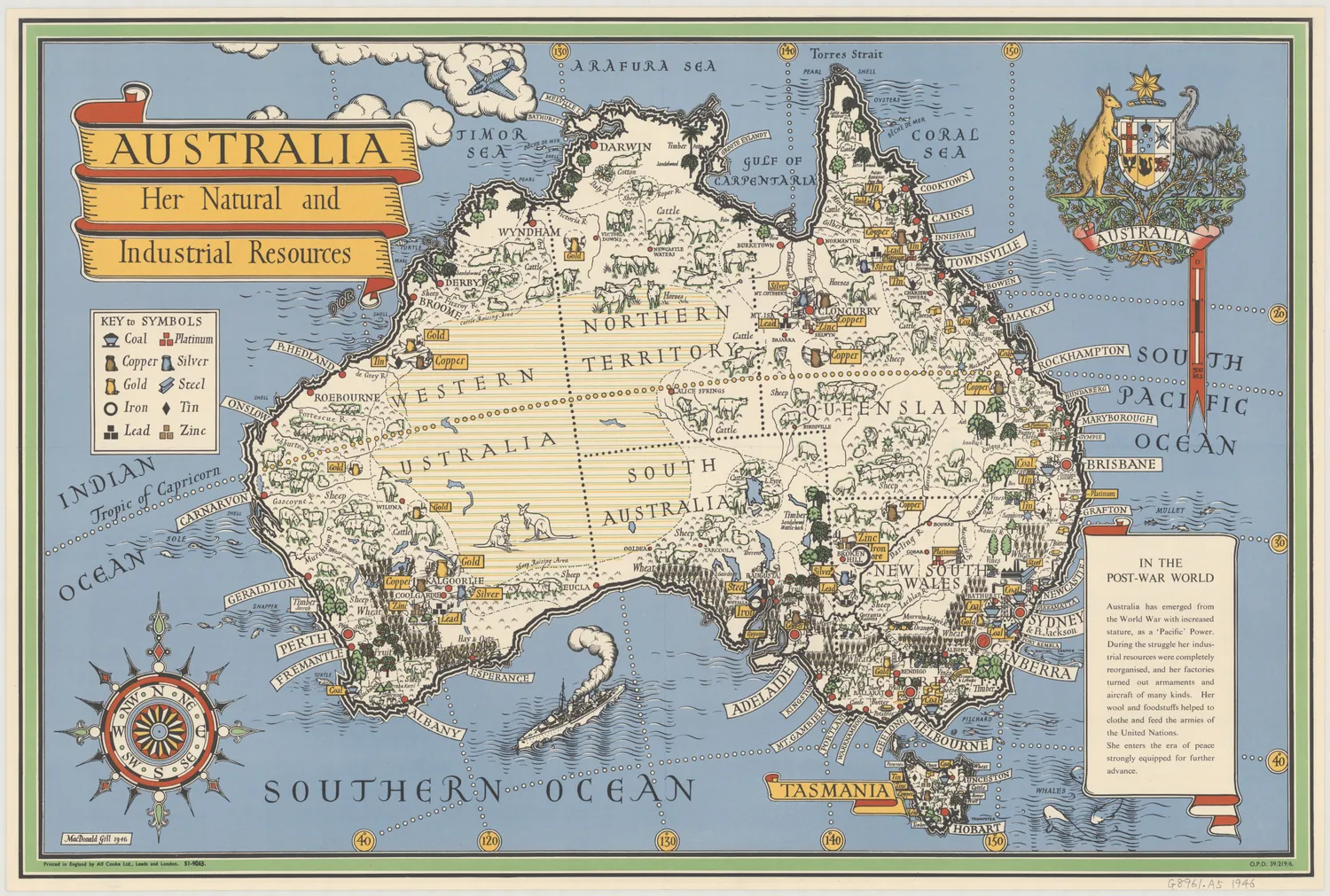
"Australia, her natural and industrial resources (1946)" by MacDonald Gill / Wikimedia Commons (Public domain).
Natural resources are materials or substances found in nature that humans use to meet their needs. These resources include everything from the water we drink to the metals used in computers and smartphones. Natural resources make modern life possible, but they are not unlimited. Scientists classify natural resources into four main types based on their characteristics and how we use them.
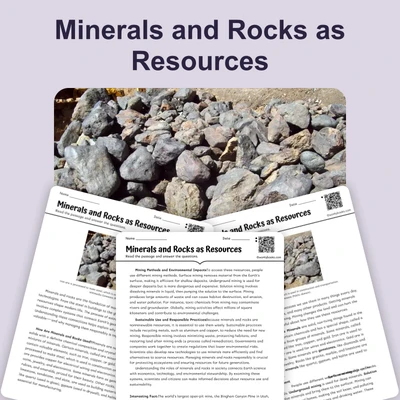
The first type is mineral resources, which are solid materials found in Earth's crust. Mineral resources include metals like copper, iron, and gold, as well as nonmetallic minerals like salt and limestone. These resources form through geological processes that take millions of years. Once we extract and use mineral resources, they cannot be replaced within a human lifetime. For example, copper used in electrical wiring comes from copper ore mined from the ground, and there is a limited supply available.
The second type is energy resources, which provide power for transportation, heating, and electricity. Energy resources include fossil fuels like coal, oil, and natural gas, which formed from ancient plant and animal remains over millions of years. Energy resources also include renewable sources like solar energy, wind energy, and geothermal energy. The key difference is that fossil fuels cannot be replaced quickly, while solar and wind energy are continuously available from natural processes.
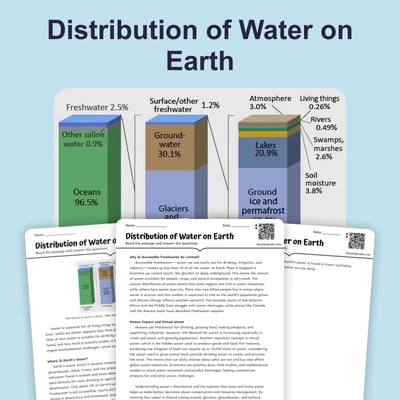
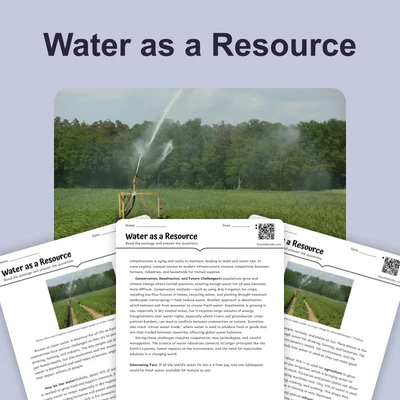
The third type is water resources, which include all freshwater sources that humans depend on for drinking, agriculture, and industry. Water resources include rivers, lakes, groundwater, and glaciers. Although water covers most of Earth's surface, only about 3% is freshwater, and much of that is frozen in ice caps. Water moves through the water cycle, making it a renewable resource, but local water supplies can be depleted if used faster than they are naturally refilled.
The fourth type is biological resources, which come from living things or ecosystems. Biological resources include forests, fisheries, crops, and wildlife. These resources can reproduce and regenerate, but only if we manage them carefully. For instance, a forest can regrow after logging, but only if enough trees remain to produce seeds and if soil quality is maintained.
Understanding sustainability is essential when studying natural resources. A resource is sustainable when the rate of use does not exceed the rate of replenishment. In other words, we can continue using a resource indefinitely if we use it no faster than nature can replace it. For example, if a forest produces 100 new trees per year, harvesting only 100 trees per year would be sustainable. However, harvesting 200 trees per year would deplete the forest over time. The same principle applies to all natural resources, from water to minerals to energy sources.
Scientists and engineers work to develop technologies that use resources more efficiently and find alternatives to nonrenewable resources. This includes developing solar panels that convert sunlight to electricity, creating recycling programs for metals and plastics, and designing water treatment systems that allow water to be reused. These efforts help ensure that future generations will have access to the resources they need.
Interesting Fact: Earth has a fixed amount of most mineral resources, but through recycling, we can use the same materials over and over. For example, aluminum cans can be recycled indefinitely without losing quality, and recycling one aluminum can saves enough energy to power a laptop for three hours.
Comprehension quiz (10 questions)
1. What are natural resources?
2. Which of the following is an example of a mineral resource?
3. What is the main difference between fossil fuels and solar energy?
4. According to the passage, what percentage of Earth's water is freshwater?
5. What does the term 'sustainability' mean in relation to natural resources?
6. Which of the following is a biological resource?
7. If a forest produces 100 new trees per year and humans harvest 200 trees per year, what will happen over time?
8. Why do mineral resources take millions of years to form?
9. Water is considered a renewable resource because it moves through the water cycle.
10. Aluminum cans cannot be recycled more than once.
Perfect for the way you teach
- Build comprehension skills
- Auto-graded quiz
- Differentiated reading
- Read together at home
- Improve fluency
- Quiet reading time
- Reading curriculum support
- Independent practice
- Track Lexile growth