What Are Rivers, Lakes, and Wetlands β Reading Comprehension
Rate this
Premium Resource
Present
Present in classroom. No work saved
Assign
Classroom with student accounts, Track progress
Quick Play
No student accounts, assign with a link
Grades
6
7
8
Standards
MS-ESS2-4
PRINT+DIGITAL RESOURCE
This learning resource is available in interactive and printable formats. The interactive worksheet can be played online and assigned to students. The Printable PDF version can be downloaded and printed for completion by hand.
This comprehensive 600-word science reading passage explores freshwater surface storage types including rivers, lakes, and wetlands. Aligned with NGSS standard MS-ESS2-4, the passage describes how these water bodies form, their roles in the water cycle, and their importance to ecosystems. Students learn about runoff, tributaries, groundwater, evaporation, and biodiversity through clear explanations and real-world examples. The passage includes audio integration for accessibility, a simplified version for struggling readers, Spanish translations, glossary terms, multiple-choice questions, writing activities, and graphic organizers. Perfect for grades 6-8 science curriculum, this resource helps students understand how water moves through Earth's systems and supports life. The content emphasizes the interconnected nature of surface water storage and its critical role in maintaining healthy ecosystems and providing fresh water for human use.
CONTENT PREVIEW
Expand content preview
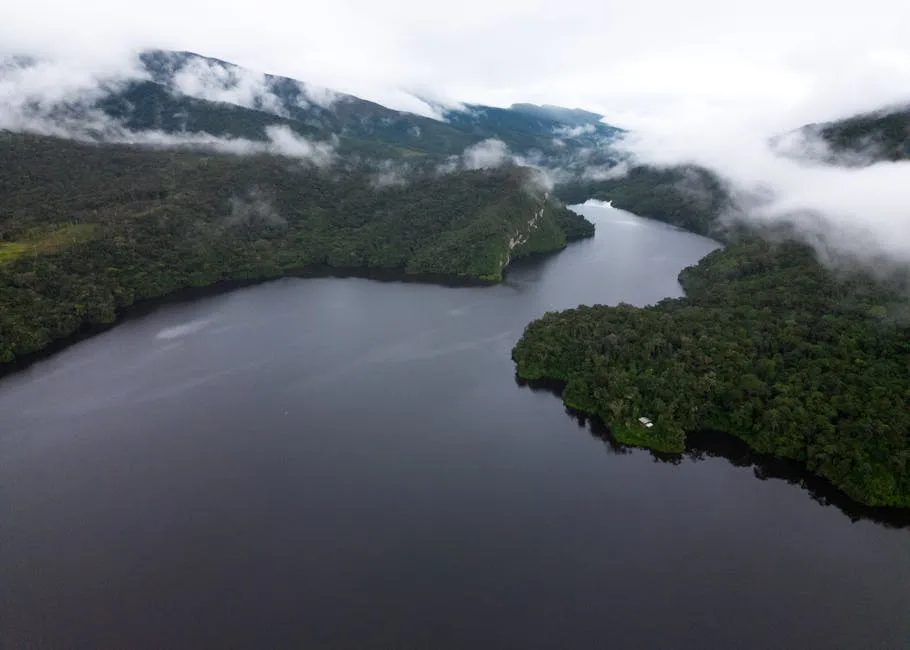
"Amazon River flowing through lush rainforest in Amazonas, Peru." Image by Edwin Malca Cerna / Pexels.
Earth's freshwater exists in several forms on the planet's surface. Surface water refers to water that collects on the ground rather than soaking into the soil or flowing underground. The three main types of surface water storage are rivers, lakes, and wetlands. Each type plays a unique role in the water cycle and supports different ecosystems.
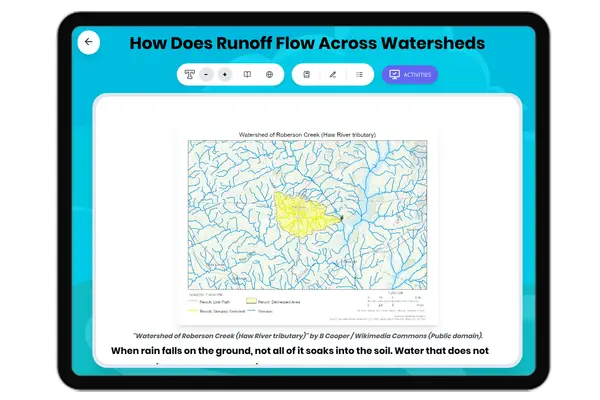
Rivers are bodies of water that flow continuously in one direction, usually toward an ocean, lake, or another river. Rivers form when precipitation falls on land and creates runoff, which is water that flows over the ground surface. Small streams called tributaries join together to form larger rivers. As rivers flow, they carry water, sediment, and nutrients from one location to another. This movement connects different parts of the landscape and transports materials that organisms need to survive. Rivers also help regulate the water cycle by moving water from land back to the ocean, where it can evaporate and form clouds again.
Lakes are bodies of water surrounded by land on all sides. Unlike rivers, lakes do not flow in one direction. Instead, water in lakes is relatively still, though wind and temperature differences create some movement. Lakes form in several ways: some fill low areas created by glaciers thousands of years ago, while others form when rivers deposit sediment that blocks water flow. Water enters lakes through precipitation, runoff from surrounding land, rivers that flow into them, and groundwater that seeps up from below. Water leaves lakes through evaporation, rivers that flow out of them, and seepage into the ground. Lakes store large amounts of freshwater and provide stable habitats for many organisms.
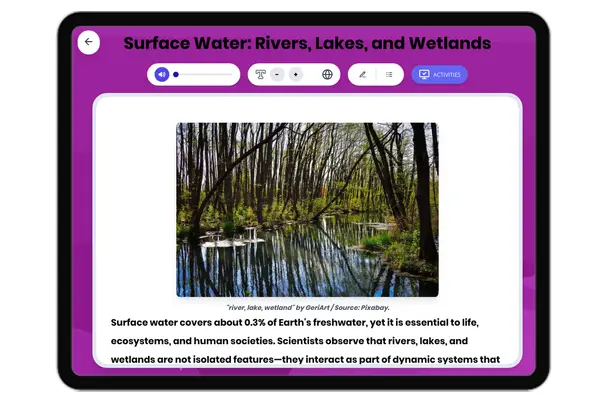
Wetlands are areas where water covers the soil for at least part of the year. These areas include marshes, swamps, and bogs. Wetlands form in low-lying areas where water collects and drains slowly. The soil in wetlands stays saturated with water, creating conditions that support specialized plants adapted to grow in waterlogged soil. Wetlands serve critical functions in the water cycle by absorbing excess water during heavy rains and slowly releasing it during dry periods. This process helps prevent flooding and maintains water flow in rivers and streams during droughts.
All three types of surface water storage support rich ecosystems. Rivers provide flowing water habitats for fish, insects, and plants adapted to currents. Lakes offer calm water environments where organisms at different depths can thrive. Wetlands support incredible biodiversity because they provide both aquatic and terrestrial habitats in the same area. Birds, amphibians, fish, and countless invertebrates depend on wetlands for food and shelter. Additionally, wetland plants filter pollutants from water, improving water quality for downstream ecosystems and human communities.
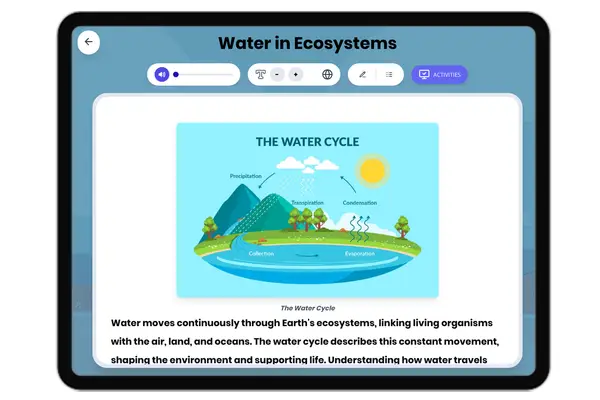
These surface water systems are interconnected through the water cycle. Rain falls on land, flows into rivers and wetlands, collects in lakes, and eventually evaporates back into the atmosphere. Understanding how rivers, lakes, and wetlands function helps scientists predict how changes in one part of the water cycle affect other parts. For example, draining wetlands can increase flooding in rivers because wetlands no longer absorb excess water. Similarly, pollution entering a river affects not only the river ecosystem but also the lake or ocean where the river flows.
Surface water storage is essential for both natural ecosystems and human societies. These water bodies provide drinking water, support agriculture, generate electricity, and offer recreational opportunities. Protecting rivers, lakes, and wetlands ensures that Earth's water cycle continues to function properly and that diverse organisms have the habitats they need to survive.
Interesting Fact: The Amazon River discharges more water into the ocean than the next seven largest rivers combined, releasing about 209,000 cubic meters of water per second into the Atlantic Ocean.
What is surface water?
Water that soaks deep into the soilWater that collects on the ground rather than soaking into soilWater that exists only in the atmosphereWater that flows only underground
How do rivers form?
When precipitation creates runoff and tributaries join togetherWhen lakes overflow their banksWhen wetlands dry up completelyWhen groundwater rises to the surface
What does the term 'tributaries' mean in the passage?
Large oceans where rivers endAreas where water evaporates quicklySmall streams that join together to form larger riversUnderground water sources
According to the passage, how do wetlands help prevent flooding?
They direct water away from citiesThey absorb excess water during heavy rains and release it slowlyThey create barriers that block water flowThey evaporate water faster than other water bodies
Which type of surface water supports the greatest biodiversity?
RiversLakesWetlandsAll three support equal biodiversity
Based on the passage, what would likely happen if wetlands in an area were drained?
Rivers would flow faster and cleanerFlooding in rivers would increase because wetlands no longer absorb excess waterLakes would become largerPrecipitation would increase in the area
How are rivers, lakes, and wetlands connected?
They are all located undergroundThey are interconnected through the water cycleThey all contain saltwaterThey exist independently without affecting each other
If pollution enters a river, what else might be affected according to the passage?
Only the organisms living in that specific section of the riverThe lake or ocean where the river flows, as well as ecosystems along the wayNothing else, because water cleans itself naturallyOnly wetlands, but not lakes or oceans
True or False: Lakes flow continuously in one direction like rivers.
TrueFalse
True or False: Wetland plants help filter pollutants from water.