What Are Transform Plate Boundaries
Interactive passage with audio narration, comprehension questions, and printable PDF.
By completing this purchase you agree to our Terms of Use and Privacy Policy. Your subscription renews automatically until you cancel. You can cancel anytime from your account settings. All sales are final and non-refundable. Digital content is available for download in your account immediately upon purchase.
What's included
What Are Transform Plate Boundaries preview and details
About this printable What Are Transform Plate Boundaries science reading passage, NGSS-aligned (Grades 5-8)
Sample passage and quiz from What Are Transform Plate Boundaries
Reading passage and comprehension quiz preview
What Are Transform Plate Boundaries
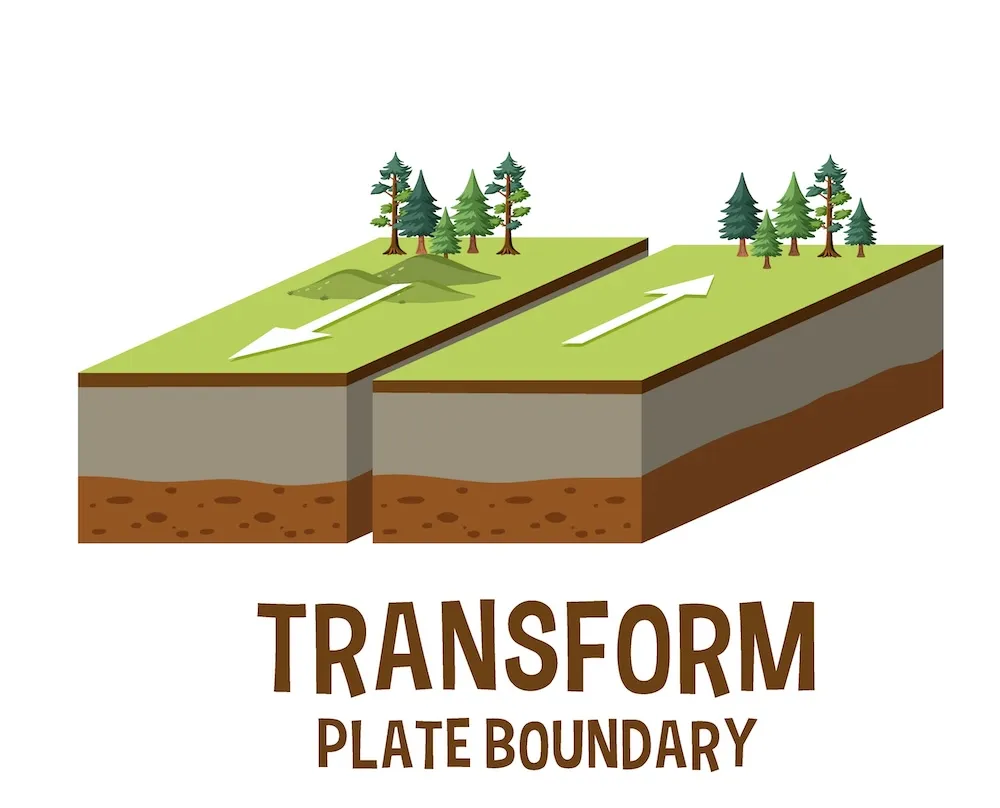
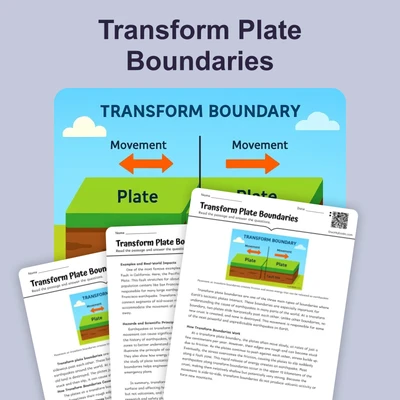
Transform plate boundaries are places where two tectonic plates slide horizontally past each other. Unlike divergent boundaries that create new crust or convergent boundaries that destroy old crust, transform boundaries simply move sideways. The plates grind in opposite directions along a fault line. This sideways motion reshapes the land mainly through powerful earthquakes.
The sliding at transform boundaries is not smooth or steady. The edges of tectonic plates are rough and jagged, not flat. When plates try to slide past each other, these rough edges catch and lock together. Friction between the plates holds them in place. Meanwhile, forces deep in Earth continue pushing the plates in opposite directions. This builds up enormous stress in the rocks along the boundary. The stress increases over many years or even decades. Eventually, the stress becomes too great for the locked edges to hold. The plates suddenly slip and lurch forward. This rapid movement releases the stored energy as seismic waves. Scientists observe that this sudden release of energy causes an earthquake.
Evidence shows that transform boundaries produce frequent and powerful earthquakes. The San Andreas Fault in California is the most famous example of a transform boundary. Here, the Pacific Plate grinds northward past the North American Plate at about two inches per year. The plates lock together along the fault, building stress until they slip. This process has caused many significant earthquakes in California's history. The 1906 San Francisco earthquake resulted from sudden movement along the San Andreas Fault. Scientists explain that the fault can produce earthquakes because the plates are constantly trying to move but repeatedly get stuck.
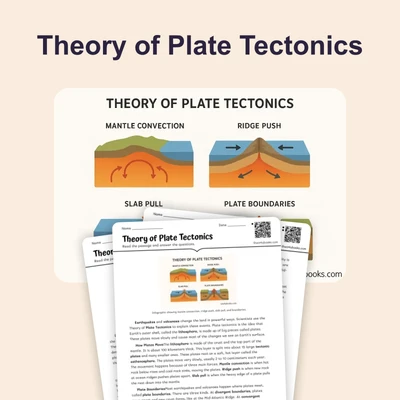
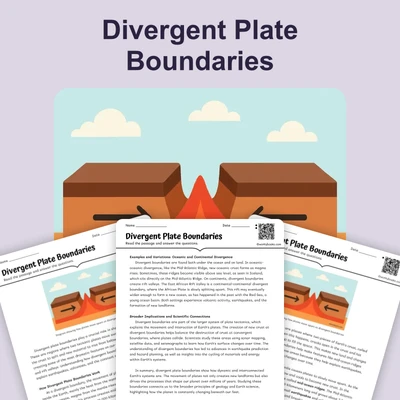
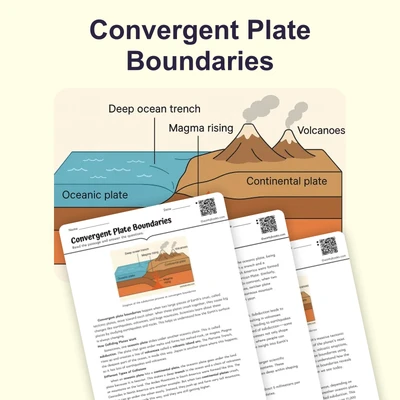
Understanding transform boundaries matters for people living near these faults. Scientists study these boundaries to better predict where earthquakes may occur. Evidence from past earthquakes helps researchers understand patterns of plate movement. This knowledge can help communities prepare for future seismic events. Transform boundaries complete the picture of plate tectonics: divergent boundaries build new crust, convergent boundaries destroy or fold crust, and transform boundaries reshape Earth's surface through earthquake activity.
Interesting Fact: The San Andreas Fault is visible from space and stretches about 800 miles through California. In about 15 million years, Los Angeles and San Francisco may be side-by-side neighbors due to the constant grinding motion of the transform boundary.
Comprehension quiz (10 questions)
1. What is the main difference between transform boundaries and other plate boundaries?
2. Why do earthquakes occur at transform boundaries?
3. What does the term 'friction' mean in the context of the passage?
4. According to the passage, what is 'stress' in rocks?
5. Which real-world example of a transform boundary is discussed in the passage?
6. What can scientists learn by studying transform boundaries?
7. At the San Andreas Fault, how fast do the plates move past each other each year?
8. What happens when stress at a transform boundary becomes too great?
9. Transform boundaries create new crust as plates slide past each other.
10. The edges of tectonic plates are smooth and flat, which allows them to slide easily.
Perfect for the way you teach
- Build comprehension skills
- Auto-graded quiz
- Differentiated reading
- Read together at home
- Improve fluency
- Quiet reading time
- Reading curriculum support
- Independent practice
- Track Lexile growth