What Causes Water Pollution
Interactive passage with audio narration, comprehension questions, and printable PDF.
By completing this purchase you agree to our Terms of Use and Privacy Policy. Your subscription renews automatically until you cancel. You can cancel anytime from your account settings. All sales are final and non-refundable. Digital content is available for download in your account immediately upon purchase.
What's included
What Causes Water Pollution preview and details
About this printable What Causes Water Pollution science reading passage, NGSS-aligned (Grades 6-8)
Sample passage and quiz from What Causes Water Pollution
Reading passage and comprehension quiz preview
What Causes Water Pollution
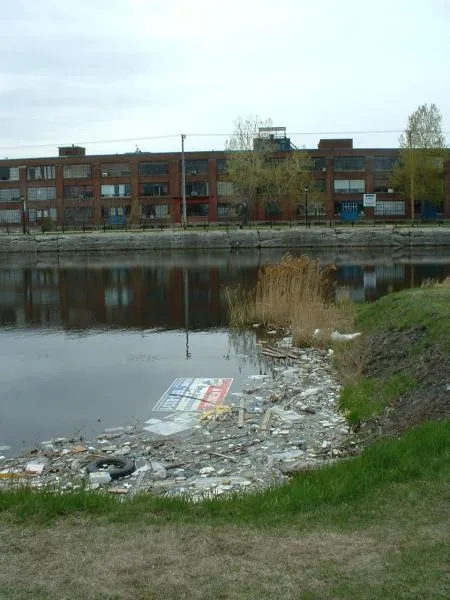
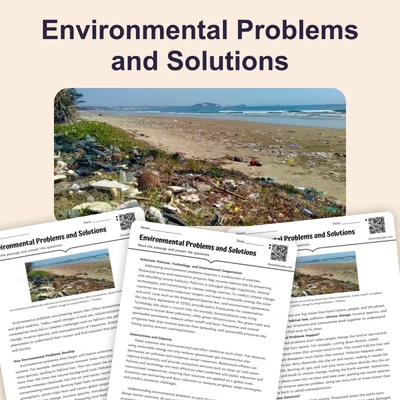
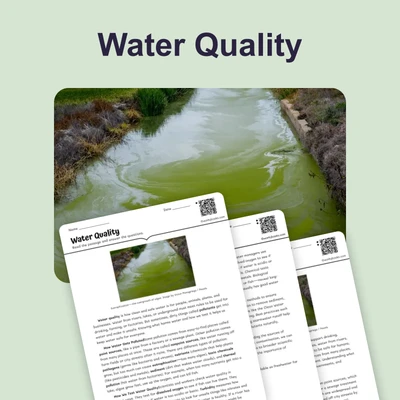
Plastic bottles, bags, and microplastics float in oceans and rivers, harming wildlife that mistake them for food. . "Canal-pollution" / Wikimedia Commons
Water pollution occurs when harmful substances enter water bodies such as rivers, lakes, oceans, and groundwater. These substances come primarily from human activities and can damage aquatic ecosystems and threaten human health. Understanding the sources and types of water pollution helps us protect our water resources and the organisms that depend on them.
Scientists classify water pollution into four major categories based on the type of harmful substance involved. The first category is biological pollution, which includes living organisms or their waste products that can cause disease. Bacteria, viruses, and parasites from sewage and animal waste are common biological pollutants. When untreated sewage enters a river, it introduces millions of harmful microorganisms that can make the water unsafe for drinking or swimming. These biological pollutants consume oxygen in the water as they decompose, creating conditions that harm fish and other aquatic life.
The second category is chemical pollution, which involves toxic substances from industrial processes, agriculture, and household products. Pesticides sprayed on crops can wash into streams during rainstorms, poisoning fish and accumulating in the food chain. Heavy metals like lead and mercury from factories can persist in water for decades, causing serious health problems in humans who consume contaminated fish. Nutrients such as nitrogen and phosphorus from fertilizers represent another form of chemical pollution. While plants need these nutrients to grow, excess amounts in water cause algal blooms—rapid growth of algae that depletes oxygen and creates dead zones where fish cannot survive.
Physical pollution, the third category, includes visible materials that do not dissolve in water. Plastic bottles, bags, and microplastics float in oceans and rivers, harming wildlife that mistake them for food. Sediment from construction sites and eroded soil clouds the water, blocking sunlight that aquatic plants need for photosynthesis. This sediment also smothers fish eggs and clogs the gills of aquatic organisms, making it difficult for them to breathe.
The fourth category is thermal pollution, which occurs when human activities change water temperature. Power plants and factories often use river water for cooling and then return the heated water to the river. Even a temperature increase of a few degrees can stress fish and other organisms adapted to specific temperature ranges. Warmer water holds less dissolved oxygen, compounding the problem for aquatic life that depends on oxygen to survive.
All four types of pollution often work together to damage aquatic ecosystems. A river receiving both chemical runoff from farms and thermal pollution from a power plant faces combined stresses that make it difficult for native species to survive. These pollution sources trace back to human activities such as agriculture, industry, urban development, and energy production. Recognizing these connections allows communities to develop solutions that protect water quality and the health of both ecosystems and people who depend on clean water.
Interesting Fact: A single quart of motor oil improperly disposed of down a drain can contaminate up to 250,000 gallons of drinking water, demonstrating how small actions can have enormous environmental consequences.
Comprehension quiz (10 questions)
1. What is water pollution?
2. Which of the following is an example of biological pollution?
3. What does the term 'nutrients' refer to in the context of chemical pollution?
4. How do algal blooms harm aquatic ecosystems?
5. What is sediment and how does it affect aquatic life?
6. Why does thermal pollution harm fish and other aquatic organisms?
7. If a river receives both chemical runoff from farms and thermal pollution from a power plant, what is likely to happen?
8. Which human activities are mentioned as sources of water pollution?
9. True or False: Biological pollutants consume oxygen in water as they decompose.
10. True or False: Warmer water holds more dissolved oxygen than cooler water.
Perfect for the way you teach
- Build comprehension skills
- Auto-graded quiz
- Differentiated reading
- Read together at home
- Improve fluency
- Quiet reading time
- Reading curriculum support
- Independent practice
- Track Lexile growth