What Causes Water Scarcity — Reading Comprehension
Rate this
Premium Resource
Present
Present in classroom. No work saved
Assign
Classroom with student accounts, Track progress
Quick Play
No student accounts, assign with a link
Grades
6
7
8
Standards
MS-ESS3-1
PRINT+DIGITAL RESOURCE
This learning resource is available in interactive and printable formats. The interactive worksheet can be played online and assigned to students. The Printable PDF version can be downloaded and printed for completion by hand.
This comprehensive 600-word reading passage examines water scarcity and its causes for middle school students in grades 6-8. Aligned with NGSS standard MS-ESS3-1, the passage explains how geography, climate, geology, and human use patterns combine to create chronic freshwater scarcity in certain regions. Students explore the uneven distribution of natural resources and how this shapes human society and decision-making. The passage includes real-world examples, defines key scientific vocabulary in context, and connects to the Disciplinary Core Idea ESS3.A (Natural Resources). Audio-integrated materials support diverse learners, while differentiated versions ensure accessibility for all students. The curriculum includes comprehension questions, writing activities, and graphic organizers that reinforce understanding of water distribution, climate impacts, groundwater systems, and conservation strategies. Students develop critical thinking skills by analyzing cause-and-effect relationships between natural factors and human activities that contribute to water scarcity challenges worldwide.
CONTENT PREVIEW
Expand content preview
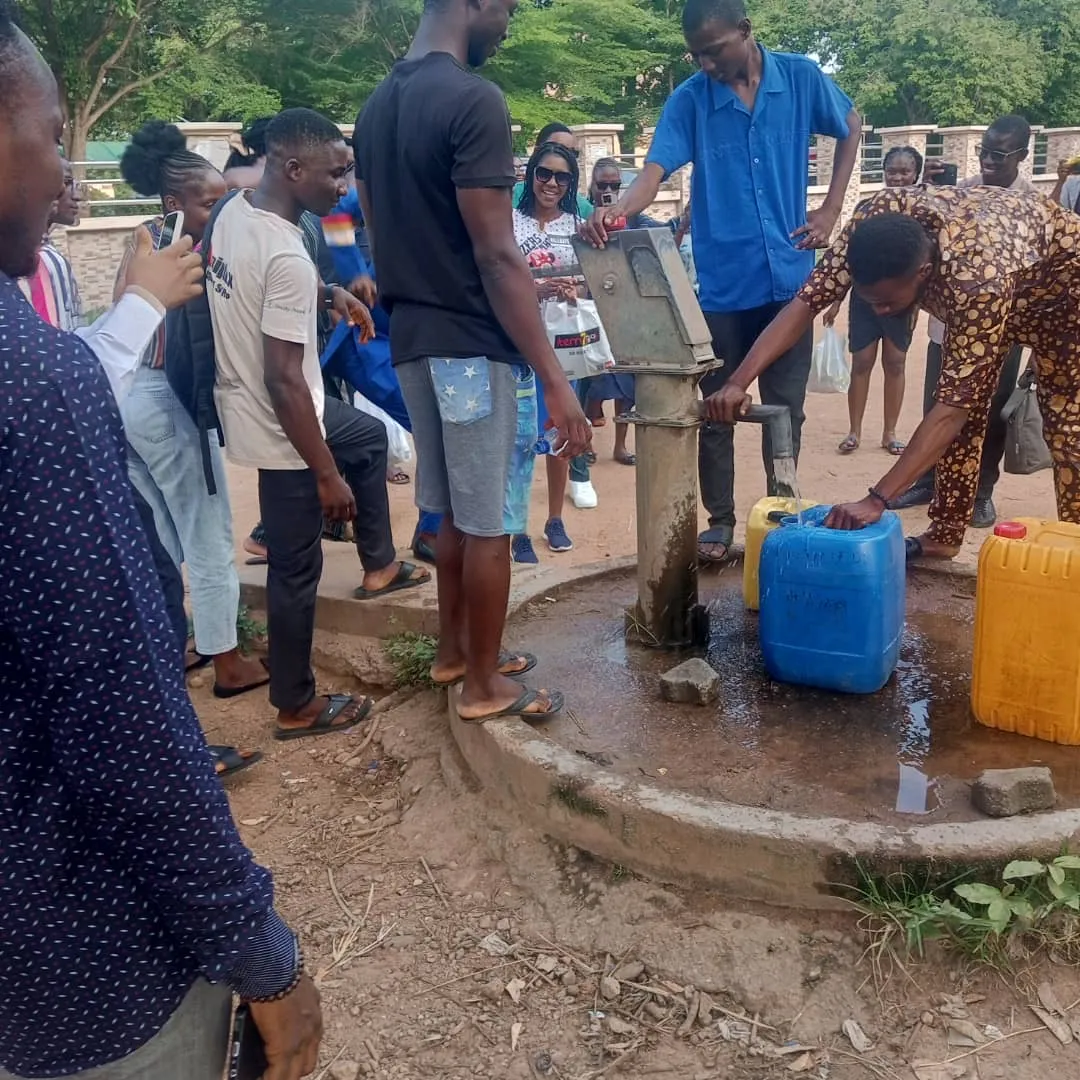
"Water scarcity in south west Nigeria" / Wikimedia Commons
Water covers about 71 percent of Earth's surface, but less than 3 percent of all water on our planet is freshwater that humans can use. Of that small amount, most is frozen in glaciers and ice caps. Only about 1 percent of Earth's freshwater is available in rivers, lakes, and underground sources called aquifers. This uneven distribution of water resources means some regions have abundant freshwater while others face severe water scarcity.
Geography plays a major role in determining where freshwater is available. Mountains act as natural barriers that affect rainfall patterns. When moist air rises over mountains, it cools and releases rain on one side, creating wet conditions. The other side of the mountain receives little rainfall, forming dry areas called rain shadows. For example, the western side of Washington's Cascade Mountains receives over 100 inches of rain annually, while the eastern side gets less than 10 inches. Distance from oceans also matters because coastal regions typically receive more rainfall than inland areas.
Climate patterns create long-term differences in water availability across Earth. Regions near the equator often receive heavy rainfall throughout the year, while areas around 30 degrees north and south latitude tend to be dry deserts. These climate zones exist because of how air circulates in Earth's atmosphere. Some regions experience seasonal rainfall patterns, receiving most of their water during specific months. When these patterns change or fail, droughts can occur. The American Southwest naturally receives limited rainfall due to its climate zone, making water a precious resource in states like Arizona and Nevada.
Geology determines how water moves and is stored underground. Some rock layers are permeable, meaning water can flow through them easily, while others are impermeable and block water movement. Aquifers form when water collects in permeable rock layers underground. The Ogallala Aquifer beneath the Great Plains is one of the world's largest underground water sources, supplying water to eight U.S. states. However, the geology of an area also affects how quickly aquifers refill, or recharge. Some aquifers take thousands of years to refill naturally.
Human activities significantly impact water availability. As populations grow, people use more water for drinking, agriculture, and industry. Farmers irrigate crops in dry regions, drawing water from rivers and aquifers faster than nature can replace it. Cities pump groundwater for millions of residents, lowering water tables. Pollution from factories, farms, and sewage can make freshwater unsafe to use. Deforestation reduces rainfall and increases soil erosion, affecting local water cycles. In many regions, human demand for water has exceeded the natural supply, creating chronic scarcity.
The combination of these factors creates different water challenges in different places. Cape Town, South Africa nearly ran out of water in 2018 due to drought, population growth, and limited storage capacity. The Middle East faces scarcity because of its desert climate, limited rivers, and rapidly growing populations. California experiences water stress from its Mediterranean climate, agricultural demands, and large cities. Understanding how geography, climate, geology, and human use interact helps societies make better decisions about managing this essential resource.
Interesting Fact: The Ogallala Aquifer is being depleted about 10 times faster than it naturally recharges, meaning this ancient water source could be significantly reduced within 50 years.
What percentage of Earth's water is freshwater available for human use?
About 1 percentAbout 3 percentAbout 25 percentAbout 71 percent
What is a rain shadow?
A cloud that blocks the sunA dry area on one side of a mountain that receives little rainfallA region that gets rain all year longAn underground water source
Which term describes rock layers that allow water to flow through them?
ImpermeableRechargePermeableDeforestation
Why does the American Southwest naturally have limited water?
Because it is far from any mountainsBecause it is in a climate zone that receives little rainfallBecause all its aquifers have been depletedBecause it has too many forests
According to the passage, which human activity significantly impacts water availability?
Building roadsPumping groundwater faster than it can be replacedPlanting treesStudying climate patterns
What does the term 'recharge' mean in the context of aquifers?
The process of cleaning polluted waterThe process by which aquifers naturally refill with waterThe amount of water people use each dayThe depth of an underground water source
Based on the passage, which combination of factors creates water scarcity in different regions?
Only climate and weatherOnly human activitiesGeography, climate, geology, and human use patternsOnly the distance from oceans
Why did Cape Town, South Africa nearly run out of water in 2018?
Because of an earthquakeBecause of drought, population growth, and limited storage capacityBecause people stopped using waterBecause all the rivers dried up permanently
Most of Earth's freshwater is frozen in glaciers and ice caps.
TrueFalse
The Ogallala Aquifer recharges faster than it is being depleted.
TrueFalse
Perfect For:
👩🏫 Teachers
• Reading comprehension practice
• Auto-graded assessments
• Literacy skill development
👨👩👧👦 Parents
• Reading practice at home
• Comprehension improvement
• Educational reading time
🏠 Homeschoolers
• Reading curriculum support
• Independent reading practice
• Progress monitoring
Reading Features:
📖
Reading Passage
Engaging fiction or nonfiction text
❓
Comprehension Quiz
Auto-graded questions
📊
Instant Feedback
Immediate results and scoring
📄
Printable Version
Download for offline reading
🔊
Read Aloud
Voice-over with word highlighting
Reviews & Ratings
No reviews yet. Be the first to share your experience!
Related Content
How Do Solar Panels Work?
This middle school reading passage explains how solar panels work by turning sunlight into electricity. The passage desc...
MS-ESS3-1
How Do Wind Turbines Work?
This NGSS-aligned reading passage for middle school students explains how wind turbines convert the energy of moving air...
MS-ESS3-1
How Does a Hydroelectric Dam Work?
This NGSS-aligned science passage for middle school students explains how hydroelectric dams work to produce clean, rene...
MS-ESS3-1
What Is Biofuel?
This NGSS-aligned middle school science passage explains what biofuel is, how it is made, and why it is important as a c...
MS-ESS3-1
What Is Tidal Energy?
This engaging reading passage for middle school students introduces tidal energy, a form of renewable energy that uses t...
MS-ESS3-1
What Is Wave Energy?
This passage introduces middle school students to wave energy—a clean, renewable energy source that comes from the movem...
MS-ESS3-1
What Is Green Energy?
This science passage introduces middle school students to the concept of green energy—clean, renewable energy that comes...
MS-ESS3-1
Igneous Rocks
This comprehensive passage introduces middle school students to igneous rocks, focusing on how these rocks form from mol...
MS-ESS2-1MS-ESS3-1
Sedimentary Rocks
This comprehensive middle school science passage introduces students to sedimentary rocks, detailing their step-by-step ...
MS-ESS2-1MS-ESS2-3MS-ESS3-1
Metamorphic Rocks
This engaging middle school science passage introduces students to the fascinating world of metamorphic rocks. Aligned w...
MS-ESS2-1MS-ESS3-1
Topographic Maps
This comprehensive passage introduces middle school students to topographic maps, with a focus on how these maps represe...
MS-ESS2-2MS-ESS3-1SEP.4SEP.7
Minerals and Rocks as Resources
This middle school science passage, aligned to NGSS standards MS-ESS3-1 and MS-ESS3-4, explores the critical role that m...
MS-ESS3-1MS-ESS3-4
Benefits of Volcanic Activity
This middle school science passage explores the many positive impacts of volcanic activity, aligning with NGSS standards...
MS-ESS2-2MS-ESS3-1
Groundwater
This middle school science passage explores the essential topic of groundwater, aligned to NGSS standards MS-ESS2-4 and ...
MS-ESS2-4MS-ESS3-1
Distribution of Water on Earth
This middle school science reading passage explores the distribution of water on Earth, aligned with NGSS standards MS-E...
MS-ESS2-4MS-ESS3-1
Water as a Resource
This middle school science passage examines water as a critical resource, focusing on how it is used, managed, and conse...
MS-ESS3-1MS-ESS3-4
Water Quality
This middle school science reading passage covers the topic of water quality, aligned with NGSS standards MS-ESS3-1 and ...
MS-ESS3-1MS-ESS3-3
Why Is Uranium Found in Certain Rock Types
This informative science reading passage for middle school students (grades 6-8) explains why uranium concentrates in ce...
MS-ESS3-1
How Minerals Are Mined
This comprehensive 650-word informational science reading passage teaches middle school students (grades 6-8) about mine...
MS-ESS3-1
Why Are Resources Unevenly Distributed on Earth
This comprehensive 650-word reading passage explains why natural resources are unevenly distributed across Earth's surfa...