What Is a Tide
Interactive passage with audio narration, comprehension questions, and printable PDF.
By completing this purchase you agree to our Terms of Use and Privacy Policy. Your subscription renews automatically until you cancel. You can cancel anytime from your account settings. All sales are final and non-refundable. Digital content is available for download in your account immediately upon purchase.
What's included
What Is a Tide preview and details
About this printable What Is a Tide science reading passage, NGSS-aligned (Grades 5-8)
Sample passage and quiz from What Is a Tide
Reading passage and comprehension quiz preview
What Is a Tide
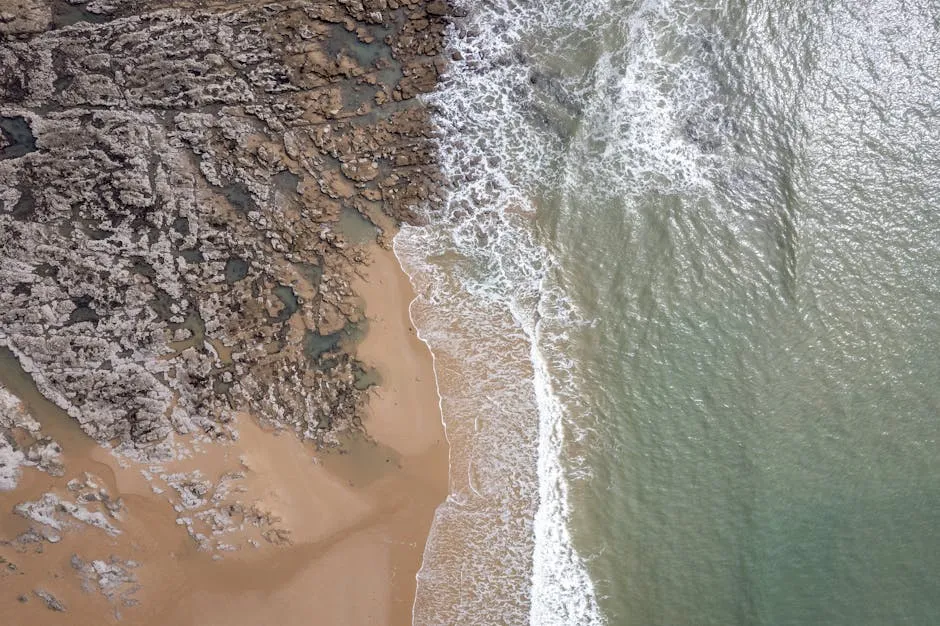
A tide is the regular rise and fall of ocean water along coastlines. Image by Ollie Craig / Pexels.
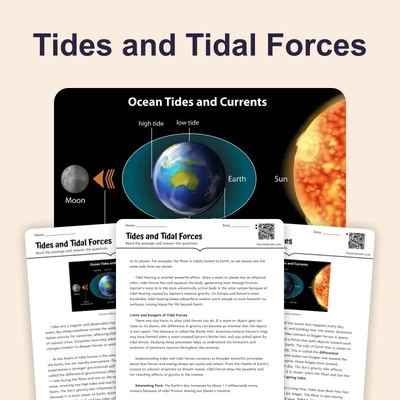
A tide is the regular rise and fall of ocean water along coastlines. Twice each day, water moves up the shore during high tide. Then it moves back down during low tide. This pattern repeats in a predictable cycle. Tides occur in lakes and inland seas too, but ocean tides are the largest and most noticeable.
Scientists explain that tides happen because of gravitational pull from the Moon and Sun. The Moon is much closer to Earth than the Sun. Evidence shows that the Moon's gravity has a stronger effect on ocean water. As the Moon orbits Earth, its gravity pulls on the water. This creates a bulge of water on the side of Earth facing the Moon. Another bulge forms on the opposite side of Earth. These bulges are high tides. Between the bulges, water levels drop, creating low tides. The Sun also pulls on Earth's oceans, but its effect is smaller. When the Sun and Moon align, their combined pull creates especially high and low tides.
The tidal range is the difference between high and low tide levels. This range varies by location. The Bay of Fundy in Canada has some of the world's highest tides. Water levels there can change by more than 50 feet between high and low tide. Scientists observe that the shape of the coastline and ocean floor affects tidal range. Narrow bays and channels can amplify tides. Open coastlines may have smaller tidal ranges.
Understanding tides matters for many reasons. Coastal communities plan activities around tide schedules. Fishermen use tide charts to find the best fishing times. Ships need high tide to enter shallow harbors safely. Marine animals and plants adapt their life cycles to tidal patterns. Tide predictions help people stay safe near the ocean. Scientists study tides to better understand the Earth-Moon-Sun system and how these bodies interact.
Interesting Fact: Earth's rotation is gradually slowing down because of tidal forces. The Moon is moving about 1.5 inches farther from Earth each year.
Comprehension quiz (10 questions)
1. What is a tide?
2. How many times does high tide occur each day?
3. What does 'gravitational pull' mean in the passage?
4. What is 'tidal range'?
5. Why does the Moon have a stronger effect on tides than the Sun?
6. Based on the passage, what can you infer about the Bay of Fundy's coastline?
7. If a ship captain needs to enter a shallow harbor, when should they plan to arrive?
8. What happens when the Sun and Moon align?
9. True or False: Tides only occur in oceans, not in lakes or inland seas.
10. True or False: The shape of the coastline and ocean floor can affect the tidal range.
Perfect for the way you teach
- Build comprehension skills
- Auto-graded quiz
- Differentiated reading
- Read together at home
- Improve fluency
- Quiet reading time
- Reading curriculum support
- Independent practice
- Track Lexile growth